The International Atomic Energy Agency has confirmed that Syria was constructing an undeclared nuclear reactor in Deir ez-Zor under former President Bashar al-Assad, bringing greater clarity to a nearly two-decade investigation into the country’s past nuclear activities.
The finding was detailed in a confidential IAEA report circulated to member states this week, following renewed inspections conducted with the cooperation of Syria’s post-Assad government.
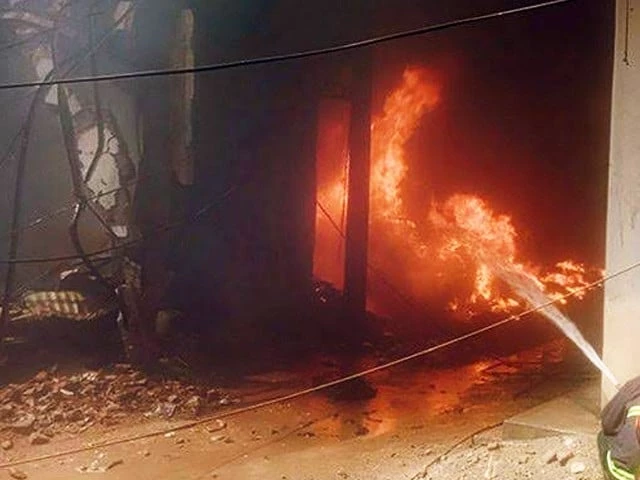
The facility, located at Dair Alzour in eastern Syria, was destroyed by an Israeli airstrike in September 2007. Israel later acknowledged carrying out the operation, saying the site was a nuclear reactor under construction. Syria had maintained that the facility was a conventional military installation.
The IAEA had previously assessed that the building was very likely a nuclear reactor that should have been declared to the agency. The latest investigation has strengthened that conclusion after inspectors gained access to locations and material connected to the former program.
Read More: Denmark Reopens Embassy in Syria After 14-Year Closure
During an inspection in August, IAEA experts examined underground infrastructure uncovered at the Dair Alzour site. The agency concluded that the structures were consistent with cooling infrastructure for a nuclear reactor, further supporting its assessment of the facility’s intended purpose.
The investigation also established links between Dair Alzour and other undeclared locations associated with Syria’s former nuclear activities. According to the IAEA findings, nuclear fuel intended for the reactor was manufactured at another location in the country.
Inspectors also verified approximately 73 tons of natural uranium metal at a related site, including around 55 tons in the form of fuel rods. The material has since been placed under IAEA safeguards and international monitoring.
The agency concluded that Syria under the Assad government failed to report nuclear material, facilities and activities as required under its safeguards obligations.
Read More: Syria Reopens Embassy in Libya After 14 Years, Restores Bilateral Cooperation Mechanism
The latest findings have been made possible by increased cooperation between the IAEA and Syria’s current authorities following Assad’s removal from power in December 2024.
The new government has provided inspectors with access to sites and information that had remained difficult to obtain during previous investigations.
The cooperation could help resolve one of Syria’s longest-running disputes with the international nuclear watchdog as Damascus seeks to rebuild relations with international institutions and governments after years of isolation.
The findings also carry wider significance for the global nuclear non-proliferation regime. The IAEA investigation demonstrates the challenges involved in verifying undeclared nuclear activities years after facilities have been destroyed or altered, while renewed access under Syria’s current government has allowed inspectors to reconstruct elements of the former program.
The IAEA is expected to continue working with Damascus to account for nuclear material and resolve outstanding safeguards issues linked to the former program.

Anoush Taimur is an International Relations graduate from DHA Suffa University, Karachi, currently based in Doha. Her research interests include Gulf politics, small-state diplomacy, Global South studies and conflict
mediation. Her work examines how states create influence through connectivity, institutions and strategic relationships. She can be reached at [email protected]