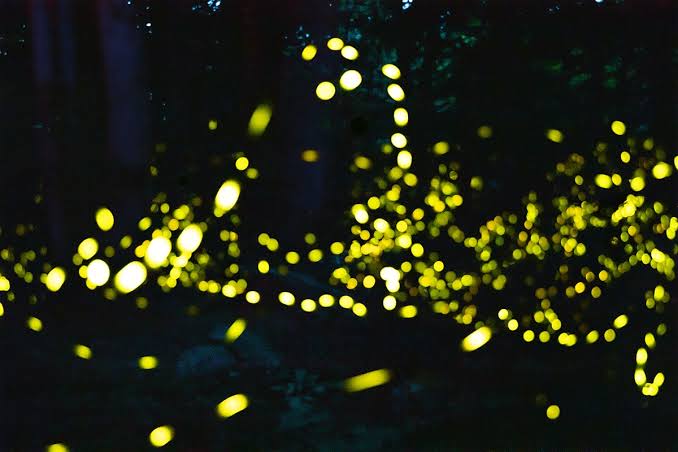
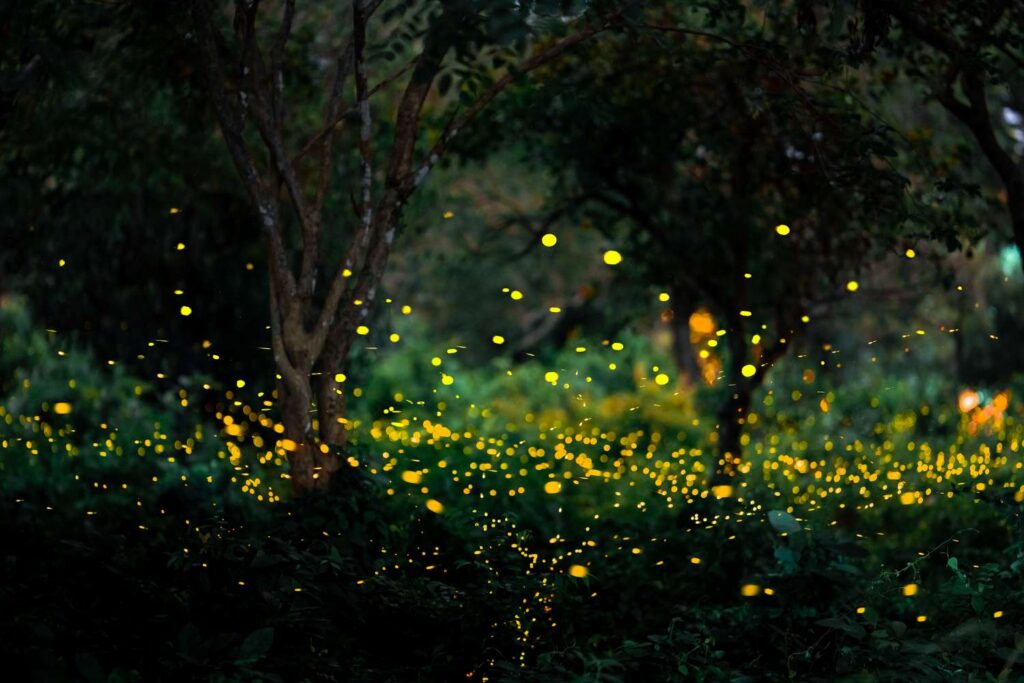
Many of us remember seeing fireflies blink in the dark on a warm summer night. It felt like magic, but in many parts of the world, fewer and fewer people get to see it now. Scientists say the main reason is simple. Our nights are no longer dark enough.
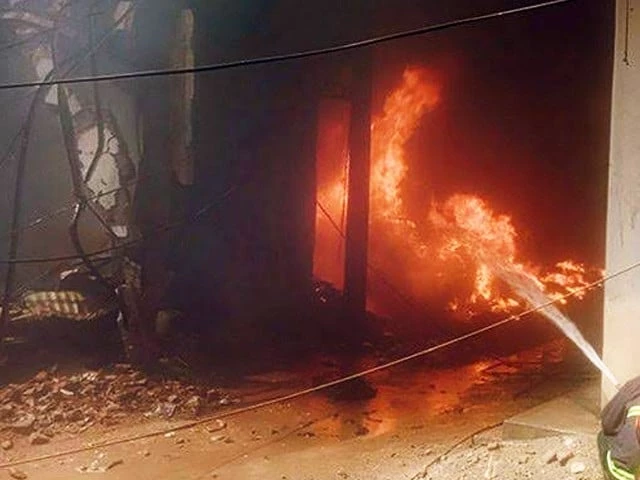
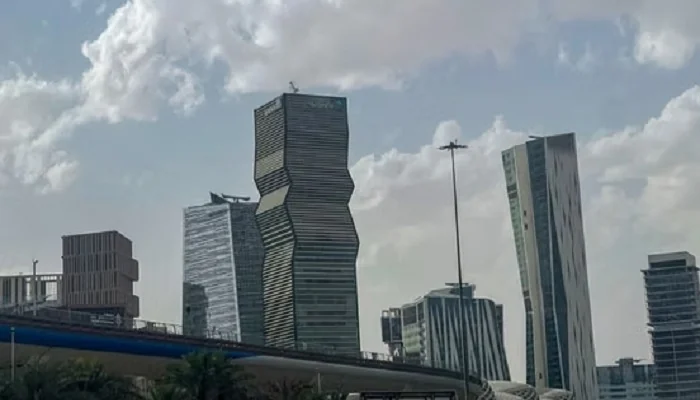
Over the last hundred years, we have filled the night with light. Street lamps, buildings, car headlights and phone screens all add to it. For us, this light feels useful and safe. For fireflies, it is more than just a problem. There are more than 2,000 kinds of fireflies in the world, and they are actually a type of beetle. Many of them depend on darkness to survive.
Some people call them lightning bugs, and others know the wingless, glowing females as glow-worms. Whatever name we use, the story is the same in many countries. People notice fewer of them each year, especially in and around towns and cities. Scientists have now spent years studying why, and their findings point mostly to two things: too much light at night, and the loss of the places fireflies live.
Fireflies use their glow to talk to each other. A male flashes a signal, and a female answers with her own. This is how they find a mate. When there is too much light around, those flashes are hard to see. It is like trying to have a quiet chat in a noisy room.
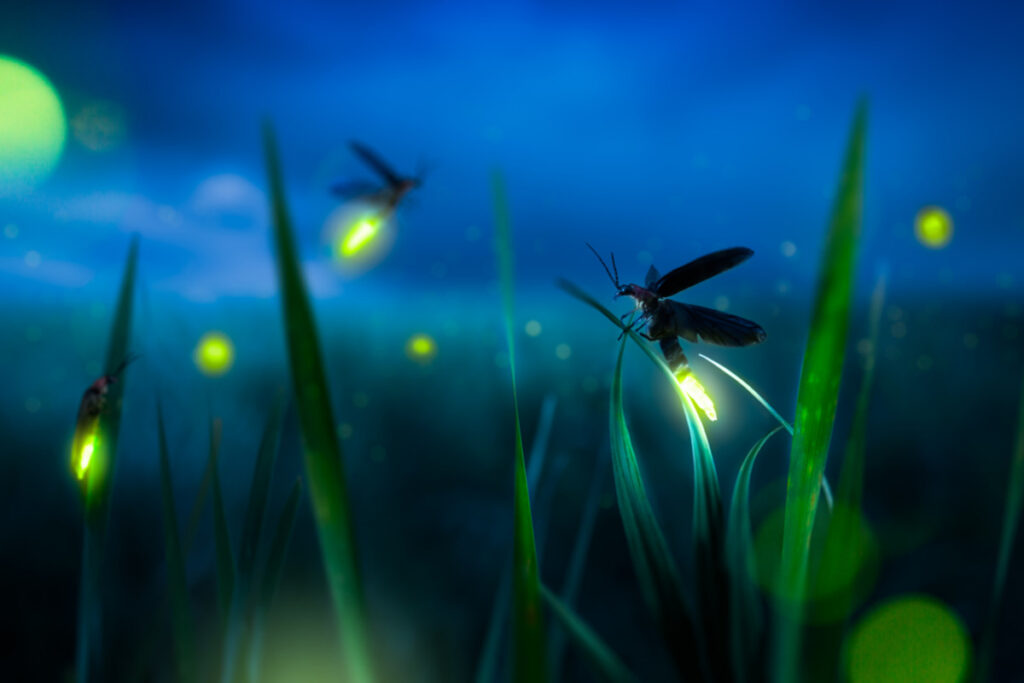
Scientists tested this in the field. They looked at a common glow-worm, Lampyris noctiluca. Even a very small amount of white LED light, between 0.025 and 7 lux, made it much harder for males to find females. (Lux is just a way to measure how bright light is.) With another firefly, Photinus greeni, just 5 lux was enough to stop males from going towards a fake female they had set up.
Females are affected the most. They usually sit on the ground and look up at the sky for male flashes, so light from above distracts them a lot. When researchers added artificial light, the number of females answering fell to about one tenth of normal in one species, Photinus obscurellus. The few that did answer gave simple, weak signals. Males also flashed less often in several other species.
Other firefly species showed the same pattern. In Photinus pyralis, Photuris versicolor and Photinus obscurellus, males gave fewer flash patterns per minute when the night was lit up. Females, meanwhile, often switched from a rich, multi-flash pattern to one plain flash, which is a much weaker way to say “Over here”.
The results were even stronger when it came to mating. In a lab test, 30 lux of light stopped pairs from mating at all, even when they were right next to each other. Outdoors, 5 lux was enough to lower the number of pairs that mated.
Glowing until they are worn out
Female glow-worms do not eat once they are adults. They live on the energy they saved up earlier. In places with a lot of light, scientists saw unmated females keep glowing for up to 24 nights in a row, waiting for a male who never came. All that glowing uses up their energy. Some even use their own eggs for fuel. In the end, they live for a shorter time and have fewer babies.
Not only adults, but larvae suffer too. They live on the ground and hunt small animals for food. When bright light hits them, many of them freeze or crawl away to find darkness. Those found right under street lamps often cannot move at all. That makes it easy for them to starve or get stepped on, and it stops them from reaching better places to live. In other words, light does not only harm the adults that glow. It harms the young ones that never glow at all.
Light can cause quieter harm as well. Over time, it may upset their body clocks and hormones and slow their growth. This can make them come out at the wrong time of year, when there are fewer mates and less food. Scientists also found that long hours of light can slow down how a larva grows, put off its development and change how much weight it puts on before winter.
Each of these small changes may not look like much alone, but together they can make a whole local group of fireflies weaker year after year.
Cutting down forests is another big danger. Scientists say it is the most common threat to fireflies. In the Atlantic Forest in Brazil, it affects more than half of the area where a firefly called Amydetes fastigiata could live. When trees disappear, so do the damp, shady spots where fireflies rest, eat and lay eggs. Without that moisture and shelter, small groups of fireflies can die out completely in a particular spot.
Growing cities cause trouble too. Roads, buildings, noise and heat all make life harder for wildlife, and as cities spread, they get closer to nature. The edges where a town meets a forest become crowded and noisy, and the wildlife living there has less room to move. Cities are also warmer than the countryside, which adds another stress for insects that like cool, damp, dark places.
You might think protected areas, like national parks, would keep fireflies safe. They do help. They stop people from cutting trees or building inside them. But they cannot stop light. The glow from a city can travel many kilometers and shine into a forest far away. So even in a protected place, the sky may not be dark enough, and that leaves fireflies with fewer safe places to gather and breed.
How does a firefly glow?
The glow comes from a clever bit of chemistry inside the firefly’s body. A special helper called luciferase mixes a substance named luciferin with oxygen and ATP, which is the energy that all living cells use.
When these come together, a chain of small reactions takes place. At the end, a tiny bit of light is let out, usually a yellow-green color. In a test tube, this light shines brightly for a moment and then fades quickly, because leftover chemicals block the helper. A living firefly avoids this problem. It has another substance, called coenzyme A, that clears those chemicals out of the way so the glow can carry on.
If you want a slightly closer look, the process happens in a few steps. First, the luciferin is switched on by attaching a small piece of ATP to it. Next, oxygen joins in, and a tight, unstable ring-shaped molecule forms for a split second. That ring quickly breaks apart and lets out a little carbon dioxide.
What is left over is a molecule full of extra energy, and it gets rid of that energy by giving off a single particle of light. That is the flash we see. The whole thing is so well tuned that fireflies waste very little energy as heat, which is why their light feels cool to the touch.
Read More: World Wildlife Day 2025: Investing in Conservation
The good news is that there are easy things we can do. We can save the forests that are left, and we can use less outdoor light. Turning off lights we do not need helps. So does pointing lamps downwards instead of up at the sky, and keeping lights away from parks, trails and rivers.
Ordinary people can help too. At home, you can use warm, dim bulbs outside, switch on lights only when you need them, and close your curtains at night so less light spills out. Towns and park managers can add covers to street lamps so the light shines down on the road and not up into the sky. Anyone who lives near a forest, a stream or a field can also try leaving a patch of garden a bit wild, because long grass and fallen leaves give young fireflies a place to hide and feed.
Bigger changes need bigger decisions. Since fireflies need dark places that connect to each other, towns and planners could try to keep strips of dark land between forests, fields and streams. Cutting down less forest matters just as much as dimming the lights, because a firefly with no trees and no darkness has nowhere left to go.
Scientists say even a small amount of light can decide whether fireflies are able to find a mate and have young ones. So the lights we choose to switch on, or off, matter more than we think. Keeping our nights dark may be one of the simplest ways to keep fireflies glowing for years to come.
Baqir Mahdi
Baqir Mahdi is a final year Zoology undergraduate at Quaid-i-Azam University, Islamabad. He takes interest in wildlife ecology and conservation.