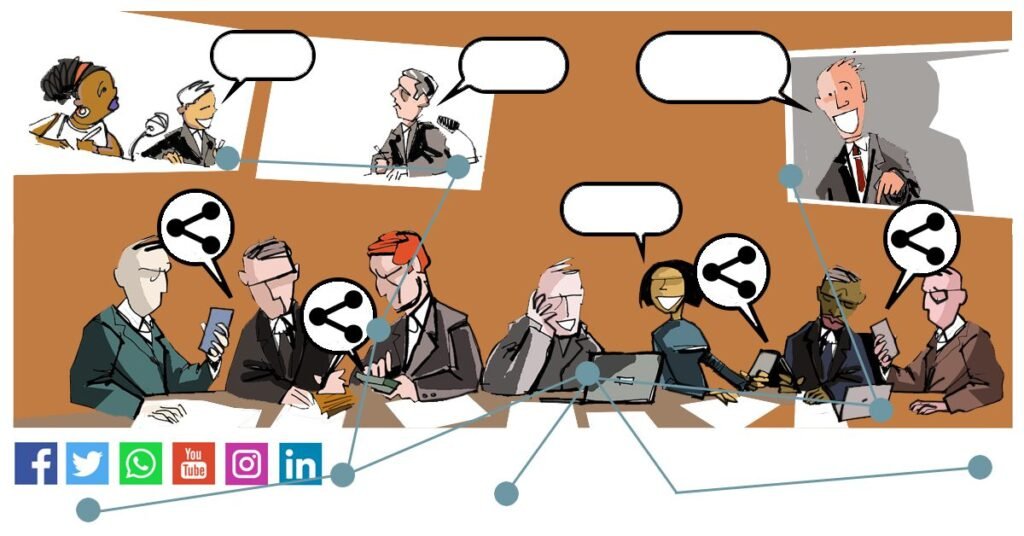
Diplomacy, by design, used to move slowly, speak carefully, and reveal as little as necessary as it navigated the complex web of geopolitics and international relations. The system was built on rooms without cameras, language without clarity and signals that required interpretation and thoughtful consideration rather than reaction.
It functioned, for the most part, like a controlled environment where filters and institutional polish kept the message just ambiguous enough to leave room for negotiation.. The point never was to say everything, or be blunt and instantaneous. Diplomacy was never meant to be loud. The point was to say just enough, to the right people, at the right time, and leave the rest to calculation.
That system served the international community well. Although it still exists, and still produces communiqués, still drafts statements, still sends diplomats across continents to negotiate frameworks that take months to assemble and minutes to collapse. But alongside it another system has emerged. It is faster, louder, less disciplined, and impossible to ignore.
It lives not in embassies, but on timelines. The architect, for the most part, is the current USA president Donald Trump and his social media handle on Truth Social. This unconventional communication style is spearheading the shifting architecture of diplomacy.
The movement is away from institutions and toward individuals, away from process and toward immediacy, away from negotiation as a controlled exchange and toward diplomacy as a public performance. It is, in its essence, the rise of personalized digital statecraft, where the channel is no longer neutral, and the message is no longer filtered.
It appeared as a habit. A tweet here, a post there, a leader bypassing the script to speak directly to an audience that was no longer limited to their own electorate. It mostly started as ramblings and commentary of influential people on twitter, some of whom later became part of administration of the USA.
Read More: The Importance of Honorary Consuls in Pakistan’s Diplomacy
Over time, the exception became the method. blurred the boundary between personal expression and state signaling. Trump’s posts, not memos or institutional frameworks, now set the terms of US foreign policy, trade relationships, and tariff barriers.
In the traditional model, diplomacy is mediated, thoughtful and deliberate. Foreign ministries draft positions, advisors refine language, and statements pass through layers of scrutiny before they reach the public domain. The friction ensures coherence.
It protects against miscalculation. It allows a state to speak with one voice even when it contains many competing interests. Social media removes that friction entirely. A message can now be drafted, published, and consumed globally within minutes, without institutional alignment, without strategic calibration, and often without the benefit of reconsideration.
A post is not a communiqué, was never supposed to be, but it is read like one and more importantly continues to run the government. This is where the nature of the message begins to change. A sentence written for a domestic audience becomes a signal to allies, adversaries, and markets simultaneously.
A phrase intended as rhetoric begins to function as policy indication. In this environment, the distinction between official and unofficial communication collapses, not because the state has formally redefined it, but because the audience has already interpreted it that way.
Read More: Political Folklore and the Power of Symbols: How Culture Shapes Diplomacy
The first shift is the quiet erosion of institutional diplomacy. When leaders communicate directly, institutions do not disappear, but they are displaced. Ministries become interpreters of intent rather than authors of it. Diplomats become responders to signals they did not craft.
The coherence that once defined foreign policy begins to fragment, not necessarily because the strategy has changed, but because the channels through which it is expressed no longer enforce consistency.
The second shift is volatility. Traditional diplomacy is slow not out of incompetence, but out of necessity. It allows space for recalibration, for backchannel correction, for ambiguity that prevents escalation. Digital platforms remove that space. They compress time. They reward immediacy.
A statement that might once have been softened, delayed, or withdrawn now travels instantly, triggering reactions before reflection has a chance to intervene. Markets move. Alliances tense. Adversaries respond. All of it happens in real time, often before the state itself has fully decided what it meant to say.
The third shift is personalization. Foreign policy, which has historically been an institutional function, begins to take on the characteristics of the individual who communicates it. Tone, temperament, and impulse start to matter as much as doctrine.
Read More: History of Diplomacy: From Ancient Times to Modern Era
The stability of diplomatic signaling becomes tied not to institutional continuity, but to personal consistency, which is a far less reliable variable. What was once the language of the state becomes, increasingly, the language of the leader.
Leaders across regions have adopted variations of the same approach, using digital platforms to bypass intermediaries, shape narratives, and engage directly with both domestic and international audiences. Diplomacy, in this sense, is no longer conducted solely between states.
It is now performed in front of publics, mediated by platforms, and amplified by algorithms that reward loud voices over caution and speed over substance.
There are, without a doubt, advantages to this system. It promotes direct engagement, rapid response, and a level of transparency that traditional diplomacy rarely offered or provided. It reduces the distance between decision makers and citizens. It democratizes, at least superficially, the flow of information.
But these advantages has a steep structural cost. The same immediacy that enables direct communication also amplifies miscalculation and reactionary narratives. The same visibility that increases engagement also increases pressure to perform. The same accessibility that enhances communication also weakens discipline.
The question is no longer whether platforms like Truth Social, or any of their equivalents, will become tools of diplomacy. They already are cementing their place. The question now is whether states can integrate them into the existing framework without allowing them to override it.
Diplomacy requires more than communication. It requires coherence, restraint, and the ability to operate within systems that outlast individuals. The danger is not that diplomacy becomes digital. It is that it becomes impulsive. And systems built on impulse rarely hold when the stakes move beyond the screen.
*The views presented in this article are the authors’ own and do not necessarily reflect the views of The Diplomatic Insight.

Abdur Rehman Iqbal
Abdur Rehman Iqbal is a researcher and writer focused on geopolitics, political economy, and global development. With a background in economics and business studies, including graduation from UNIFE and training at CiMET, he explores the intersection of policy, strategy, and structural change, particularly in Asia and Europe, and the evolving dynamics of international relations.He can be reached at:contact.ariqbal@gmail.com