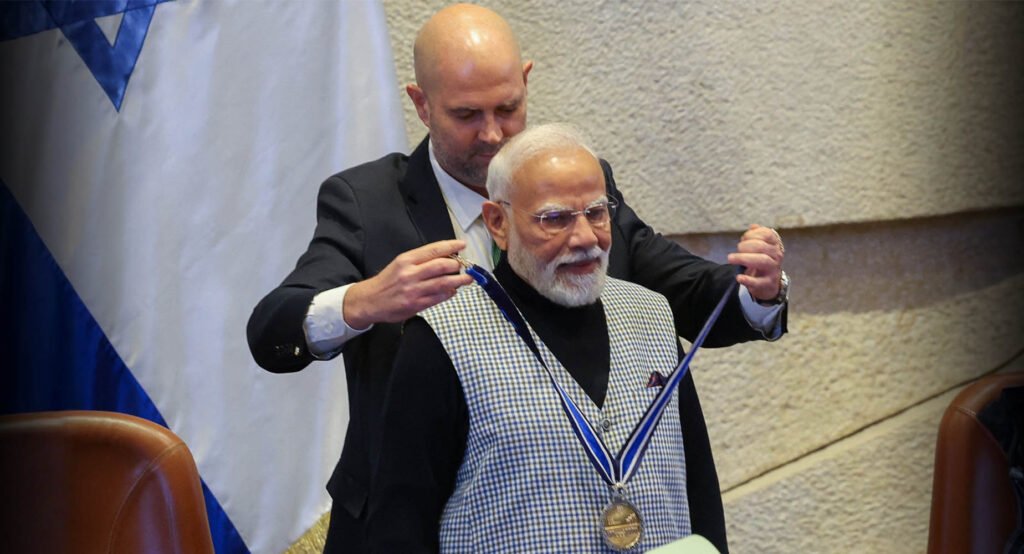
Indian Prime Minister Narendra Modi returned from an official visit to Israel last week, and just days before Israel launched joint and coordinated attacks on Iran, alongside the United States. The visit covered defense contracts worth $10 billion. The partnership has entered a new phase, “Special Strategic Partnership for Peace, Innovation, and Prosperity,” as it has been named in the official discourse.
The strategic bond over the past three decades has changed from small-scale procurement to more intense technological cooperation in missiles, drones, radar, and air defense architecture. This explainer touches on the scale of procurement, India’s degree of dependence, and how this is being used in its military operations.
The visit was Modi’s second to Israel after 2017. In a speech to the Knesset, Modi referred to Israel as a “brother country” and mentioned the strong civilizational connection between the two nations going far back as 2,000 years. Prime Minister Benjamin Netanyahu called Modi more than a friend.
These statements highlight the close strategic relationship, especially with these two leaders being in power. Israel is one of the largest arms suppliers to India today, while India is Israel’s largest defense purchaser. Additionally, in the recent visit, both diversified their partnership from military-focused to economic integration; initiating negotiations on a Free Trade Agreement (FTA).
In 1950, India officially recognized Israel, but did not open full diplomatic relations until 1992. Nevertheless, following the fall of the Soviet Union and India’s economic liberalization, it reoriented its strategies. It took a significant strategic turn after Israel allegedly provided India with precision munitions and surveillance gear on short notice during the 1999 Kargil conflict with Pakistan. The episode created trust and established Israel as a reliable defense supplier in times of crisis.
Since the beginning of the 2000s, cooperation has been growing gradually. The bond shifted from procurement to joint research and development between the Defense Research and Development Organization (DRDO) of India and Israeli defense companies. Israel has emerged as a significant provider of high-tech military systems to India.
Read More: Modi Addresses Israel’s Parliament as Tensions Hover Over Middle East
As the date of Stockholm International Peace Research Institute (SIPRI) shows, Israel has been among the three biggest arms suppliers to India in the last two decades. In the years 2020-2024 alone, Israeli defense sales to India reached approximately 20 billion dollars, a major portion of Israel’s global arms exports.
Defense imports into India have increased manifold between 2015 and 2024, with Israeli suppliers dominating in air defense radars, unmanned systems, and missile-related technologies, although their share remains a fraction of overall Indian defense imports. It also includes surveillance sensors and loitering munitions.
Indian companies are co-producing systems, such as the Barak-8 surface-to-air missile system, and sourcing advanced Israeli-origin UAVs and loitering munitions to compensate for capabilities not yet achieved through local production. The “Make in India” initiative of India, however, is focusing more on joint production as a way of decreasing the vulnerability to imports in the long run.
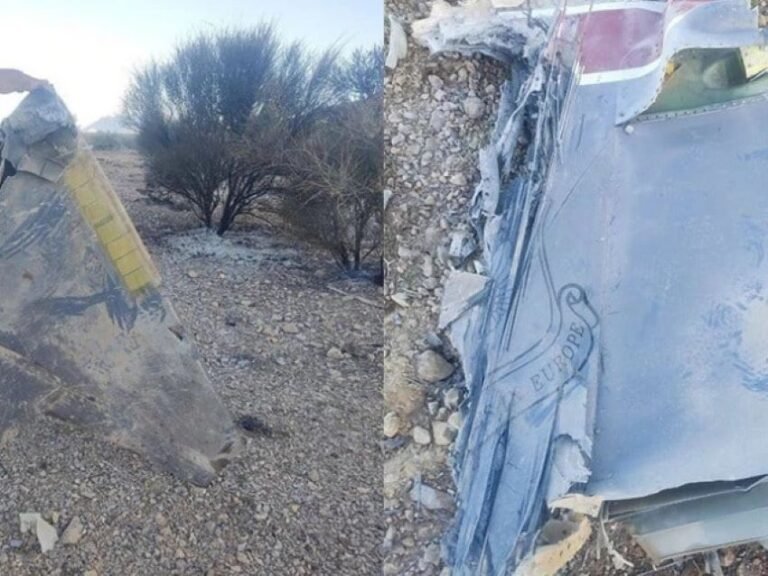
This association has been put to practice in actual conflict settings. India incorporated drones and precision systems of Israeli origin especially on the India-Pakistan line of control and in Jammu and Kashmir. Most noticeably, in the May 2025 India-Pakistan faceoff, Indian forces used loitering munitions, Harop, and UAVs of Israeli origin to attack Pakistani air defense systems.
The UAVs of Israeli origin are not new in Kashmir surveillance and are used mainly to collect intelligence, reconnaissance, and track movement across the borders. The loitering munitions and precision systems are credited with boosting the ability of the Indian to have rapid targeting capabilities of military infrastructure across the Line of Control. Although official information remains limited and confidential, open-source defense coverage indicates that such systems have been involved in cross-border deterrence signaling.
The nature of what was initially intended as a transactional defense trade is now developing into institutional depth. The facts and figures signal that India and Israel will no longer be buyers and suppliers but strategic allies intertwined by security concerns and technological needs.

Adeela Ahmed
Adeela Ahmed is a Research Fellow at the Centre for Security, Strategy Policy Research (CSSPR), University of Lahore, Pakistan. She can be reached at adeelaahmed6@gmail.com