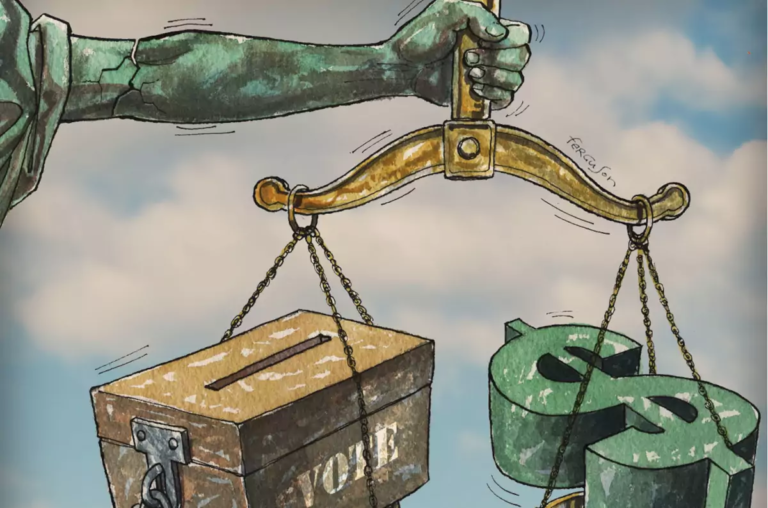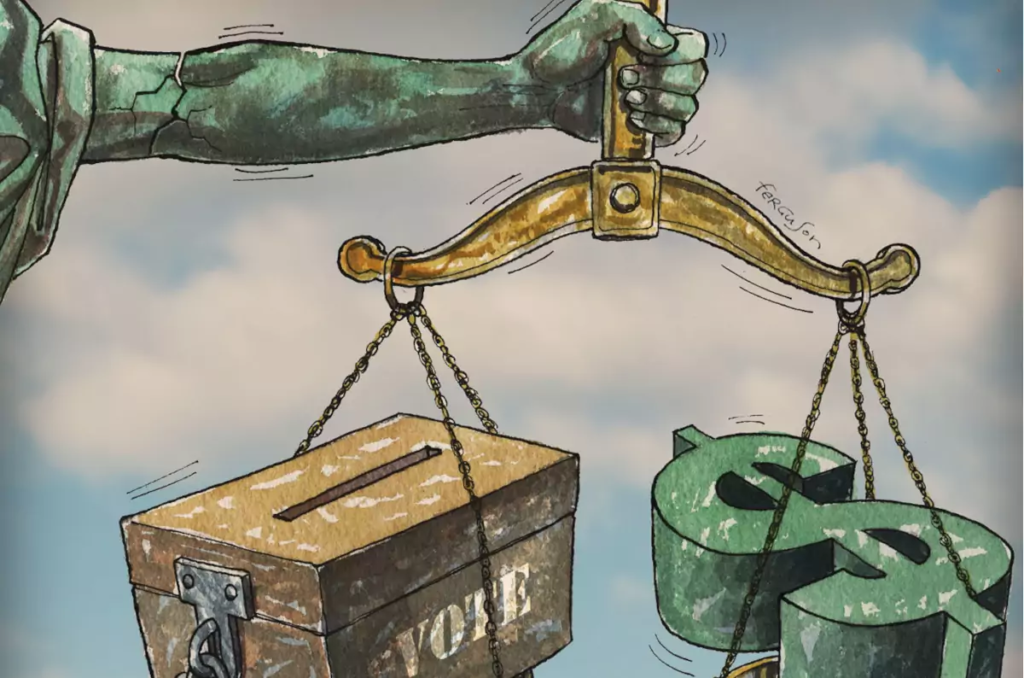
At a time when global geopolitical tensions are rising from conflicts in the Middle East to strategic competition between major powers an old question has returned to the center of political debate: can capitalism and democracy truly coexist? This question is not new. It was explored by the Austrian economist Joseph Schumpeter in his seminal 1942 work Capitalism, Socialism and Democracy.
Schumpeter did not argue that the two systems were entirely incompatible, but he warned of a deep structural tension between them one that is becoming increasingly visible in today’s uncertain global environment. Democracy, by design, responds to public demands. Governments must win elections, and voters often favor policies that provide immediate economic relief subsidies, welfare programs and protection from economic shocks.
Capitalism, by contrast, depends on long-term investment, fiscal discipline and market efficiency, often requiring short-term sacrifices for future gains. This tension becomes more pronounced during periods of geopolitical instability. Recent conflicts have disrupted energy markets, increased defense spending and forced governments to intervene more actively in their economies.
In many cases, democratic pressures have pushed states to prioritize short-term economic protection over long-term sustainability.
The United States provides a clear example. Federal spending has risen to approximately $6–7 trillion annually, or about a quarter of GDP, with a large share directed towards entitlement programs. At the same time, rising geopolitical competition particularly with China has led to increased defense spending and industrial policy aimed at securing supply chains and technological leadership.
Read More: Realpolitik: A Challenge to the Post-Cold War Liberal Economic Order
This dual pressure welfare at home and competition abroad illustrates how democracy and capitalism can pull in different directions. Yet this does not signal the collapse of capitalism. Instead, it reflects the evolution of a mixed economic model, where markets coexist with state intervention. In Europe, countries such as Germany and Sweden have long balanced strong welfare systems with competitive economies, demonstrating that coexistence is possible when managed effectively.
However, maintaining this balance is becoming more difficult. Geopolitical fragmentation, supply chain disruptions and rising economic nationalism are placing additional strain on global economic systems. Governments are increasingly intervening in markets through subsidies, tariffs and industrial policies to protect national interests. Beyond the West, alternative models further complicate the picture.
China has pursued rapid economic growth under a non-democratic system, combining state control with market mechanisms. Its rise has challenged the long-held assumption that capitalism and democracy must go hand in hand. Meanwhile, India represents a different path a large democracy attempting to sustain economic growth while managing social and political pressures.
Its experience highlights both the possibilities and the difficulties of aligning democratic governance with market-driven development. For countries like Pakistan, the challenge is even more acute. Economic vulnerability, reliance on external financing and exposure to global shocks make it difficult to balance growth with social protection. At the same time, political pressures often demand immediate economic relief, limiting the scope for long-term structural reforms.
Read More: Shakespeare’s Lesson in Economics
The real challenge, therefore, is not choosing between capitalism and democracy, but managing the tension between short-term political incentives and long-term economic sustainability, especially in an era of geopolitical uncertainty.
Schumpeter’s insight remains relevant not because it predicts inevitable conflict, but because it highlights the fragile equilibrium required for both systems to function. In today’s world shaped by strategic rivalry, economic fragmentation and shifting power dynamics maintaining this balance has become even more complex.
In the end, the survival of both capitalism and democracy depends on the ability of states to adapt to changing global realities while managing internal pressures. Where this balance fails, economic instability and political discontent often follow. In an increasingly uncertain world, the relationship between capitalism and democracy is not breaking down but it is being tested as never before.

Shafqat Ali
Shafqat Ali is a Master’s student of Political Science at Universitas Airlangga, Surabaya, Indonesia. He can be reached at shafqat.ali-2024@fisip.unair.ac.id