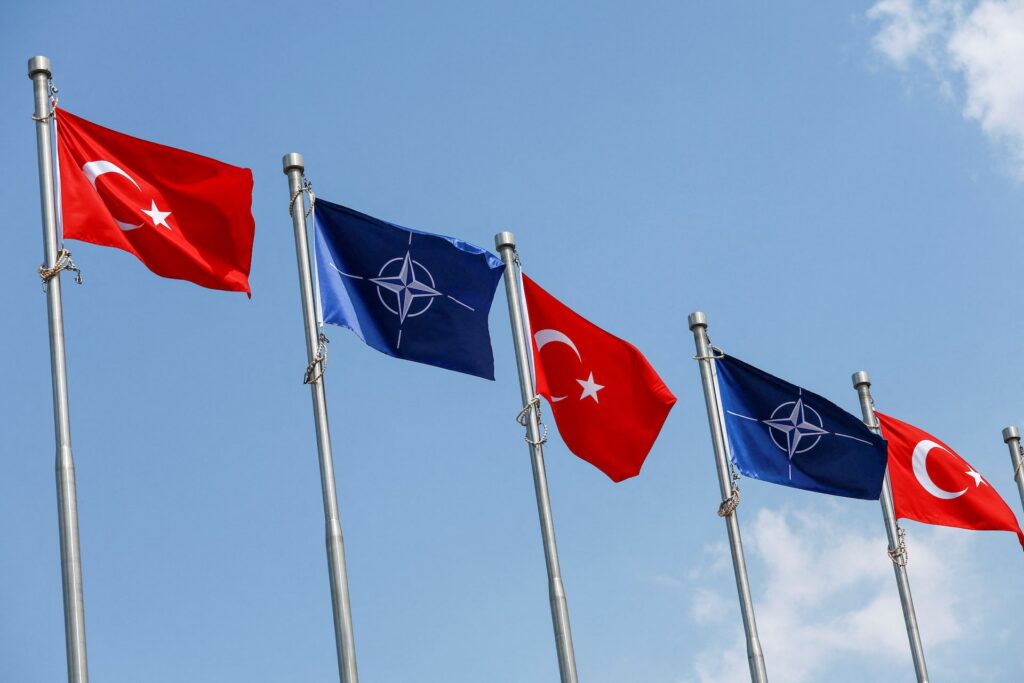
The world’s most powerful military alliance has come together in Ankara, Turkiye, for one of its most difficult and consequential summits in recent history.
The leaders of all 32 member states are gathered in Ankara for the NATO annual summit on July 7-8. Turkish President Recep Tayyip Erdogan is hosting the summit at the Bestepe Presidential Compound. This is the second time Turkiye is hosting a NATO summit; the first was in Istanbul in 2004.
All 32 member countries are being represented by heads of state and government while the single most-consequential name among all is the United States President, Donald Trump, whose presence alone makes it one of the most closely watched event.
Ukrainian President Volodymyr Zelenskyy is also attending the summit, even though Ukraine is not a member state, reflecting the alliance’s deep commitment to and involvement with Kyiv.
Leaders of Australia, Japan, New Zealand, and South Korea are also attending as NATO partner countries while Foreign Ministers from Gulf States, including Bahrain, Kuwait, Qatar, and the UAE, are participating in separate discussions on the sidelines.
Read More: Netanyahu Opposes US Sale of F-35 Jets to Turkiye
NATO Secretary General has outlined three core priorities for the summit. First, defense spending is turning last year’s promises into a real budget and concrete plans. The second is defense industrial production, not just spending more, but actually building more weapons, missiles, drones, and military equipment. The third one is support for Ukraine, keeping military assistance to Kyiv going in a consistent and long-term way.
The summit agenda builds on the commitment member states made at last year’s summit in The Hague to increase annual defense spending to 5% of their GDP by 2035, up from the 2% benchmark set in 2014.
Trump got what he wanted from NATO at last year’s summit. This time, his mission is to enforce those pledges. Before arriving in Turkiye, Trump complained about how much the US spends on defense compared to other countries.
So the historic guarantor of the transatlantic security is now here to check whether the allies are actually delivering on their promises.
The good news for the US is that the European allies and Canada have increased their total defense spending by almost 16% from 2024 to 2025 and by 19% the year before. NATO General Secretary Rutte has been calling this the “Trump Trillion,” the total increase in European and Canadian defense spending since 2017 and has been using it to keep Trump satisfied.
Read More: Türkiye Accuses NATO Allies of Betraying Alliance Spirit with Defense Embargoes
Trump’s behavior has rattled European allies on multiple forums. His repeated interest in acquiring Greenland, part of Denmark, which is one of NATO’s founding members, has unsettled many allies. His administration’s plans to reduce US troops in Europe have raised questions about how committed Washington really is to European security.
The biggest wound going into this summit is the Iran war; when Trump asked European allies for help in the war to be more specific. Several key members refused. France openly criticized the war against Iran. Spain refused to allow US military operations from its bases. This split has left the alliance wounded, and Ankara is the place where leaders will have to deal with that reality face to face.
Trump even told a British newspaper in April that he was “never swayed by NATO” and called it a “paper tiger” and refused to rule out withdrawing from the alliance altogether.
Despite all the tensions, NATO is expected to come together on the Ukraine issue. Member states are set to pledge around $80 billion in military aid to Ukraine for 2026, with similar levels promised in 2027.
Zelenskyy is expected to meet Trump directly at the summit, asking for more US-made air defense interceptors after Russian strikes killed at least 20 Ukrainians just days before the summit opened.
Running alongside the leaders’ summit today, Tuesday, is something that has received less attention but may ultimately matter just as much – the NATO Summit Defense Industry Forum (NSDIF26); described by the Secretary General as the most comprehensive and largest defense industrial gathering in NATO’s history.
Read More: Rubio Says Ankara Summit Must Confront Trump’s Frustration with NATO Allies
The forum will bring together senior NATO officials, allied governments, defense companies, startups, and investors responsible for driving forward industry and innovation to discuss the most pressing issues. The agenda includes a major announcement, described as a “Big Reveal,” as well as sessions on joint weapons production, critical raw materials for defense, and NATO’s growing use of drones.
The message behind the forum is simple; that NATO needs to actually manufacture weapons, missiles, and military systems. Agreements worth tens of billions of dollars in defense contracts are expected to be announced during the forum.
Turkiye was deliberately chosen as a host for the forum. Rutte praised the country’s defense industry, home to around 3000 defense companies including well-known firms like ASELSAN and Baykar, calling it a perfect showcase for NATO’s industrial strength.
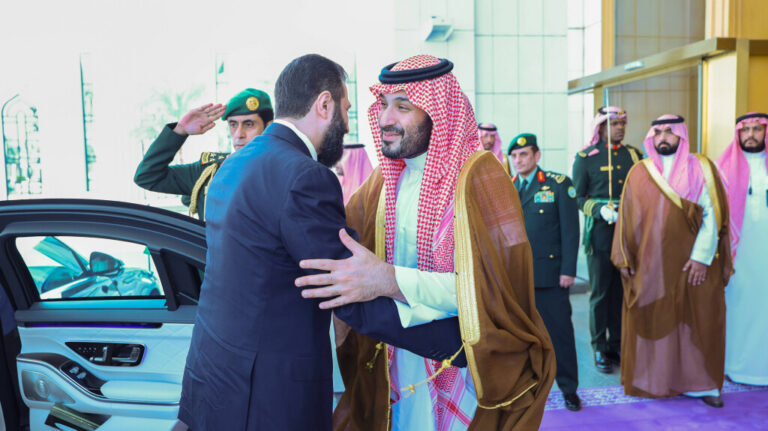
Additionally, some of the important meetings are expected on the sidelines of the forum. Trump will sit down with Turkish President Erdogan for bilateral talks. He will also meet Zelenskyy and Syrian President Ahmed-al-Sharaa. Trump has no other bilateral meetings planned with any other NATO leaders, which tells us where his priorities are.
The big question is, can NATO hold together? If we look at the European countries, they are now genuinely spending more on defense and taking threats more seriously than they did a decade ago. The Defense Industry Forum is evidence that NATO is not just talking about rearmament; it is trying to industrialize it.
But at the same time, the alliance is divided over Greenland and Iran, also over how much to trust Washington’s long-term commitments. These are not small disagreements, but the fundamental questions about what the alliance is and who it is for.
Whether Ankara proves to be a summit of unity or a summit that exposes deeper cracks, that is the question the next two days might subtly answer.