New Delhi (TDI): India faced a difficult year in 2025, marked by military, economic, and diplomatic challenges, according to a review by The Financial Times.
The report characterized the past year as a “year of crisis,” highlighting a historic military setback against Pakistan, a declining currency, and increasing economic uncertainty.
The review notes that India’s inability to maintain full strategic autonomy forced it to simultaneously manage delicate relations with the United States, China, and Russia.
Economic challenges compounded the situation. The long-awaited US-India trade agreement was repeatedly postponed, while the imposition of American tariffs added extra pressure on New Delhi. Limited progress in implementing GST reforms further constrained economic growth. Meanwhile, the Indian rupee continued its downward trend, ending the year at an all-time low against the US dollar.
Read More: Congress Demands Modi Clarify China’s Claim of Mediating Pak-India Truce
Tensions with Pakistan escalated earlier in the year following an attack on tourists in the Pahalgam area of IIOJK. New Delhi alleged Pakistani involvement, though Islamabad denied any role and offered to participate in a neutral investigation. The attack resulted in 26 deaths.
The military confrontation that followed became the most serious clash between the two countries in decades. Pakistan claimed a major victory, downing seven Indian fighter jets, including three Rafale jets, and numerous drones. After 87 hours of fighting, the standoff ended on May 10 with a US-brokered ceasefire.
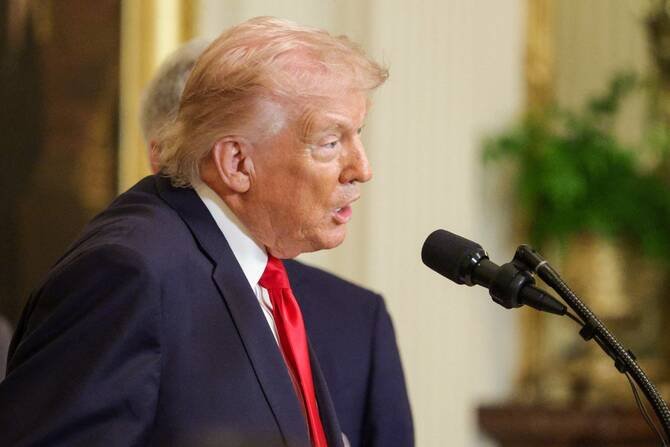
Pakistan’s success in the skirmishes helped strengthen its ties with Washington. In the months after the ceasefire, US President Donald Trump openly strengthened his rapport with Pakistan’s top military officials, which many viewed as a diplomatic setback for India.
The stalled US-India trade agreement attracted significant attention throughout 2025. Following Trump’s election, Indian officials were initially optimistic about securing a favorable deal. Prime Minister Narendra Modi visited Washington in February, raising hopes of early progress.
Read More: Inside the Chamber of Situations: Is Modi’s Crisis Control Model Collapsing?
Negotiations were expected to conclude in May, then June, and later July, but talks repeatedly stalled. In August, Trump implemented reciprocal tariffs and later imposed an additional 25% tariff on India in response to its purchases of Russian oil. Commerce Secretary Rajesh Agarwal stated that India remained “positively engaged” in discussions with the US, though a deal failed to materialize. By late summer, the Indian government shifted its focus toward domestic economic growth.
The Indian rupee suffered as a result, losing 6% in 2025 and reaching 91.14 against the US dollar, a historic low.
India’s foreign policy faced further challenges in Asia. Ties with Bangladesh deteriorated following the ouster of Prime Minister Sheikh Hasina, who fled amid a pro-democracy uprising and sought refuge in India.
Relations with China also failed to improve despite high-profile diplomatic efforts. Modi visited Beijing for the first time in seven years, meeting President Xi Jinping. Both leaders emphasized “cooperation based on mutual respect, mutual interest, and mutual sensitivity,” yet suspicion remains on both sides.