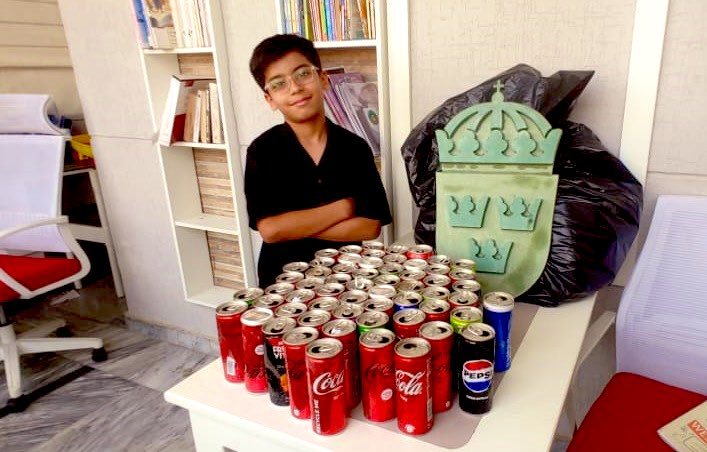
Islamabad (TDI): On the International Day of Zero Waste, 9-year-old Muaaz Darrak Khan from Pakistan turned discarded cans into a beautiful Swedish emblem.
The Swedish Embassy in Pakistan highlighted his project as a powerful “symbol of creativity, responsibility and hope.” It described the idea as a great example of how small individual efforts can inspire bigger change.
The Swedish Embassy, in a post on social platform X, said “On International Day of Zero Waste, a reminder that small actions matter.”
It encourages similar initiatives across communities to support global zero waste goals and inspire collective environmental responsibility.
On International Day of Zero Waste, a reminder that small actions matter.
9-year-old Muaaz Darrak Khan turned discarded cans into a beautiful Swedish emblem and this is a symbol of creativity, responsibility and hope.
This is a great example of a small act & big inspiration. 🇸🇪🌍 pic.twitter.com/agzXNhgFNh— Sweden in Pakistan (@SwedeninPK) March 30, 2026
Muaaz Darrak Khan collected used cans and crafted them into the Swedish flag emblem. The project demonstrates how young individuals can contribute to environmental awareness through simple recycling.
The boy’s initiative received widespread recognition from the Swedish Embassy in Pakistan. It shows the potential of youth-led projects in fostering sustainability and cultural appreciation.
Pakistan and Sweden maintain strong people-to-people ties, including cooperation in education, innovation and sustainability. Such grassroots initiatives by Pakistani youth strengthen bilateral cultural and environmental links.
Pakistan is actively combating plastic pollution through initiatives like the National Plastic Action Partnership (NPAP), aiming for a 34% reduction in plastic waste by 2040.
These observances and diplomatic engagements reflect its focus on strong international partnerships. They also highlight its commitment to peace and stability.

Read More: How Zero Waste Cities Are Redefining Urban Sustainability
The International Day of Zero Waste was established by the United Nations General Assembly on 14 December 2022 and is observed globally on 30 March to promote sustainable consumption and production patterns.
The day encourages communities to reduce waste, reuse materials and adopt recycling practices to protect the environment. It aligns with the United Nations 2030 Agenda for Sustainable Development and calls for zero waste lifestyles worldwide.
The United Nations Environment Program (UNEP) organizes the observance to raise awareness about the environmental impact of waste and to support the transition to a circular economy.
The day also highlights the importance of community-level actions in tackling global waste challenges. Many countries including Pakistan use the occasion to launch awareness campaigns and showcase successful recycling projects by individuals and organizations.

Muhammad Usman Hashmi
Muhammad Usman Hashmi is a researcher in International Relations, focusing on climate diplomacy, global governance, and political economy in the Global South. He has contributed to policy dialogues with the Foreign Policy Community of Indonesia and serves as a Senior Research Fellow at the International Council on Human Rights, Peace and Politics. He is also associated with Rethinking Economics Islamabad, contributing to research on development and sustainability. He can be reached at musmanhashmi99@gmail.com