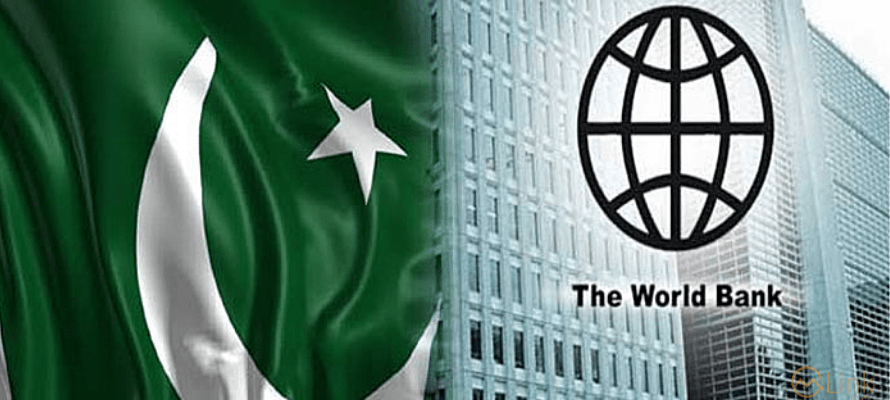
Islamabad (TDI): The World Bank has approved $700 million in funding for Pakistan as part of a multi-year effort to strengthen macroeconomic stability and improve public service delivery, officials said on Saturday.
The financing will come under the Public Resources for Inclusive Development — Multiphase Programmatic Approach (PRID-MPA), which could ultimately provide up to $1.35 billion in support. Of this allocation, $600 million is designated for federal programs, while $100 million will go to a provincial initiative in Sindh.
This latest approval follows a $47.9 million grant in August aimed at enhancing primary education in Punjab. Bolormaa Amgaabazar, the World Bank’s country director for Pakistan, highlighted the importance of mobilizing domestic resources and using them efficiently. She said the program will support more predictable funding for schools and clinics, fairer tax systems, stronger data-driven decision-making, and safeguard key social and climate initiatives.
Tobias Akhtar Haque, lead country economist for Pakistan at the World Bank, added that building strong fiscal foundations is crucial for restoring economic stability and improving institutional performance. “Through PRID-MPA, we are introducing a coordinated approach to reforms that expand fiscal space, boost investments in human capital and climate resilience, and strengthen revenue administration and budget execution,” he said.
At the federal level, the program will focus on raising domestic revenues equitably, improving budget planning, and strengthening statistical systems. Specific measures include tax policy and administration reforms, scaling up the Integrated Financial Management Information System with its e-procurement platform, targeted subsidy reforms, and enhancing the Pakistan Bureau of Statistics.
Read More: World Bank Delegation Explores Partnership Priorities with Pakistan’s Climate Minister
In Sindh, the initiative aims to increase provincial revenues, accelerate and streamline payments, and expand the use of data for policy decisions. Both federal and provincial components are expected to improve the delivery of services to schools and healthcare facilities, ensuring funds reach their intended targets efficiently.
Read More: World Bank Projects 3% GDP Growth for Pakistan in FY26
A recent IMF-World Bank report noted that fragmented regulation, opaque budgeting, and political influence have hampered investment and limited revenue collection, highlighting the need for the reforms supported by PRID-MPA.