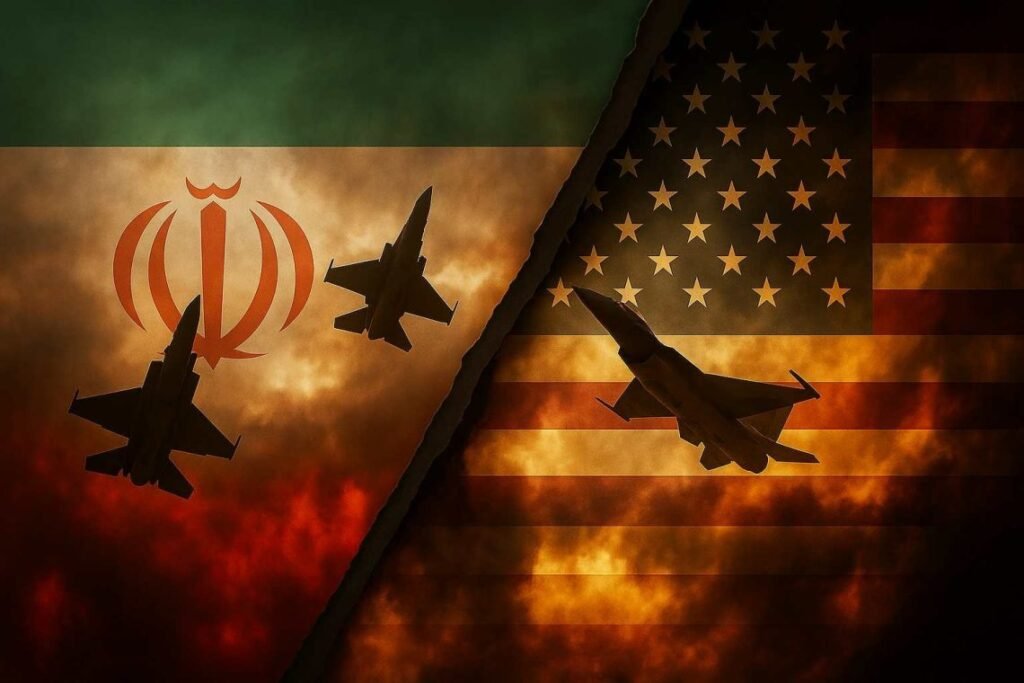
In early 2026, tensions escalated in the Persian Gulf amid reports of a large-scale US naval buildup aimed at pressuring Iran over its nuclear program and alleged domestic repression, raising fears of a high-stakes military confrontation. Negotiations to de-escalate the crisis are currently underway in Muscat between Washington and Tehran. Former President Donald Trump has warned Iran of severe consequences if a deal fails to materialize.
While Tehran has signaled conditional willingness to compromise on uranium enrichment levels in exchange for sanctions relief, a central point of contention remains its ballistic missile program, which Iranian officials describe as non-negotiable. The current Gulf crisis is not a prelude to war but a strategic contest in which Iran’s strategy centers on prolonging escalation while avoiding direct military confrontation, whereas the United States relies on rapid coercive pressure and overwhelming naval signaling to force strategic concessions. The logic behind this strategy is economics; it costs billions of dollars to the US in maintaining alert positioning in the Persian Gulf against Iran.
In late 2025, Iran was crumbling with widespread protests across the state due to alleged socioeconomic hardships amid currency devaluation. As unrest spread across all thirty-one provinces of Iran, the regime imposed a nationwide internet blackout, obscuring extreme violence against the protesters. The US-based Human Rights Activists News Agency (HRANA) reported that thousands of protesters have been killed since demonstrations started late last month.
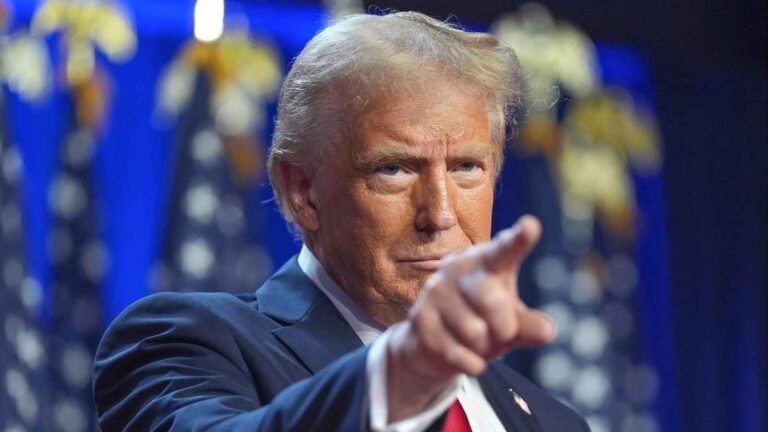
President Donald Trump threatened the Iranian government with intervention if protesters were killed; later, he backed away from an immediate attack. The Guardian says Trump’s remarks are the clearest sign yet that he may be preparing for military action against Tehran. The US has sent the Abraham Lincoln aircraft carrier to the Persian Gulf, accompanied by several Arleigh Burke-class destroyers armed with Tomahawk cruise missiles, offering substantial offensive capability.
Iran has threatened to strike US bases in the Middle East if it is attacked by US forces. Diplomacy is taking place in the shadow of missiles. US and Iranian diplomats held talks in Muscat last week in an effort to revive diplomacy over Tehran’s nuclear program after Trump amassed military forces in the region, raising fears of new military actions.
Read More: Iran Drafts Counterproposal as Trump Weighs Military Strike
The US-Iran conflict is best described as a zero-sum strategy in perception, where Washington’s revived ‘maximum pressure’ campaign—demanding total curbs on nuclear enrichment, ballistic missile capabilities, and support for proxies like Hamas and Hezbollah—is viewed in Tehran as an existential defeat that could dismantle the regime’s core defenses and regional influence. In contrast, Tehran’s prolongation of talks and intransigence on missiles is framed as a humiliating setback for American credibility and resolve.
The US is relying on the strategy of swift shift whereby building naval pressure coerces Iran to accept the Trump plan. In contrast to Iran, relying heavily on delaying the direct conflict and engaging US over negotiation, inflicting US with heavy economic loss because in the Persian Gulf, the cost to stand steady against Iran costs US over $6.5–9 million/day per CSG; the greater the stay, the higher will be the cost.
In the meeting between Netanyahu and Donald Trump, Israel demanded that the US put pressure on Iran on two more agendas: rolling back the missile program and disconnecting support for proxies like Hezbollah and Hamas. In the Middle East, Israel’s harmony has only the threat of Iran and its proxies. To deal with it, in 2025 they engaged in a 12-day war with Iran, and now this time they engaged the US to dismantle the missile program.
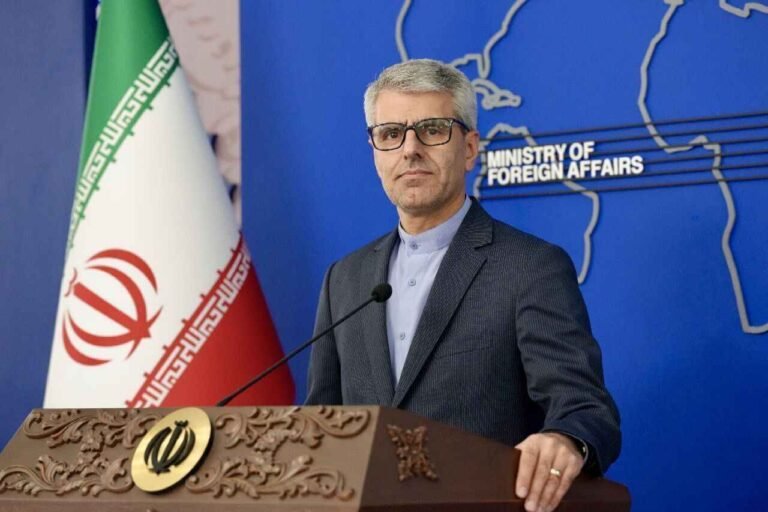
The demands of US to Iran seem to be taking Iran off the table, although the Iranian minister in an interview said IRAN is ready to consider compromises to reach a nuclear deal with the US if the Americans are willing to discuss lifting sanctions; the ball is in the Americans’ court. The question to roll back its ballistic missiles program, he said, is non-negotiable; it is demanding the surrender of national sovereignty.
“When we were attacked by Israelis and Americans, our missiles came to our rescue, so how can we accept depriving ourselves of our defensive capabilities?” Takht-Ravanchi stressed.
Read More: Will the US Attack Iran? High Risk of Military Action and Likely Targets
In the first round of negotiation mediated by Oman, the state secretary of the US said the negotiation with Iran is complicated, where the Iranian says they are willing to remove the nuclear enrichment at the cost of sanctions removal. Yet no final deal has been made between the two adversaries yet. US and Iranian officials are set to meet in Switzerland for a second round of talks.
Iran says the meeting will focus on its nuclear program and the potential lifting of economic sanctions imposed by the US Washington has previously said it wants to discuss other issues as well. Donald Trump has said he will be “indirectly” involved in the talks between Iran and the United States.
Certainly, the military and naval buildup of the US in the Persian Gulf can cause severe consequences, not just for Iran but for the whole region. Iran will attack US bases in the region, and if Iran enables the US in a prolonged period, it will inflict heavy economic and strategic losses on the US, which the US might not be willing to gain.
In conclusion, the US-Iran escalation is underway, rhetoric is rising, and threats are flying. Just one miscalculation can ignite the devastating war. Diplomacy is taking place in the shadow of missiles and rhetoric. War is not in the gain of any side; if this deal happens, it will enable the saving of thousands of lives and billions of dollars. Prolonged escalation is itself the strategy—not a failure of diplomacy.
*The views presented in this article are the author’s own and do not necessarily reflect the views of The Diplomatic Insight.

Syed Ibtisam ull Hassan Gillani
Syed Ibtisam ull Hassan Gillani is a scholar of International Relations. He is passionate about South Asian and Indo-Pacific geopolitics and defense studies. His academic work focuses on Pakistan’s emerging military industrial complex and its impacts on the country's strategic capabilities.