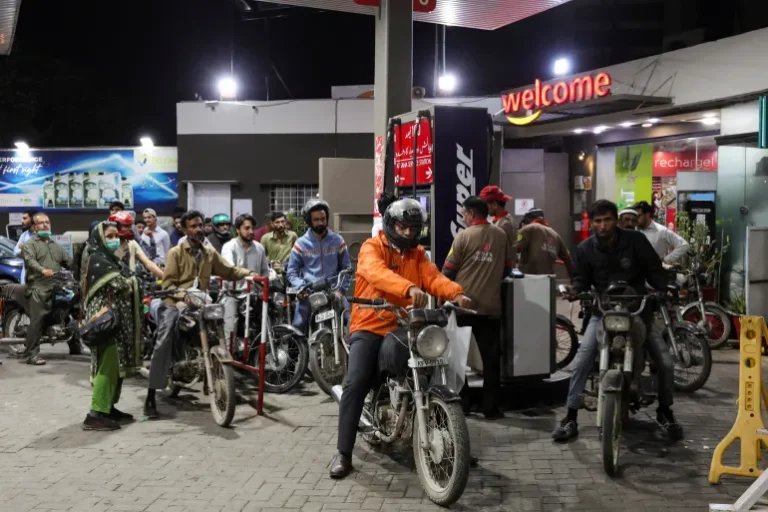
Rising petrol and high speed diesel prices have slammed Pakistan’s economy again. Petrol prices were increased by 55 Rupees per liter, while diesel saw a similar hike, pushing already high fuel costs to new levels. This surge is linked to escalating tensions in the Middle East, a region that fuels a large part of the world.
For Pakistan, who is heavily reliant on imported energy, these shocks hit immediately, fuel costs rise, inflation climbs, and the average household feels the pinch. Petrol, diesel, and liquefied natural gas (LNG) are essential not only for transportation and industry but also for electricity generation, making the country particularly vulnerable.
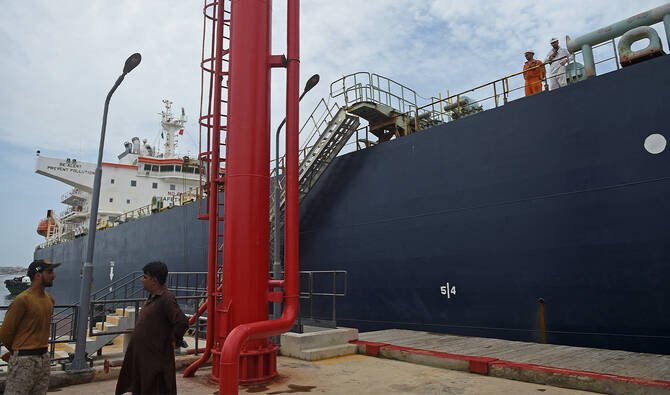
In 2024, Pakistan spent over $6 billion on oil imports alone. Pakistan imports the majority of its petroleum and petroleum products from Middle Eastern countries, mainly Saudi Arabia, the United Arab Emirates, and Qatar to meet its energy needs, which passes through the Strait of Hormuz, where shipping has been at a near total halt from March 1st, 2026.
Taking in account the current situation and because of this reliance, any conflict or instability in the Gulf or Persian Gulf has a direct impact on Pakistan’s domestic fuel prices, even a small spike in petrol and diesel prices would have cascading effects: higher transportation costs push up the price of food and goods, and electricity generation costs rise as oil-based power plants become more expensive to operate. Furthermore higher prices increase Pakistan’s import bill and worsen the trade deficit.
The “Easy Solution” Myth
Amid rising prices, the argument often arises that Pakistan should simply source oil from alternative suppliers like Russia or Iran. Cheaper Oil? Not if your hands are tied by politics and sanctions. After the Russian invasion of Ukraine in 2022 and the sanctions imposed on Russia, Russian oil became available at discounted prices in some markets. Similarly, Iran faces sanctions mainly because of concerns over its nuclear program and regional military activities.
Many countries, especially the United States and members of the European Union, believe Iran could develop nuclear weapons and accuse it of supporting armed groups in the Middle East. Because of this, economic sanctions were imposed to pressure Iran to change these policies. Iran has significant oil and gas reserves that could theoretically be exported to Pakistan.
On the surface, it seems like a simple solution: buy cheaper oil, reduce costs, and ease domestic inflation. However, this is where geopolitics makes energy policy far more complicated than it appears.
Sanctions on both Russia and Iran create legal, financial, and logistical challenges. Banks and financial institutions involved in international transactions face heavy penalties if they violate sanctions. This makes large-scale imports risky, expensive, or even impossible without running afoul of international regulations.
Read More: Pakistan Send Vessels to Saudi, UAE Ports to Secure Oil Supplies Amid Hormuz Disruption
In addition, Pakistan has long-standing diplomatic and economic ties with Gulf countries such as Saudi Arabia and the United Arab Emirates, which provide not only oil but also financial assistance and investment. Moving away from these partners could strain relationships that are critical to Pakistan’s foreign policy and economic stability. At the same time, importing large amounts of oil from Russia or Iran could complicate Pakistan’s relations with the United States, which has imposed sanctions on both countries.
Because Pakistan relies on Western financial systems and international lenders, openly expanding energy trade with sanctioned states could risk diplomatic pressure and economic repercussions. These factors create a complex web of political and economic constraints, turning what seems like a simple solution into a difficult dilemma.
Regional energy projects have been proposed to reduce Pakistan’s vulnerability, but they too face challenges. The Iran–Pakistan Gas Pipeline, often referred to as the “Peace Pipeline,” was designed to transport natural gas from Iran to Pakistan, providing a relatively stable and inexpensive energy source.
However, the project has faced repeated delays due to international sanctions on Iran and political pressures from Western countries. Another example is the Turkmenistan–Afghanistan–Pakistan–India (TAPI) Pipeline, which aims to bring gas from Turkmenistan through Afghanistan to Pakistan and India.
While this pipeline promises to diversify Pakistan’s energy sources, it faces obstacles including security concerns in Afghanistan and the need for coordinated funding and political agreements among multiple countries. Even domestic projects like the Pakistan Stream Gas Pipeline, which involves cooperation with Russia to transport LNG within the country, require careful negotiation to avoid international complications.
Possible Solutions for Pakistan
Pakistan cannot immediately replace Gulf oil, but it can reduce dependence over time by investing in alternative energy. Expanding solar and wind projects can reduce the need for imported fuel used in electricity generation. Pakistan already has significant solar potential, especially in regions like Sindh and Balochistan. Increasing renewable energy in the national grid would reduce exposure to global oil price shocks.
Another practical solution is improving how energy is used. Pakistan loses a large amount of electricity through transmission losses, outdated infrastructure, and inefficient fuel consumption. Modernizing the power grid, improving public transportation, and promoting fuel efficient vehicles could significantly reduce demand for imported oil.
Many countries maintain strategic petroleum reserves to cushion temporary supply disruptions. Pakistan could gradually build emergency oil reserves that can be used during global supply shocks or geopolitical crises. This would not eliminate dependence on imports but would provide short term stability during sudden disruptions.
While Pakistan cannot fully shift to sanctioned suppliers like Russia or Iran, it can still diversify within the global market. Countries such as Malaysia, Kazakhstan, or African producers could become supplementary suppliers. Even limited diversification would reduce reliance on a single region.
Despite political challenges, regional energy projects still hold long term promise. Completing projects like the Iran–Pakistan Gas Pipeline or the Turkmenistan–Afghanistan–Pakistan–India Pipeline could provide more stable natural gas supplies in the future. However, these projects require diplomatic balancing and security guarantees.
Pakistan also has untapped potential in hydroelectric power and natural gas exploration. Expanding hydroelectric projects and encouraging domestic energy exploration can reduce reliance on imported fuels in the long run.
*The views presented in this article are the author’s own and do not necessarily reflect the views of The Diplomatic Insight.

Izza Ilyas
Izza Ilyas is a student of International Relations at IIUI, and an intern at IRS. Her interests focus on Middle East politics, security issues, and energy diplomacy. She can be reached at izzailyas99@gmail.com