For decades, the relationship between the United States and Israel has often been described as an unshakable special relationship. But developments unfolding now suggest that the foundations of the relationship are undergoing serious tests.
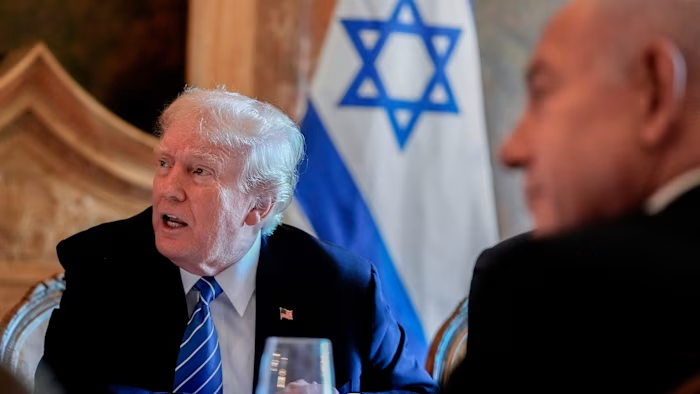
This change is evident from the rising tensions between the President of the United States, Donald Trump, and the Prime Minister of Israel, Benjamin Netanyahu.
If at the beginning of the Iran conflict the two seemed to be on the same policy line, now there are fundamental differences regarding the future of the region.
From Israel’s perspective, the problem is not just Iran. For years, Netanyahu has built a political narrative that Iran is the greatest existential threat to Israel’s security. Iran’s nuclear program, proxy networks such as Hezbollah, and Tehran’s influence in Lebanon, Syria, Iraq, and Yemen are considered long-term threats that must be destroyed, not simply restricted.
Therefore, as Washington began to move toward a peace deal with Tehran, many Israeli elites felt that the strategic momentum they had been waiting for was halted before the main goal was achieved. A number of Israeli officials privately consider the deal to weaken Israel’s strategic position because it does not permanently eliminate the threat of Iran or its proxy network.
Read More: Trump Urges Netanyahu to Exercise Caution Over Lebanon as US-Iran Deal Advances
For Netanyahu, war is not just about stopping Iran’s attacks today. He sees war as a rare opportunity to permanently change the regional balance of power.
Therefore, there was disappointment when Trump was more interested in ending the war through diplomacy than continuing military pressure. This difference explains why Netanyahu insists that Israel is not fully bound by the deal’s clause limiting Israel’s military operations in Lebanon.
The Israeli government even confirmed that its forces will remain in some security zones for as long as it deems necessary. In other words, Washington sees peace as the ultimate goal. While some of Israel’s elites see the current peace as an early or hasty cessation of war.
What is interesting is not only Israel’s dissatisfaction with Trump, but also Trump’s dissatisfaction with Netanyahu. Trump has repeatedly expressed frustration with Israel’s military actions in Lebanon. He assessed that the Israeli operation complicates the negotiations that Washington is building with Tehran.
Even Trump has publicly said he is “unhappy” with the way Israel is handling the conflict as the protracted war interferes with his efforts to build a bigger deal with Iran. And this ultimately changed the way Trump views Netanyahu.
In his first term, Trump was known as a staunchly pro-Israel American president. He recognized Jerusalem as Israel’s capital, moved the U.S. Embassy, and supported policies that benefited Netanyahu’s government. But Trump’s second term seems more pragmatic. He sees the Middle East through the lens of transactions and economic stability.
Read More: Trump Says Israel-Iran Strikes Will Not Derail Peace Deal Efforts
The priority is no longer solely to win the war, but to create conditions that allow energy trade to return to normal, the Strait of Hormuz to be reopened, and global markets to stabilize. For Trump, the ongoing war actually hinders this agenda. This is where the conflict of interest finally emerges, Netanyahu thinks within the framework of Israel’s national security.
While Trump reads in the framework of regional stability and geopolitical gains of the United States. When the two interests are no longer in line, personal relationships that have been looking strong begin to show cracks. Then there is the side that is often forgotten, namely that public opinion about Israel in the United States is starting to change.
The Gaza war and the high Palestinian civilian casualties have changed the perception of the younger generation of Americans. If in the past support for Israel was a bipartisan consensus, now the issue has become increasingly polarized. Sympathy for Palestine is increasing, especially among the Democratic Party and the younger generation of the United States. So that public support and narratives supporting Israel are at their weakest in recent times.
This change is important because American presidents, including Trump, cannot ignore domestic political dynamics. Although the Republican conservative base remains supportive of Israel, Washington is beginning to realize that the political cost of supporting any unconditional Israeli action is getting higher.
In the long run, this may be more dangerous for Israel than the Iranian military threat. Military threats can be countered with weapons. But a change in U.S. public opinion could erode the foundations of the strategic relationship that has been the source of Israel’s diplomatic power.
Read More: Trump Loses Temper in Heated Call With Netanyahu: Report
The question arises, is the US-Israel relationship coming to an end? The answer is not yet and it is unlikely to be that fast. Military, intelligence, and technological cooperation between the two countries is still very strong. There is no indication that America will abandon Israel as a key ally in the Middle East. However, what changes is the nature of the relationship.
For decades, Israel has often received almost automatic support from Washington. In the future, the support is likely to be more conditional. The U.S. may continue to help Israel deal with external threats, but it will increasingly pressure Tel Aviv when Israeli policies are perceived to interfere with American strategic interests. Then what should be considered in the future? The first is of course about the future of the US-Iran deal.
Although the signing of the peace deal has been announced, this is the initial phase, many details need to be considered, such as Iran’s nuclear program, the lifting of sanctions, and the future of Iran’s proxy groups that are still unclear. If those details fail to be properly mitigated, then the war could break out again.
Second, there is a potential for unilateral Israeli action. The country has publicly stated that it will continue to act if it feels its national security is threatened. This means that even if Washington and Tehran reach an agreement, there is no guarantee that Israel will abide by the entire content of the agreement. This opens up the possibility of new conflicts that precisely stem from Israel’s own action.
Third, about Netanyahu’s political future. He has been building an image as a leader who is able to manage a special relationship with Washington. If relations with Trump continue to deteriorate, his political opponents will use the issue to attack his credibility.
The US-Iran deal has undermined the narrative that only Netanyahu is capable of managing relations with America effectively. And fourth, about the change in the geopolitical orientation of the United States. Trump seems to want to reduce long-term military involvement and focus more on economic deals and regional stability.
If this approach continues, then America will no longer be an unconditional supporter of Israel’s security agenda, but rather acts as a counterweight between Israel, Arab countries, and even Iran. In conclusion, the United States is now beginning to view the Middle East through the lens of its own interests, not solely through the perspective of Israel’s security.
If this trend continues, then the special U.S.-Israel relationship will not end abruptly, but will turn into a more transactional and full of negotiations. In other words, Israel’s biggest challenge going forward may not be Iran. That biggest challenge could be the fact that Washington no longer always sees the world from Tel Aviv’s point of view.
*The views presented in this article are the authors’ own and do not necessarily reflect the views of The Diplomatic Insight.