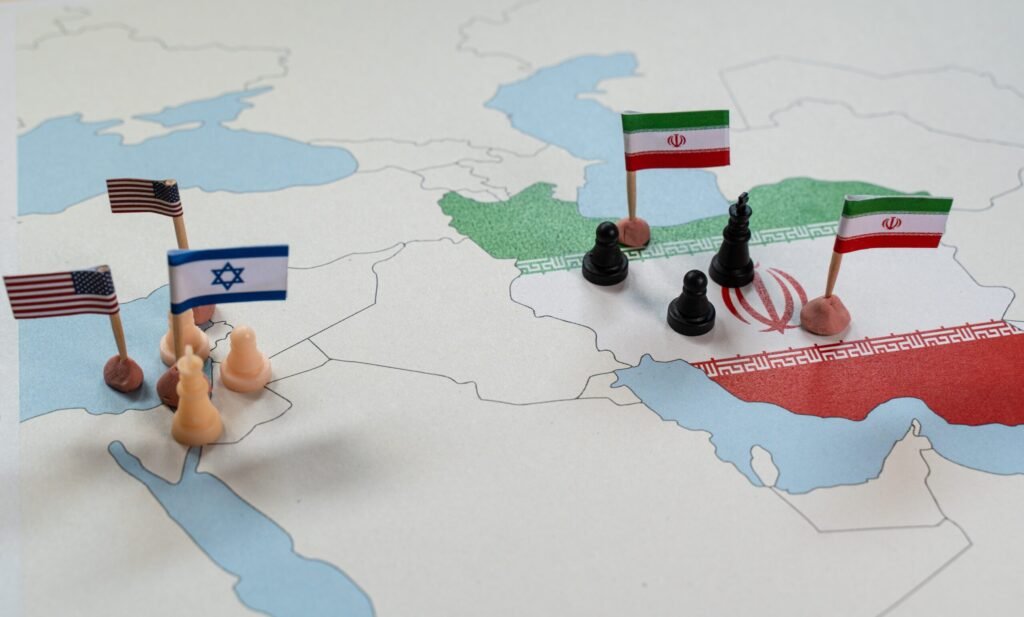
The confrontation between Iran and Israel is no longer a shadow conflict fought quietly through covert operations, proxy militias, and intelligence warfare. It is increasingly evolving into one of the defining geopolitical tests of the emerging global order. What began as a regional rivalry rooted in ideology and security concerns now sits at the intersection of great-power competition, regional realignment, and shifting global influence.
Understanding the trajectory of this conflict requires looking beyond the daily cycle of missile strikes and political statements to examine the deeper historical and strategic forces shaping it.
To understand Iran’s current strategic posture, one must revisit the geopolitical landscape that emerged after the Second World War. During the Cold War era, Iran under Shah Mohammad Reza Pahlavi was one of the United States’ most important allies in the Middle East. Washington supported Iran politically, economically, and militarily, viewing it as a stabilizing pillar in a volatile region.
In fact, Iran’s early nuclear ambitions were initially encouraged under Western-backed modernization programs. However, the Islamic Revolution of 1979 dramatically transformed Iran’s political identity and foreign policy orientation.
The revolution replaced a pro-Western monarchy with an ideological Islamic republic that defined itself in opposition to Western influence. From that moment onward, Iran’s security doctrine evolved around the principle of strategic resilience. The country quickly found itself confronting regional isolation, economic sanctions, and external hostility. The defining moment of this period was the Iran–Iraq War in the 1980s, when Iraq under Saddam Hussein invaded Iran with varying levels of international support.
Despite the scale and brutality of the conflict, the war ended without Iraq achieving decisive territorial control. For Iran, the war became a formative strategic experience. It reinforced the belief that survival required long-term endurance, domestic mobilization, and the development of unconventional forms of deterrence. Over time, Iran invested heavily in asymmetric military capabilities, missile technology, and regional alliances designed to expand strategic depth beyond its borders.
This approach gradually transformed Iran into a central actor in the broader Middle Eastern power structure. Rather than relying solely on conventional military strength, Tehran developed networks of political and military partnerships across the region. These networks serve as both deterrence mechanisms and instruments of influence, allowing Iran to project power without direct confrontation.
Read More: Epic Fury: Anatomy of a Geopolitical Suicide in the Middle East
Israel, however, views this strategy as an existential threat. Since its founding, Israel’s security doctrine has relied on technological superiority, intelligence dominance, and the ability to neutralize threats before they fully materialize. In previous decades, Israel’s primary security challenges came from neighboring states or non-state militant organizations. A sustained confrontation with Iran, however, presents a far more complex strategic challenge.
Unlike previous adversaries, Iran possesses significant geographic depth, missile capabilities, and a broad regional influence network. A prolonged confrontation therefore risks expanding beyond bilateral hostilities and drawing in multiple regional actors. For Israel, the consequences are not only military but also economic and political. In a country with a relatively small population, sustained conflict can produce significant societal and political pressure.
The United States, Israel’s principal strategic partner, finds itself navigating a complicated geopolitical balancing act. For decades, Washington has served as the primary security guarantor in the Middle East. Yet the concentration of military resources in any single theater inevitably reduces strategic flexibility elsewhere. Reinforcing Israel’s defense posture may require redeploying military assets from other regions, creating opportunities for rival powers to test American deterrence.
This dynamic illustrates a broader transformation underway in the international system. The global order that emerged after the Cold War was largely characterized by American strategic dominance. Today, however, the system is gradually shifting toward a more multipolar configuration in which multiple powers compete for influence. Russia and China, in particular, are carefully observing developments in the Middle East and adjusting their strategic calculations accordingly.
Prolonged instability in the region can generate opportunities for these actors to expand diplomatic, economic, or strategic influence. Russia has already demonstrated its willingness to engage deeply in Middle Eastern conflicts, while China has steadily expanded its economic and infrastructural presence across Asia, Africa, and the Gulf region. For both countries, the Iran–Israel confrontation represents not only a regional crisis but also a potential inflection point in the global balance of power.
At the same time, Arab states across the Middle East are attempting to navigate an increasingly delicate strategic environment. Many maintain security partnerships with the United States while simultaneously seeking to avoid direct confrontation with Iran. Publicly emphasizing neutrality, diplomatic dialogue, or de-escalation allows these governments to maintain internal stability while avoiding the risks associated with open alignment in a rapidly evolving conflict.
The economic stakes of the confrontation are equally significant. The Middle East remains one of the most critical energy corridors in the world. Any sustained escalation involving major shipping routes or energy infrastructure could disrupt global markets and trigger wider economic consequences. In an interconnected global economy, instability in the Gulf or surrounding regions reverberates far beyond the immediate conflict zone.
Read More: Tactical Success or Strategic Miscalculation? The Iran Strikes and Asia’s Nuclear Future
Ultimately, the Iran–Israel confrontation must be understood not merely as a regional dispute but as a strategic testing ground for the future international order. It reflects deeper tensions surrounding the decline of unipolar dominance, the rise of alternative power centers, and the increasing complexity of regional alliances.
A decisive outcome in this confrontation ultimately hinges on one strategic variable: regime change in Iran. If the United States and Israel were able to successfully engineer or facilitate a political transformation that replaces the current Iranian leadership, it would represent a profound geopolitical victory.
Such an outcome could significantly strengthen their long-term strategic dominance across the Middle East, particularly within the Gulf Cooperation Council (GCC) states, consolidating security alignments and reinforcing the existing regional order under U.S. influence.
However, the likelihood of such a scenario appears limited. Iran’s political system is built around institutional and constitutional mechanisms that ensure leadership continuity; one Supreme Leader can be replaced by another through established procedures. Even if the current leadership were removed, the structure of the Islamic Republic allows for a new leadership to emerge without fundamentally altering the regime itself.
In this context, achieving regime change becomes extremely difficult and remains the only path through which the United States and Israel could claim a decisive strategic victory. Conversely, if such a transformation does not occur, the conflict may instead strengthen the strategic position of rival powers such as Russia and China.
By supporting Iran as a central axis of resistance against Western influence, these powers could help establish a new political and military balance in the region. Over time, this dynamic could elevate their role as indispensable stakeholders in regional negotiations and security arrangements, potentially granting them a degree of influence even indirect military or strategic leverage within the Gulf alongside the United States.
Such an outcome would signal a gradual transition away from the long-standing unipolar dominance of the United States toward a more complex and competitive multipolar world order.
*The views presented in this article are the author’s own and do not necessarily reflect the views of The Diplomatic Insight.

Prof. Dr. Gulfam K.K. Baghoor
Prof. Dr. Gulfam K.K. Baghoor is the Founding CEO of Skillsrator, a renowned entrepreneurial ecosystem specialist, corporate social scientist, and development consultant with significant experience in educational leadership, system thinking, institutionalization, project management, logistics and budgeting for private and non-profit sectors. Currently, he is member board of directors, International Center of Excellence (ICE).