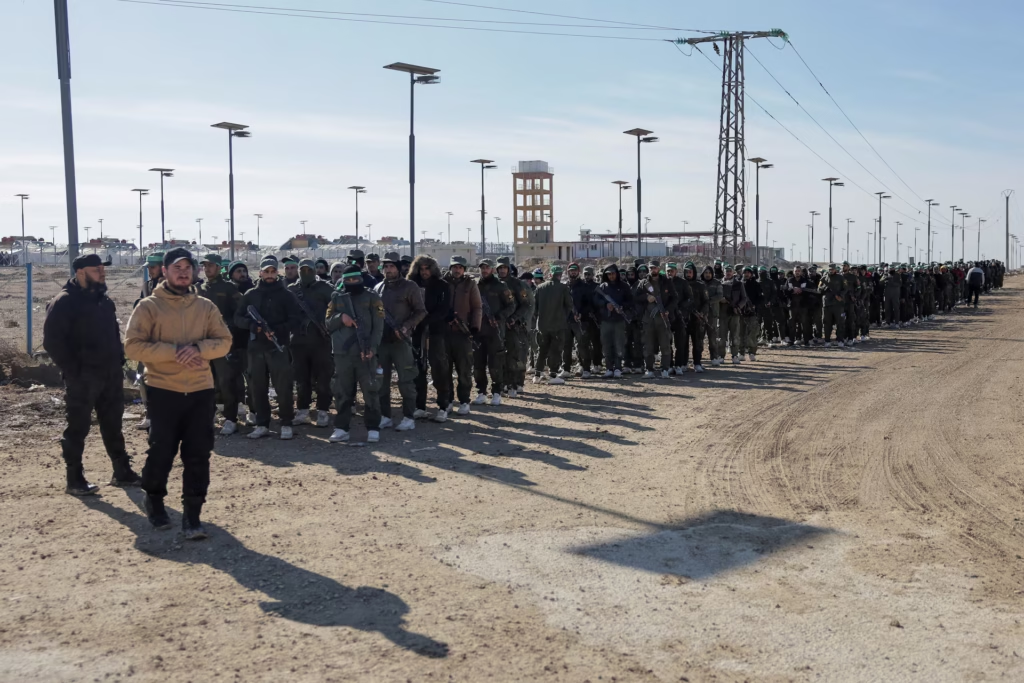
Washington (TDI): The United States military has started transferring Islamic State (IS) group detainees from northeastern Syria to prison facilities in Iraq.
According to US Central Command (CENTCOM), the first batch of around 150 IS members was moved from a detention facility in Hasakah province on Wednesday, and flown to “secure locations” in Iraq.
The broader plan could involve relocating up to 7,000 IS detainees currently held in various sites across northeastern Syria.
CENTCOM commander Admiral Brad Cooper said the transfers are being conducted in close coordination with the Iraqi government, with the goal of preventing mass breakouts and ensuring detainees remain in secure custody.
“Facilitating the orderly and secure transfer of ISIS detainees is critical to preventing a breakout that would pose a direct threat to the United States and regional security,” Cooper said in a statement.
This relocation comes at a times when Syrian government forces, backed by a recent ceasefire agreement with the Kurdish-led Syrian Democratic Forces (SDF), have been advancing into territory long held by the SDF; including detention sites and camps housing suspected IS fighters and their families.
Read More: Syria Declares Ceasefire in Aleppo After Days of Deadly Cashes
The SDF, once a key US partner against Islamic State, has withdrawn from several positions, triggering concerns about the security of prisons and camps.
Washington appears ready to pivot its primary on-the-ground counter-IS relationship from the autonomous Kurdish forces toward engagement with the central government in Damascus.
Iraqi authorities have welcomed the transfer plan, having already received the first group of detainees, who are expected to face interrogation and trial under Iraqi anti-terrorism laws.
Despite the territorial defeat of the Islamic State in Iraq in 2017 and in Syria in 2019, its sleeper cells remain active, making secure detention and prosecution of captured militants a persistent priority for regional stability.
The operation underscores the complexity of the post-ISIS era in the Middle East, where years-long military campaigns have dismantled the group’s territorial “caliphate,” but the remnants of its network and the humanitarian and security challenges tied to it remain.