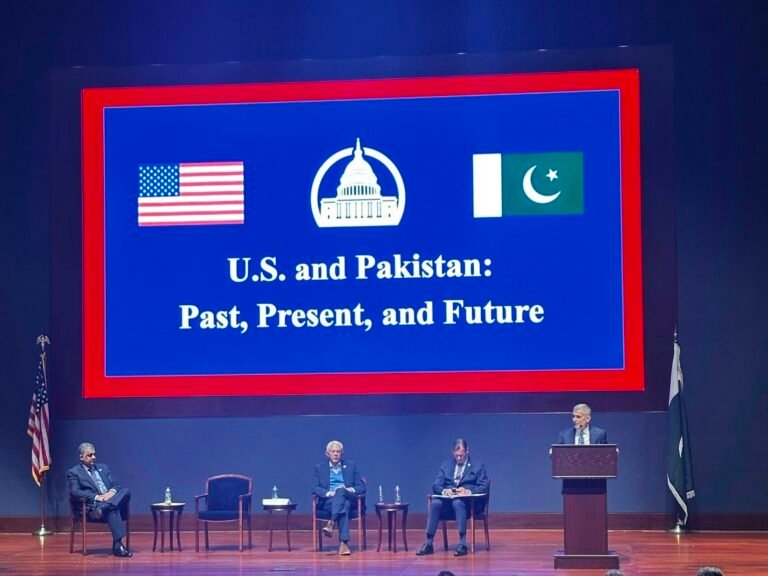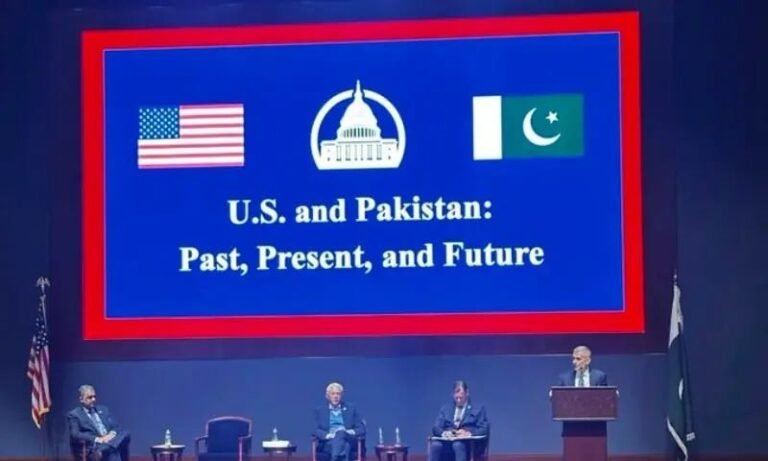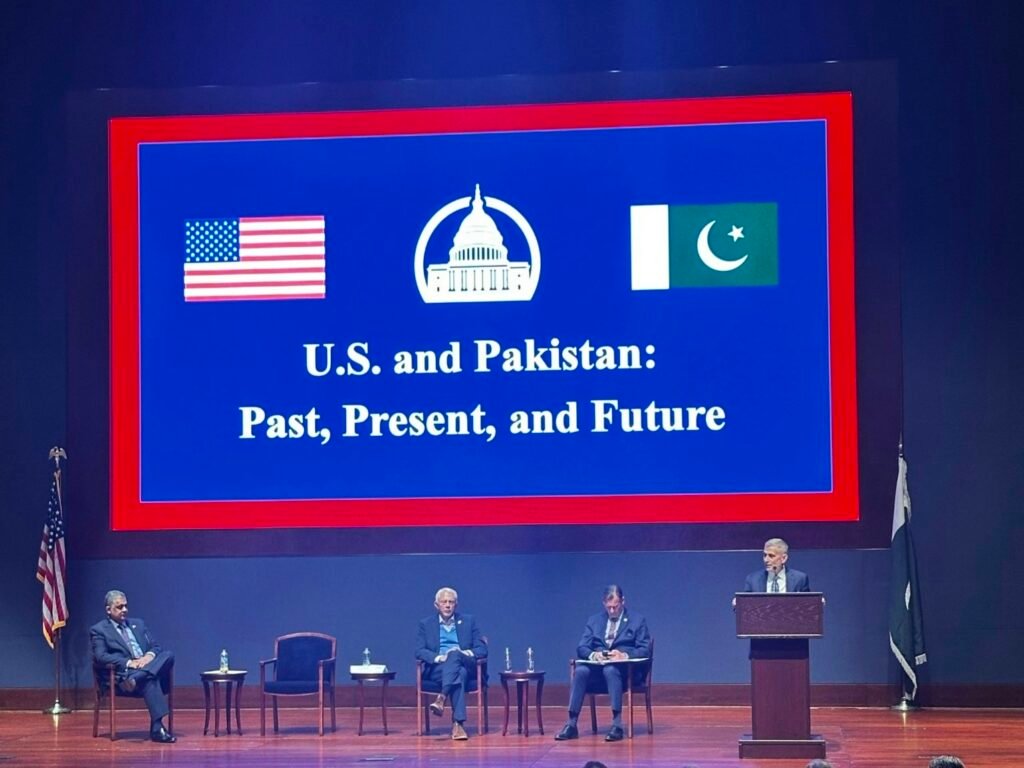
Washington (TDI): Speakers at a symposium titled “US and Pakistan: Past, Present, and Future” noted that Pakistan’s recent offer to host talks between the United States and Iran reflects growing confidence in Islamabad’s diplomatic role.
Held at Capitol Hill on Tuesday, the event was organized by the Congressional Pakistan Caucus under the Chatham House Rule and co-chaired by Representatives Tom Suozzi and Jack Bergman in collaboration with the Embassy of Pakistan in the United States.
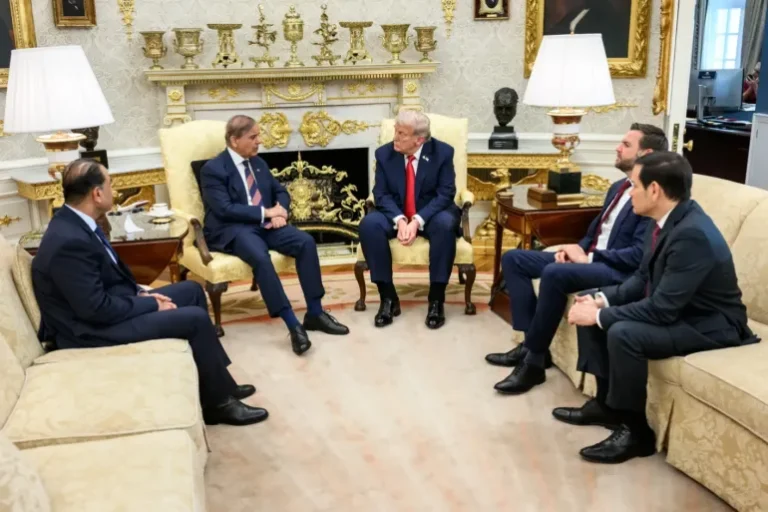
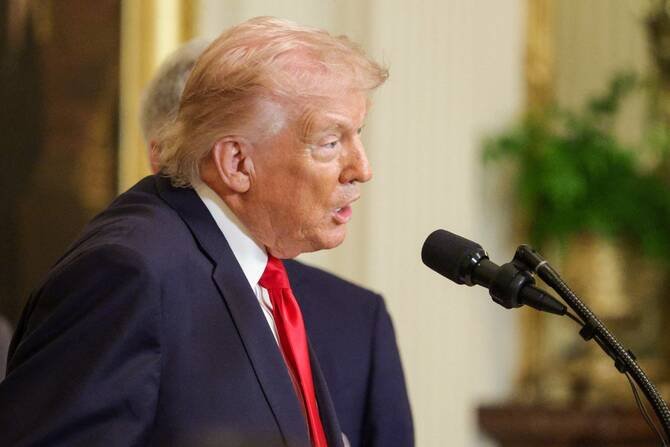
The symposium, though planned already, coincides with President Donald Trump sharing Prime Minister Shehbaz Sharif’s X post on his Truth social platform.
In the post, Sharif said that Pakistan stands ready to facilitate meaningful and conclusive talks for a comprehensive settlement of the Iran conflict, subject to concurrence by Tehran and the US.
Great to join the Pakistan Caucus Symposium. Under @POTUS Trump’s leadership, a positive recalibration in the U.S.-Pakistan relationship is enabling mutually beneficial economic and commercial ties, including in the critical minerals sector. – SPK pic.twitter.com/wxEYvLrbKJ
— Bureau of South and Central Asian Affairs (SCA) (@State_SCA) March 24, 2026
Natalie Baker, Chargé d’Affaires at the US Embassy in Pakistan, addressed the conference and thanked members of Congress for organizing the important and historic event.
Pakistan’s Ambassador to the United States, Rizwan Saeed Sheikh, highlighted Pakistan’s unique geostrategic location and its frontline role in the fight against terrorism.
He noted that Pakistan has made significant sacrifices for regional and global peace and remains ready to continue playing a full role in promoting international stability.
Assistant Secretary of State for South and Central Asian Affairs Dr. Paul Kapur said, “Under President Trump’s leadership, a positive recalibration in the US-Pakistan relationship is enabling mutually beneficial economic and commercial ties, including in the critical minerals sector.”
Congressman Tom Suozzi posted on X, saying that the symposium brought experts together “to review the history, security and economic dimensions of Pakistan–US bilateral relations and to help build a better future.”
Today, we gathered experts from around the world to discuss the U.S.-Pakistani relationship, its history, current security and economic concerns, and how to build a better future. Thank you, Ambassador Rizwan Sheikh, Assistant Secretary of State Dr. Paul Kapur, and my Co-Chair of… pic.twitter.com/FHWgCNdhxN
— Tom Suozzi (@RepTomSuozzi) March 24, 2026
Participants observed that Pakistan, a country of over 250 million people strategically located bordering Afghanistan, Iran, India and close to the Gulf, should be viewed beyond a narrow security lens.
They noted its large US diaspora, growing educated middle class, natural resources and nuclear capability as factors making it an important regional player.
Speakers recalled that US-Pakistan relations have moved in cycles of close cooperation followed by mistrust, often influenced by third-country factors involving India, Afghanistan and China.
They agreed the relationship had at times become overly transactional and called for clearer expectations and institutionalized cooperation beyond crisis-driven security ties.
On security, discussions focused on Pakistan’s current threat environment, including fragmented but technologically capable militant groups operating across borders. Participants stressed the need for stronger civilian law enforcement and rule of law alongside military operations.
Read More: Pakistan’s Mediation Offer in Iran War Signals Rising Diplomatic Confidence: Experts
They described India-Pakistan tensions as a continuing source of regional risk, cautioning that a major terrorist incident could trigger another crisis between the two nuclear-armed neighbors.
Economic partnership emerged as a major focus. Speakers advocated moving from aid-based relations to trade and investment, citing Pakistan’s potential in critical minerals, renewable energy, IT and digital services.
While military cooperation with China remains strong, economic outcomes under CPEC have been mixed. Participants noted Pakistan does not seek exclusive dependence on any single partner and values continued engagement with the United States.
Speakers identified three key themes: counterterrorism cooperation and regional stability; Pakistan’s central role in dynamics involving China, India, Afghanistan and Iran; and the need to deepen economic ties.
Participants expressed cautious optimism for a more stable and productive US-Pakistan partnership through sustained engagement, realistic expectations and practical reforms.

Muhammad Usman Hashmi
Muhammad Usman Hashmi is a researcher in International Relations, focusing on climate diplomacy, global governance, and political economy in the Global South. He has contributed to policy dialogues with the Foreign Policy Community of Indonesia and serves as a Senior Research Fellow at the International Council on Human Rights, Peace and Politics. He is also associated with Rethinking Economics Islamabad, contributing to research on development and sustainability. He can be reached at musmanhashmi99@gmail.com