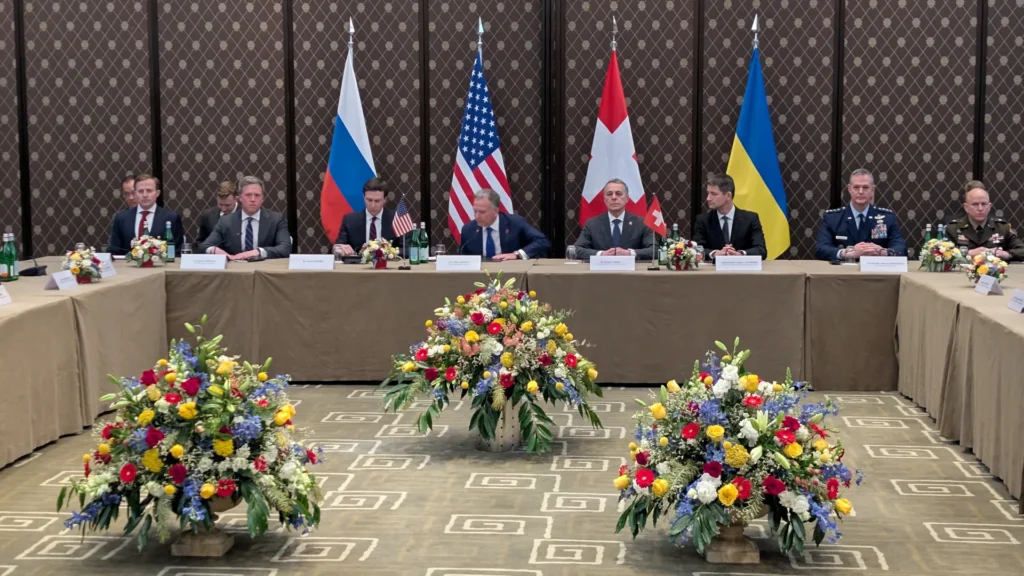
Geneva (TDI): Talks between Russia and Ukraine resumed in Geneva this week in a renewed US-brokered effort to halt a war now entering its fourth year, but the two days of the talks demonstrated just how wide the gap remains between the parties.
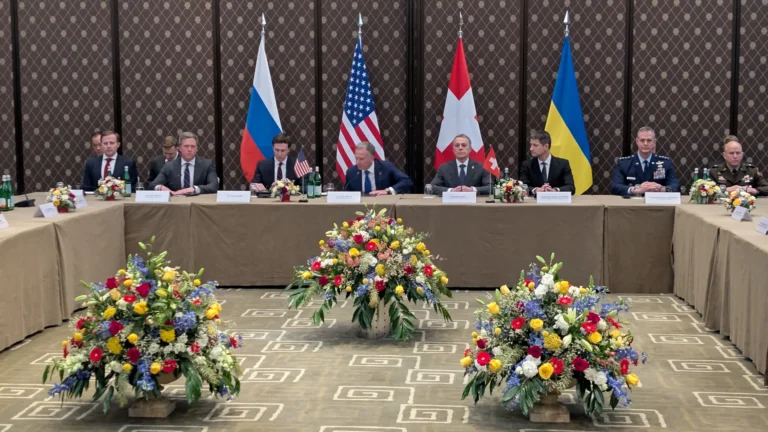
On the opening day of negotiations in Geneva, delegations from Russia, Ukraine, and the United States met for roughly six hours; closed-door discussions described by participants as “tense” and “difficult.”
The talks began after the clashes intensified, with Russian missile and drone strikes hitting Ukrainian energy infrastructure just hours before negotiators sat down.
Ukrainian officials said dozens of missiles and hundreds of drones targeted power facilities, causing blackouts in several regions.
Kyiv characterized the attacks as an attempt to strengthen Moscow’s leverage ahead of negotiations, while Russian officials framed their operations as part of ongoing military objectives.
Read More: Ukraine, Russia Resume Direct Talks in Abu Dhabi on US Peace Proposal
By the end of the first day, no breakthrough had been announced. US mediators described the mere continuation of dialogue as a positive sign but acknowledged that substantial differences remain.
Ukraine’s lead negotiator, Rustem Umerov, said the first day of talks on Tuesday focused on “practical issues and the mechanics of possible decisions.” While, Russian officials made no comments.
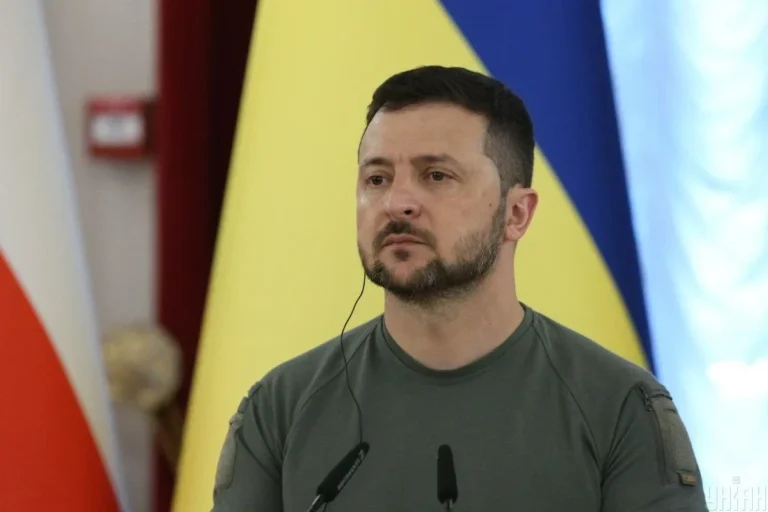
Zelensky said he was waiting for a report from the negotiating team in Geneva. “We are ready to move quickly toward a worthy agreement to end the war,” he said. “The question for the Russians is: Just what do they want?”
The current Geneva negotiations build on the earlier US-facilitated meetings held in the Gulf earlier this year, which established a framework for negotiations but did not resolve the central disputes.
At the heart of the impasse lies territory, Russia continues to control significant areas in eastern and southern Ukraine, and Moscow has insisted that any settlement must address the status of those regions.
Ukraine, for its part, maintains that its sovereignty and territorial integrity are non negotiable. Kyiv is seeking assurances from Western partners to deter future aggression, while Russia opposes arrangements it views as expanding western military influence near its borders.
Read More: Great-Power Confrontation in Europe: Russia, NATO & UK in the Ukraine War
Repeated strikes on Ukrainian infrastructure, as well as Ukrainian cross-border attacks and counteroffensives, have hardened public opinion on both sides, complicating room for compromise.
In this context, Zelenskyy gave a notable interview to Axios. He was quoted as saying that it was “not fair” that Trump kept publicly calling on Ukraine, not Russia, to make concessions in negotiating terms for a peace plan.
Zelenskiy also said any plan requiring Ukraine to give up territory that Russia had not captured in the eastern Donbas region would be rejected by Ukrainians if put to a referendum.
He stressed that public opinion in Ukraine would not support ceding regions such as the Donbas under pressure and described suggestions that Kyiv accept territorial losses as politically and constitutionally fraught.
As the Geneva talks move forward, the gap between the parties remains significant. While all sides publicly endorse dialogue, their positions on territory, security guarantees, and the sequencing of a ceasefire versus a political settlement remain far apart.