

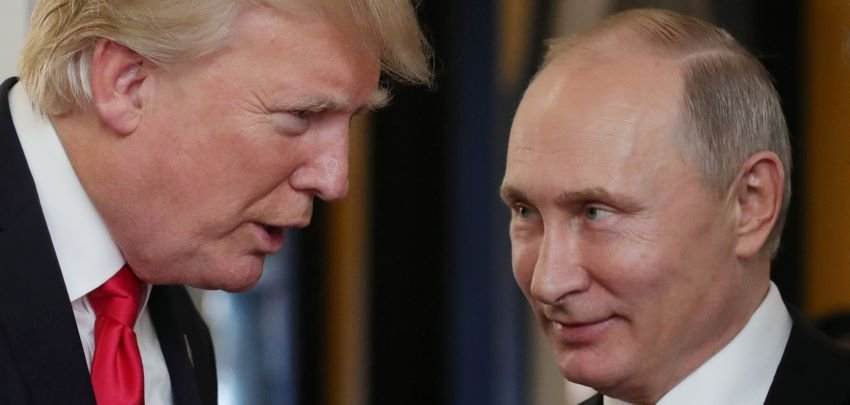
Moscow (TDI): Russia on Wednesday said it is still awaiting a formal reply from Washington regarding President Vladimir Putin’s proposal to jointly maintain the last remaining US-Russia arms control treaty, which is set to expire in less than two months.
The New START treaty, due to expire on February 5, limits the number of strategic nuclear warheads the United States and Russia can deploy, as well as the land- and submarine-based missiles and bombers used to deliver them.
In September, Putin proposed voluntarily extending the treaty’s limits for one year. US President Donald Trump had commented in October that the idea “sounded like a good idea.”
The United States and Russia together hold more than 10,000 nuclear warheads, roughly 87 percent of the global total. China, with about 600 warheads, ranks as the world’s third-largest nuclear power, according to the Federation of American Scientists.
Read More: Can Trump’s Sanctioning of Russian Oil Conglomerates Bring Putin to the Table?
Arms control agreements between Moscow and Washington were historically designed to reduce the risk of misunderstanding and slow the nuclear arms race, particularly after the 1962 Cuban Missile Crisis. However, decades of tension, disagreements over NATO expansion, and Russia’s war in Ukraine have left most major treaties in tatters.
The US National Security Strategy under the Trump administration highlights the need to reestablish “strategic stability with Russia,” signaling a desire to reopen nuclear arms control discussions.
Rose Gottemoeller, former chief US negotiator for New START, wrote this month that implementing the treaty alongside Russia could give the United States additional time to address China’s growing nuclear capabilities without simultaneously worrying about new Russian deployments.
With less than two months remaining before New START expires, international attention is turning to Washington’s next steps and the broader implications for global security.
Observers say that timely engagement between Moscow and Washington could prevent further escalation and maintain some level of predictability in nuclear arms management.
Read More: ‘Europe Problem’: Trump Frustrated Over Russia-Ukraine and Putin
As the world watches closely, experts stress that ongoing dialogue, diplomacy, and adherence to international agreements remain critical in reducing the risks posed by nuclear weapons.
The coming weeks will be crucial in determining whether the two largest nuclear powers can find common ground or face a new era of uncertainty in strategic arms control.


