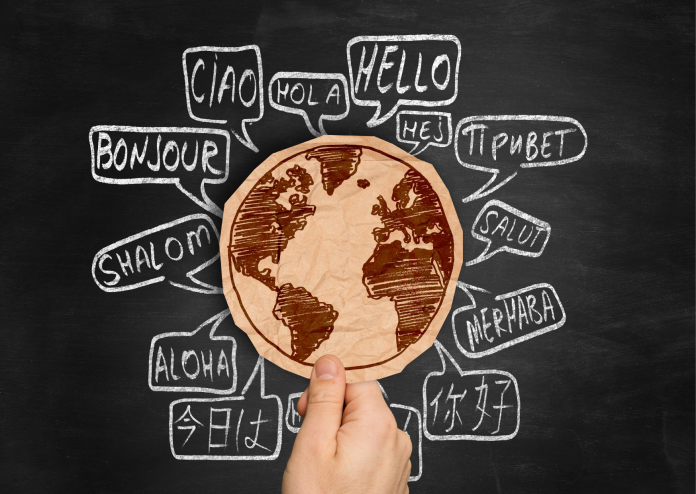
In an era of unprecedented global mobility and interconnected international relations, language sits at the very heart of how nations communicate, negotiate, and welcome new citizens. Every diplomatic treaty signed between world powers, every visa application submitted by a hopeful immigrant, and every legal document crossing international borders relies on one critical process: accurate, faithful translation.
Yet despite its foundational importance, the role of language in diplomacy and immigration remains widely misunderstood and frequently underestimated. This article explores how language shapes global diplomacy and immigration outcomes, why translation errors can carry devastating consequences, and how professional certified translation services serve as the quiet but essential backbone of international human movement.
Diplomacy, at its core, is an exercise in precise communication. When world leaders negotiate trade agreements, peace treaties, or climate accords, every word carries legal, political, and economic weight. A single mistranslated phrase can alter the meaning of an entire clause, turning a binding commitment into an ambiguous statement or, worse, creating the foundation for future conflict.
History offers sobering examples of how translation failures have affected international relations. During Cold War negotiations, subtle linguistic differences between English and Russian interpretations of treaty language created mistrust and misunderstanding at the highest levels of global politics.
In the modern era, multilateral organizations such as the United Nations rely on teams of expert interpreters and translators to ensure that every declaration, resolution, and communique carries identical meaning across six official languages.
Beyond formal negotiations, language shapes the softer dimensions of diplomacy. Cultural diplomacy, the exchange of art, education, and ideas between nations, depends on accurate translation to ensure that meaning survives the crossing of linguistic borders. A poem, a film, or a philosophical concept that loses its essence in translation fails to build the bridges of mutual understanding that cultural diplomacy seeks to create.
Immigration: Where Language Meets Human Lives
If diplomacy operates at the level of nations, immigration operates at the level of individual human lives. For millions of people each year, the immigration process represents their most profound interaction with the systems of international language and law.
A family fleeing conflict, a student pursuing education abroad, a skilled professional seeking new opportunities, each of these individuals must navigate a complex web of documentation requirements, legal procedures, and linguistic standards.
In the United States alone, the U.S. Citizenship and Immigration Services (USCIS) processes millions of applications annually. Every foreign-language document submitted, whether a birth certificate, marriage record, academic transcript, or police clearance, must be accompanied by a certified English translation.
This requirement is not bureaucratic red tape; it exists because immigration adjudicators must be able to evaluate the authenticity and content of documents written in languages they may not speak.
Similar requirements exist across the globe. The UK Visas and Immigration authority (UKVI), Immigration, Refugees and Citizenship Canada (IRCC), and immigration bodies in Australia, Germany, and dozens of other countries all mandate certified translations of foreign documents.
The standards are strict for a compelling reason: the consequences of inaccurate translation in immigration are not abstract, they are deeply personal.
The High Stakes of Translation Errors in Immigration
When a translation is inaccurate, incomplete, or improperly certified, immigration authorities have no choice but to reject the application. These rejections carry real human costs. A family’s reunification can be delayed by months or years.
A student may miss an academic enrollment deadline. A professional may lose a job opportunity that required immigration status. In the most serious cases, individuals fleeing persecution may find their asylum claims weakened by documentation errors.
Common translation errors that lead to immigration rejections include literal word-for-word translations that lose legal meaning, failure to translate all visible text including stamps and annotations, inconsistent rendering of names across multiple documents, and the omission of the translator’s certification statement confirming competence and accuracy.
Each of these errors is entirely preventable when documents are handled by qualified professional translators who understand both the linguistic and legal requirements of immigration documentation.
Read More: Languages: Bridge to Cross-Cultural Cooperation
Certified translation is distinct from standard translation in one critical respect: it carries a formal declaration by the translator or translation agency that the translation is complete and accurate to the best of their knowledge and ability. In the United States, USCIS requires that all foreign-language documents be accompanied by a full English translation and a signed certification attesting to the translator’s competence in both languages.
The American Translators Association (ATA) represents one of the most recognized standards of translator competence in the English-speaking world. ATA-certified translators have passed rigorous examinations demonstrating mastery of their language pairs, and their certifications are widely accepted by government agencies, legal institutions, and academic bodies.
Working with ATA-certified translators provides applicants with the assurance that their documents meet the professional standards expected by immigration authorities.
Beyond individual competence, professional translation agencies bring systematic quality control to the process. Document review, format matching, and accuracy checks ensure that the translated document mirrors the original in structure and content — a requirement that immigration authorities take seriously when evaluating whether a translation is faithful to the source document.
Language Inclusion as a Diplomatic Value
The relationship between language and diplomacy extends beyond formal negotiations into the broader realm of how nations signal their values to the world. Countries that invest in multilingual public services, translation infrastructure, and language accessibility programs send a powerful message: that they recognize the humanity and dignity of people who speak languages other than the national tongue.
In this sense, the quality of a nation’s translation and language access services is itself a form of diplomatic communication. When immigrants encounter clear, accurate, and accessible translation of official documents and procedures, they experience a form of welcome that transcends words.
Conversely, when language barriers are left unaddressed, they become walls — invisible but powerful obstacles that separate people from the opportunities and protections that immigration is meant to provide.
International organizations including the United Nations High Commissioner for Refugees (UNHCR) have long recognized that language access is a fundamental component of refugee protection. Asylum seekers who cannot communicate effectively in the language of their host country face compounded vulnerabilities: they may be unable to access legal assistance, understand their rights, or accurately convey the circumstances of their claim.
Professional translation and interpretation services are therefore not luxuries in these contexts — they are human rights imperatives.
Language is simultaneously the greatest barrier and the greatest bridge in human international relations. In diplomacy, it shapes the terms on which nations coexist. In immigration, it determines whether individuals can successfully navigate the systems designed to welcome or evaluate them. In both domains, the quality of translation is not a technicality, it is a matter of consequence.
As global mobility continues to increase and the multilingual complexity of international relations deepens, the role of professional translation will only grow in significance. Governments, international organizations, and individuals alike have a shared interest in ensuring that language serves as a bridge rather than a barrier, that the documents and declarations that shape human lives are rendered with the accuracy, care, and professionalism they deserve.
In a world where the stakes of miscommunication have never been higher, the translators who work quietly behind the scenes of global diplomacy and immigration deserve recognition as essential contributors to the movement of people, ideas, and understanding across borders.
*The views presented in this article are the author’s own and do not necessarily reflect the views of The Diplomatic Insight.

Abdullah Imran
Abdullah Imran is a translation industry professional and Manager atPro Translation Service, a certified translation agency specializing in immigration, legal, medical, and academic document translation. Pro Translation Service works with ATA-certified translators to deliver USCIS-accepted certified translations with 24-hour turnaround.