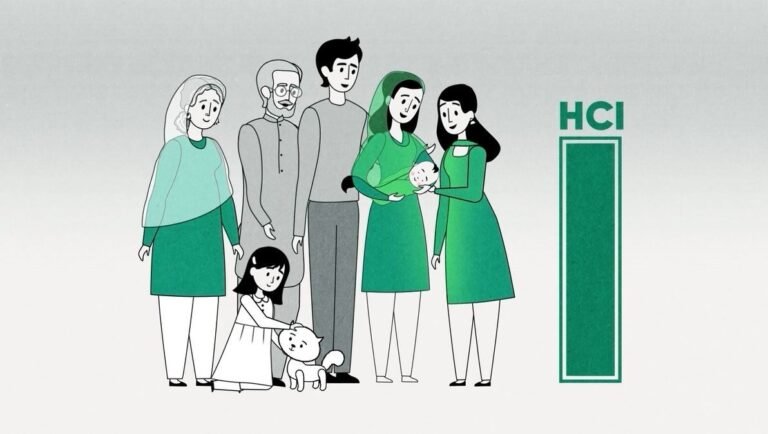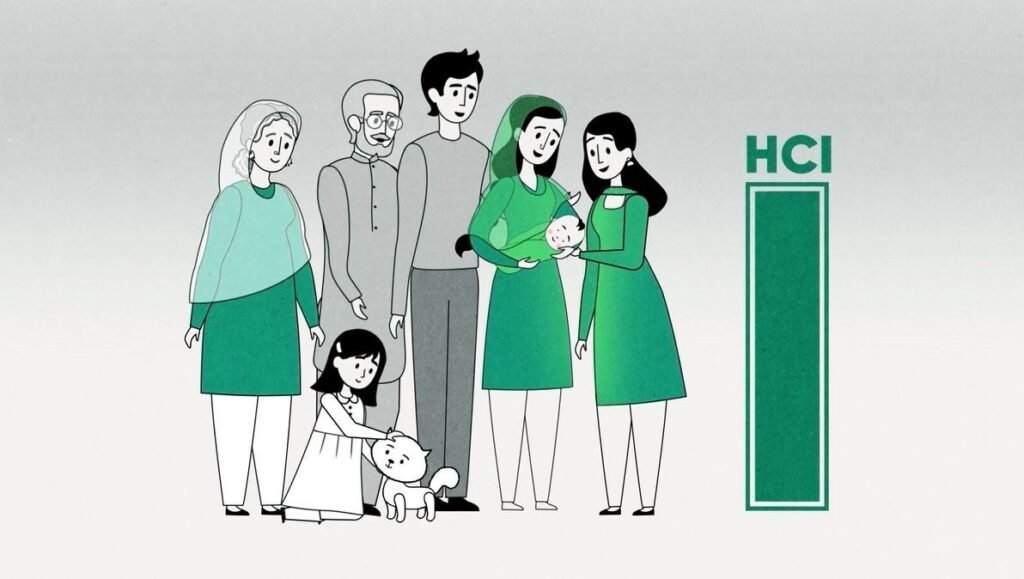
Pakistan’s Human Capital Index shows a significant but devastating reality that makes many developing countries envious: the Human Capital Index (HCI) of 0.41 means the newborn baby only has 41% productivity, and this could be controlled with complete health and education facilitation. The country’s HCI is equivalent to Sub-Saharan African nations’ and lower than South Asian nations’, an average of HCI 0.40.
Another facet shows that more than 25 million children remain out of school, participation of female labor is low, and neonatal mortality remains high in Pakistan. The neonatal mortality rate of Pakistan is among the highest in the world, with approximately 38 deaths per 1000 live births as of 2023.
The national NMR shows a far-reaching number of data that underscores the need to reimagine Pakistan’s human capital crisis; Pakistan’s more developed province, Punjab, stood at 3.3%-3.9% of NNMR, while Sindh, Baluchistan, and KPK show an average of 2.73%.
The story of Pakistan’s human capital growth has been a cycle of unfulfilled promises and incomplete reforms. For decades, Pakistan’s policymakers have confused economic activity with human progress, introducing macroeconomic models but deliberately abandoning the core factor that serves the people. Re-imagining Pakistan’s human capital crisis is no longer a policy option. It has become an existential necessity for the entire nation because the single person’s story represents the struggle of millions.
This crisis did not emerge overnight. It is a product of neglecting the foundational capacity to invest in human capital, where Pakistan hardly puts less than 2% of its national GDP on human capital factors. Meanwhile, the regional peers like Bangladesh and India invest more in education and health, and Pakistan is still trapped in a cycle of short-term fiscal thinking, political instability, and elite capture that is systematically hollowing out the nation’s potential to rise and grow. This crisis is not about reimagining Pakistan’s HCC but identifying factors that are undermining the human capital progress.
Read More: Pakistan’s Green Future Rests on Youth Leadership, Says UK Climate Expert
Pakistan’s human capital crisis needs more than incremental reforms; it requires a fundamental reorientation that places human capital at the center. Three structural shifts are non-negotiable: Investment in sustained public potential, placing human development at the center of every economic decision, and elite capture of policies that have been fulfilling the demands of a selected few. Pakistan cannot achieve economic progress without working on its human capital potential; by chasing this potential, Pakistan could break the cycle of short-term thinking that is hollowing out the nation’s economic development.
Re-imagining Pakistan’s human capital crisis does not mean drafting another policy document that gathers dust on a ministry shelf. It means fundamentally changing the question policymakers ask, not “how do we grow the economy?” but “how do we grow our people?” It means treating education and health not as budget line items to be trimmed during fiscal stress, but as the primary engines of sustainable economic progress.
Countries like Bangladesh, South Korea, and even Rwanda did not stumble into development. They deliberately and unapologetically invested in their people first. Pakistan has the demographics, the potential, and the urgency. What it has lacked is the political imagination to reimagine its own future.
In the previous couple of months, some argued and will be arguing that Pakistan has come out from the cycle of underinvestment and the crisis of education is improving because the enrollment figure is increasing. Some will say programs like Sehat Sahulat programs, health cards, and successive educational policies are evidence of progress. These efforts cannot be neglected, but enrollment without learning outcomes, health cards without functional hospitals, and policies without implementations are not reforms; they are the unfulfilled reflection of reforms.
Pakistan has learned the language of human development but consistently fails in its practices. The important factor is not that the solutions are unknown; it is the lack of political will to execute these policies in their complete spirit and without neglecting the common people, because policies are formed to serve the needs of every single person in this country.
Read More: Between Rhetoric and Reality: Pakistan’s Unfinished Shift to Geo-economics
The cost of inaction is not abstract. It is generational. A nation that fails to invest in its human capital today will pay a compounding price tomorrow. Pakistan’s youth bulge, the largest in its history, is either its greatest opportunity or its greatest threat. Without education, skills, and health, this demographic dividend rapidly becomes a demographic disaster marked by rising unemployment, deepening poverty, social instability, and an economy permanently trapped in low productivity cycles. The window to act is narrow. Every year of delay means every child is left behind, the capacity to rise is moving from potential to hopelessness, and another decade of growth is lost in political failure.
Re-imagining Pakistan’s human capital crisis begins with a simple but productive act: taking it seriously. Policymakers must move beyond performative reform and commit to raising education spending to at least 4% of GDP, improving primary healthcare, and dismantling the policy structures that have long served the elite interests at the expense of ordinary citizens. Provincial governments must be held accountable for learning outcomes, not just enrollment numbers.
The private sector, civil society, and international partners all have a role to play but the state must lead. Pakistan has spent decades chasing growth while neglecting the people who are supposed to drive it. The reimagining this nation needs is not a new economic model on paper. It is a genuine political commitment to its people, all of them, not just the few who have always been served. That is where Pakistan’s real growth story begins.
*The views presented in this article are the author’s own and do not necessarily reflect the views of The Diplomatic Insight.
Izna Zaman Khattak
Izna Zaman Khattak is a BS International Relations student at the University of Central Punjab, Lahore. She writes on human development and human rights.She can be reached atiznazamanofficial@gmail.com