Over the past three decades, Qatar has transformed from a relatively quiet Gulf emirate into one of the most diplomatically active states in the international system. Despite its small population and limited geographic depth, Doha has positioned itself at the center of regional mediation, global energy markets, and multilateral diplomacy.
Its ascent is not accidental. Rather, it reflects a deliberate foreign policy strategy crafted to convert structural vulnerability into strategic leverage.
This article argues that Qatar’s global reach is rooted in a coherent small-state strategy: diversification of alliances, hedging among competing powers, and the pursuit of strategic autonomy as a form of regime and state survival.
Far from being erratic or opportunistic, Doha’s diplomacy represents a calculated effort to maximize maneuverability in a volatile regional and global environment.
The Logic of Small-State Diplomacy
For small states operating in conflict-prone regions, security is rarely guaranteed by geography alone. The Gulf region, marked by rivalry among regional heavyweights and periodic external intervention, offers little margin for strategic complacency. In such contexts, small states typically adopt policies of diversification and hedging cultivating multiple partnerships to avoid over dependence on a single patron.
Qatar exemplifies this logic. While hosting the forward headquarters of the United States Central Command at Al Udeid Air Base, Doha has simultaneously maintained functional relations with actors often at odds with Washington. This is not a contradiction; it is strategic insurance. By preserving channels across geopolitical divides, Qatar reduces the risk of entrapment and enhances its diplomatic relevance.
Qatar’s foreign policy doctrine rests on three pillars: independent positioning within the Gulf, balancing regional and global actors, and multi-vector diplomacy.
First, Doha has pursued an independent trajectory within the Gulf Cooperation Council (GCC), resisting full alignment with any single regional pole. This approach has at times generated friction but has also enabled Qatar to cultivate a distinctive diplomatic identity.
Second, balancing behavior defines Qatar’s regional and global engagement. Doha maintains close security cooperation with the United States while preserving working relations with Iran, with whom it shares the world’s largest natural gas field. It engages Türkiye, European states, Asian energy consumers, and African partners in parallel, distributing strategic risk across multiple axes.
Third, multi-vector diplomacy engaging diverse political actors, hosting negotiations, and investing in global platforms amplifies Qatar’s relevance. By acting as a convener and mediator, Doha transforms its neutrality into political capital. This diplomatic branding has elevated Qatar’s profile far beyond what material size alone would suggest.
Read More: Qatar Stresses Talks with All Parties for Regional Peace
The Gulf Crisis and Strategic Resilience
The 2017 blockade imposed by Saudi Arabia, the United Arab Emirates, Bahrain, and Egypt marked the most severe test of Qatar’s foreign policy model. Accused of supporting political movements deemed destabilizing and pursuing an overly independent course, Doha faced abrupt economic and political isolation.
Rather than capitulate, Qatar adapted. It rapidly diversified trade routes, strengthened ties with Türkiye and Iran to secure supply chains, accelerated domestic production initiatives, and deepened LNG partnerships globally.
Financial reserves and sovereign wealth mechanisms buffered immediate shocks, while diplomatic outreach reframed the crisis as a question of sovereignty rather than compliance.
The blockade ultimately reinforced the very principles it sought to constrain. By the time the Al-Ula Declaration formally ended the crisis in 2021, Qatar had consolidated a more self-reliant economic infrastructure and a more assertive diplomatic posture. The experience validated diversification as doctrine and strategic autonomy as necessity.
In retrospect, the Gulf crisis did not weaken Qatar’s foreign policy foundations; it hardened them. It demonstrated that resilience, backed by economic leverage and diplomatic networks, could offset structural vulnerability.
Following the principles of diversification and strategic autonomy provided above, Qatar has applied its versatile diplomacy to active mediation. Through its working relations with other actors that are rivals, Doha can establish itself as a valid mediator in conflicts that the larger powers are deemed with doubt.
Read More: Qatar Threatens to Quit Gaza Mediation After Israeli Strike
The role of Qatar in mediating the talks between the United States and the Taliban that led to the 2020 Doha Agreement was one of the most notable examples of such. The Taliban had a political office in Doha in Qatar at the same time, having close security relations with Washington.
This doubled involvement allowed Qatar to become an intermediary to enemies. In other countries outside of Afghanistan, Doha has mediated in Lebanon, Sudan and Palestinian groups, furthering its branding as a diplomat as a neutral party.
This is a mediation approach that will increase the global relevance of Qatar. Doha transforms neutrality into political capital by offering diplomatic platforms, hosting negotiations, and maintaining channels of communication. It is not solely a kind gesture that Qatar is enhancing its security by making a part of the world business connections through mediation.
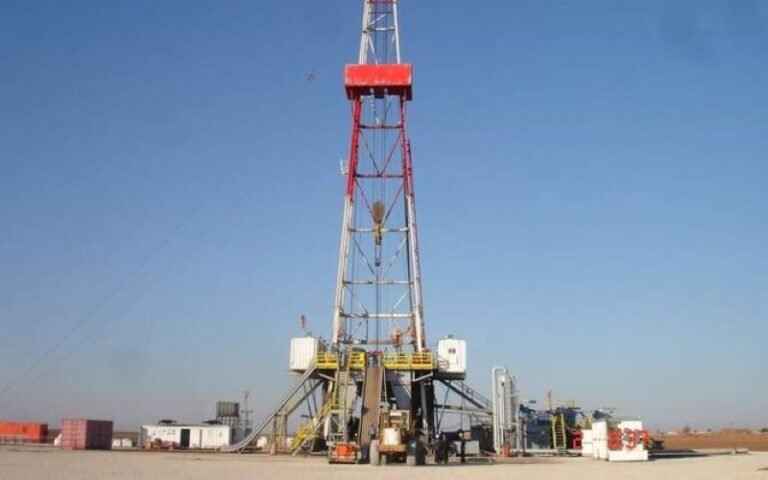
Although mediation increases the political presence of Qatar, energy diplomacy forms its structural advantage. Qatar has been ranked among the largest exporters of liquefied natural gas (LNG), which is provided to the large markets in Asia and Europe. The existence of long term contracts with nations like Japan, South Korea, China, and most recently Germany and France has made Doha play a key role in world energy security.
The energy crisis of 2022 in Europe, which was caused by the failure of Russian gas flows, once again underscored the significance of Qatar. European countries were actively interested in Qatari LNG in order to have diversity in the sources of supply. This pressure strengthened the bargaining power of Qatar, through which it could strengthen strategic alliances outside of the Gulf.
Energy is, therefore, not just a source of economic resources, but of political capital. Qatar intensifies interdependence to major economies by entering into long-term supply contracts and by increasing the production capacity using the North Field expansion project. Such dependence, on its part, increases the diplomatic power of Doha.
Soft Power and Global Image
Qatar has invested in soft power to augment its hard economic leverage. With the introduction of Al Jazeera in 1996, Doha was provided with a strong means of communication that was reachable in most parts of the world. The network increased the presence of Qatar, and it created the image of an opening and interaction, even in cases when its coverage caused controversy.
Sports diplomacy also increased the world profile of Qatar. The 2022 FIFA World Cup hosted in the country caused a level of global interest like never before as the country became the center of world media during the months. The enormous investments in infrastructure, aviation and cultural projects solidified Qatar as a brand of a modern and globally integrated state.
Qatar has been able to influence the perception of other countries with the help of education programs, cultural diplomacy, and even humanitarian aid. Its strategy is all about reputation management: the global presence strengthens security by putting Qatar in the international institutions and networks.
Qatar’s foreign policy, despite its diplomatic successes, faces criticism and limitations. Its image has been challenged by allegations of supporting radical groups, tensions with Gulf neighbors, and concerns over labor and human rights.
Balancing neutrality is increasingly difficult amid rising US–China competition and regional tensions involving Iran and Saudi Arabia. Engagement with highly polarizing actors could lead to diplomatic backlash.
Additionally, the global shift toward renewable energy poses long-term structural challenges. As reliance on hydrocarbons declines, Qatar must further diversify its economy and diplomatic tools to sustain its international influence.
The foreign policy of Qatar shows how a small state can use wealth, diplomacy and strategic placement to gain disproportionate influence. Doha has infiltrated regional and global systems through mediation, energy diplomacy and soft power.
But this role will have to balance cautiously in a world which is more multipolar and fragmented. The strategic autonomy should also be flexible instead of fixed. Provided that Qatar manages to navigate geopolitical and energy changes, its model of the activism of a small state could remain a unique case of how weakness can be turned into the accessibility of the whole world.
Qatar shows how a small state can survive and influence through strategy, diversification, mediation, and energy diplomacy. The 2017 blockade strengthened its independence and networks. Its future success depends on flexibility amid global competition and energy shifts, making it a modern model of adaptive small-state diplomacy.
*The views presented in this article are the authors’ own and do not necessarily reflect the views of The Diplomatic Insight.

Omneya Elkafafy
Omneya Elkafafy is pursuing her master’s degree in Middle Eastern Studies at Middle East Technical University (METU). She specializes in regional politics and strategic policy analysis and contributes to research on Middle Eastern dynamics and global diplomacy. She can be reached at omneyaelkafafy@hotmail.com

Abdullah Waqas
Abdullah Waqas is a geopolitical analyst area of experties in Middle Eastern and Indo-Pacific politics. A Türkiye Bursları Scholar, he is pursuing a Master’s in International Relations at Selçuk University Konya ,Türkiye. His work focuses on climate refugees, human security, and regional cooperation.