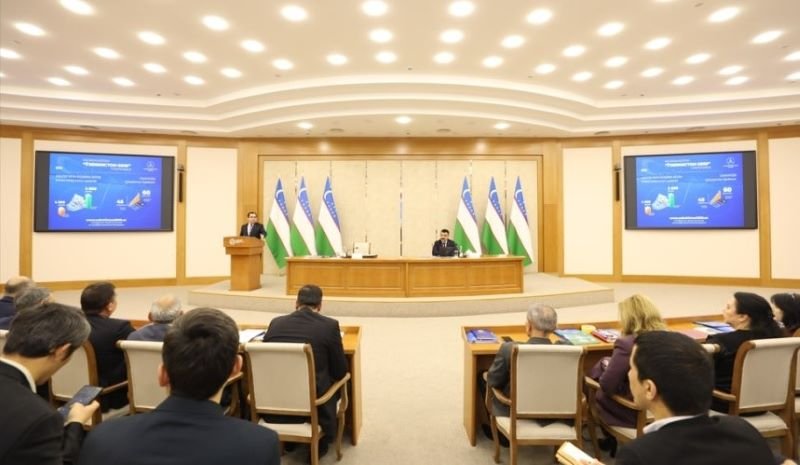
Tashkent (TDI): A public discussion on the draft of the updated ‘Uzbekistan–2030’ Strategy was held at the Academy of Public Policy and Administration under the President of Uzbekistan, in collaboration with the Development Strategy Center. The event brought together professors, teachers, researchers, and doctoral students.
At the opening of the session, Alisher Umarov, Vice-Rector of the Academy, and Eldor Tulyakov, Executive Director of the Development Strategy Center, highlighted the priorities set out in the President’s address to the Oliy Majlis and the Uzbek people.
They emphasized the need to refine the current Strategy in line with the reforms underway in the country, the achievements so far, and the importance of reaching the ambitious milestones established.
Adopted in 2023, the original ‘Uzbekistan–2030’ Strategy marked a significant new stage in the nation’s development. Based on the updated Constitution, it prioritizes enhancing human dignity, promoting sustainable economic growth, strengthening social protection, and building a people-oriented state.
Read More: ‘Uzbekistan–2030’ Strategy Strengthens Harmony and Stability
Early implementation experience has shown the need for clearer goals, annual planning, transparent funding sources, and defined accountability. Public feedback, regional proposals, and lessons from the initial phase further underscored the importance of updating the strategy.
According to Tulyakov, the revised draft represents a logical continuation of the current Strategy while introducing significant improvements in both content and approach. Unlike the original document, which primarily defined broad goals and priority areas, the updated Strategy links each goal to specific annual indicators.
“For example, in education and healthcare, the initial Strategy focused on expanding coverage. The updated version emphasizes quality, environment, and outcomes,” Tulyakov explained. “Alongside targeting 80 percent coverage of children with preschool education, the Strategy sets a goal of providing 100 percent of preschool institutions with clean drinking water and modern sanitary facilities. Annual targets also ensure full coverage of preparatory groups for school-age children.”
Read More: Uzbekistan –2030: Why the National Development Strategy Is Being Updated
The discussion included a detailed presentation of the proposed changes and an analysis of performance targets under both the current and updated Strategy. Participants asked questions and offered suggestions, while professors, researchers, and students provided recommendations and initiatives to further refine the draft.
The session highlighted the commitment to making the updated ‘Uzbekistan–2030’ Strategy a practical, results-oriented framework for the country’s continued development.

Sohail Majeed
Sohail Majeed is a Special Correspondent at The Diplomatic Insight. He has twelve plus years of experience in journalism & reporting. He covers International Affairs, Diplomacy, UN, Sports, Climate Change, Economy, Technology, and Health.