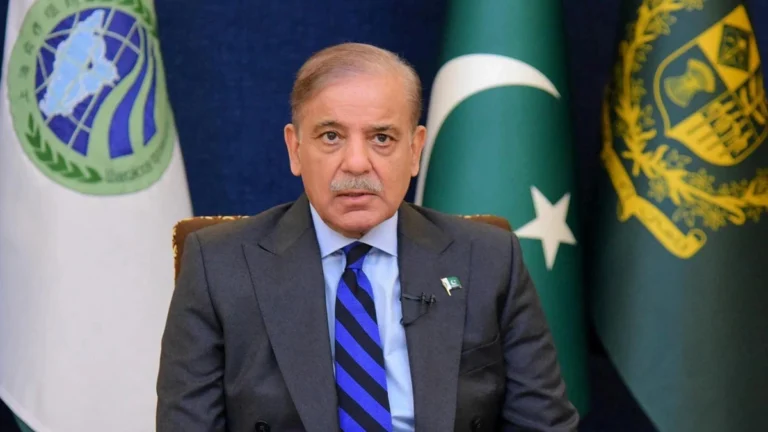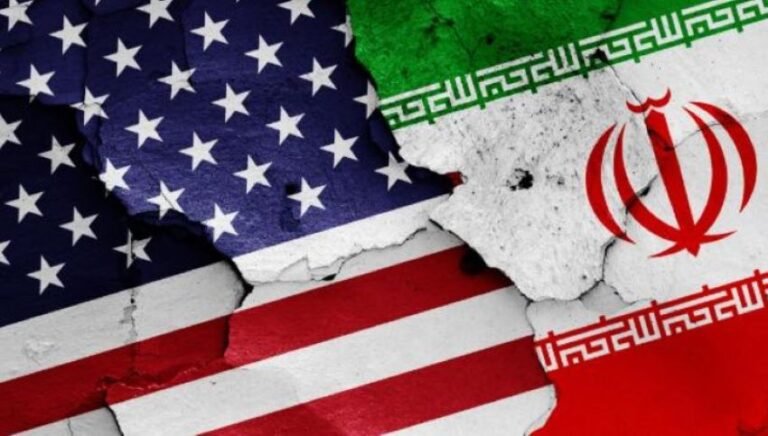
Islamabad (TDI): President Asif Ali Zardari and Prime Minister Shehbaz Sharif on Monday underscored the importance of a unified national approach and stronger coordination among institutions to deal with the challenges arising from the ongoing US-Israel war with Iran.
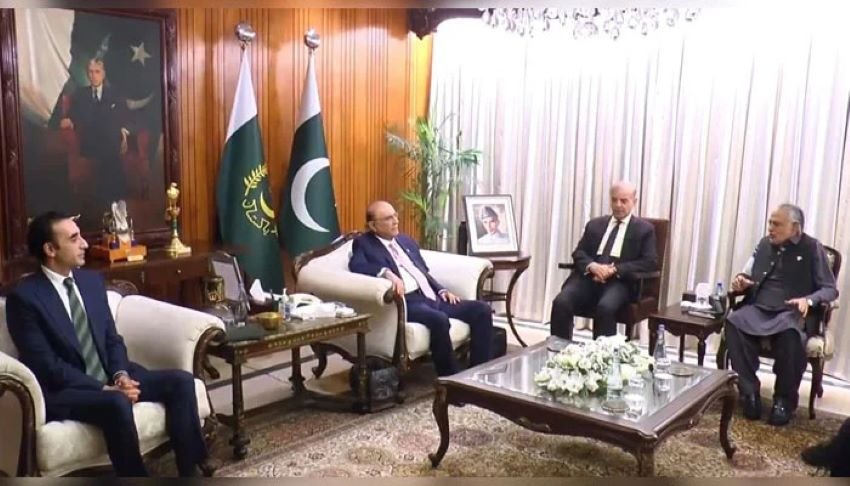
The prime minister met the president in Islamabad, where both leaders held detailed discussions on the evolving regional and domestic situation.
The meeting was attended by Deputy Prime Minister and Foreign Minister Ishaq Dar, former foreign minister Bilawal Bhutto Zardari, Interior Minister Mohsin Naqvi, and National Security Adviser Lieutenant General Asim Malik.
Participants reviewed the overall national security landscape, with particular focus on the shifting regional dynamics and their potential impact on Pakistan. Key issues such as economic stability, energy security, and internal security challenges were also discussed.
The leadership stressed the need for a coordinated national strategy, highlighting the importance of institutional alignment to effectively respond to the current situation.
Read More: Dar to Visit China Tomorrow as Diplomacy Intensifies Over Iran War
The meeting followed a high-level consultation held last week at Aiwan-e-Sadr, chaired by President Zardari and attended by Chief of Army Staff Asim Munir along with senior federal ministers.
During that session, civil and military leadership agreed on adopting a unified policy framework through consensus and close coordination to safeguard Pakistan’s security, economy, and food supply.
It was also agreed that economic management, energy planning, and food security must remain closely integrated with broader security considerations to effectively navigate the current crisis.
On the diplomatic front, Pakistan has intensified efforts to ease regional tensions through active engagement. A day earlier, Islamabad hosted a quadrilateral meeting involving foreign ministers from Pakistan, Saudi Arabia, Turkiye, and Egypt to explore options for de-escalating the Iran war.
Read More: Iran Denies Direct Talks with US, Calls Demands ‘Unreasonable’
The talks were attended by Saudi Foreign Minister Faisal bin Farhan Al Saud, Turkish Foreign Minister Hakan Fidan, and Egyptian Foreign Minister Badr Abdelatty.
These diplomatic initiatives come amid ongoing efforts to create room for negotiations to end the conflict involving the United States, Israel, and Iran, which began on February 28 and has continued to affect the broader region.
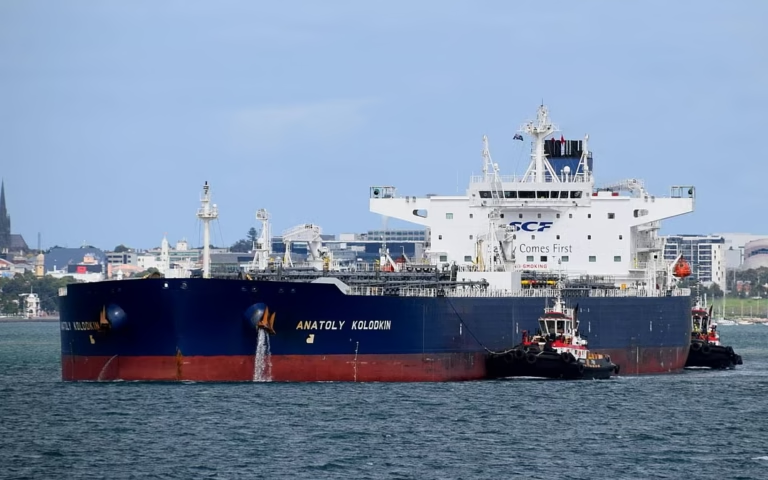
The crisis has also had significant economic consequences, particularly due to disruptions in oil and gas shipments through the Strait of Hormuz, placing additional pressure on global energy markets.