The rise of merchant shipping in Europe during the fifteenth and sixteenth centuries was initially not conceived as a project of conquest. For European powers such as Portugal, Spain, the Netherlands, and later Britain and France, the earliest maritime expeditions were framed as commercial ventures intended to secure spices, gold, and new trading routes. The Portuguese voyages around Africa beginning in the 1400s, and Columbus’s 1492 expedition under the Spanish crown, were justified primarily as economic expansions rather than territorial ones. Yet the commercial pursuit of wealth rapidly evolved into systematic colonization.
Trading posts became fortified settlements, settlements became colonies, and colonies became engines of extraction. The transatlantic slave trade—beginning in the early 1500s and continuing into the nineteenth century—arose directly from the same commercial maritime networks that Europe had celebrated as breakthroughs in global trade. A similar story unfolded centuries later in the Middle East. During the First World War (1914–1918), the peoples of the Arab world were promised independence by the British in exchange for revolting against the Ottoman Empire. But the secret Sykes–Picot Agreement of 1916, negotiated between Britain and France, revealed a different reality. Instead of self-rule, Arab territories were divided into spheres of influence.
After the war, the League of Nations Mandate system (1920) formalized British control over Iraq, Transjordan, and Palestine, and French control over Syria and Lebanon. The region’s inhabitants were kept, metaphorically, in “green pastures”—managed rather than empowered—while the colonial powers carved up borders to suit imperial interests. The pattern also appeared in South Asia. The East India Company, founded in 1600 as a limited liability enterprise for trade, gradually transformed into a territorial authority. Through a combination of military victories—such as the Battle of Plassey in 1757 and the Battle of Buxar in 1764—and political manipulation, the Company became the de facto ruler of vast territories in the Indian subcontinent.
By 1858, after the Indian Rebellion of 1857, British rule became de jure as the Crown dissolved the Company and established the British Raj. What began as commerce again matured into empire. The Ottoman Empire, too, fell victim to seemingly harmless economic arrangements. In the 1500s and 1600s, the Ottomans granted European Merchants Capitulations—trade concessions intended to stimulate commerce. Yet by the nineteenth century, these privileges had eroded the empire’s economic sovereignty. European powers gained extraterritorial rights, controlled tariffs, and influenced internal politics.
Read More: How the World Order Will Look Like in Next 50 Years
The empire, weakened by debt, administrative strain, and nationalist uprisings, gradually became known as the “sick man of Europe,” ultimately dissolving after World War I. What had started as trade evolved into dependency, and dependency evolved into collapse. Historically, diplomacy reflected the pace of these developments: slow, secretive, and deliberate. States operated through long correspondence, coded letters, and cautious negotiations. International relations were a craft shaped over months and years, often hidden behind palace curtains or conducted through carefully worded treaties. But the emergence of mass media—and now artificial intelligence—has shattered the old tempo.
Diplomacy is no longer confined to embassies and conference halls; it has become, as one observer noted, a “fireside chat of the dining room.” Leaders communicate directly with populations, sometimes bypassing their own foreign ministries. The rise of social media has injected speed, spectacle, and polarization into matters once reserved for professionals. Former U.S. President Donald Trump embodied this shift. On taking office in 2017, he dismissed climate change as “the greatest hoax,” and echoed slogans like “drill, baby, drill,” disregarding decades of painstaking climate diplomacy. His unfiltered social media posts routinely upended traditional diplomatic procedures—demonstrating how easily nuanced statecraft can be overshadowed by instant messaging. The darker side of this transformation is visible in global conflicts.
Facebook’s algorithms were cited by UN investigators in 2018 as contributing to the Rohingya genocide in Myanmar by amplifying hate speech and extremist narratives. Digital platforms became accelerators of violence—spreading propaganda faster than any envoy or treaty could counter. Meanwhile, technological warfare has evolved beyond the predictable logic of nuclear deterrence. In the Cold War, the “mutual assured destruction” doctrine ensured restraint: a nuclear first strike would trigger a devastating second strike. But cyber weapons operate under a different logic. They suffer from a “use it or lose it” syndrome, this incentivizes states to strike first, making cyberspace inherently unstable. A well-timed cyberattack can cripple infrastructure, disrupt economies, or manipulate public consciousness without a single missile being launched.
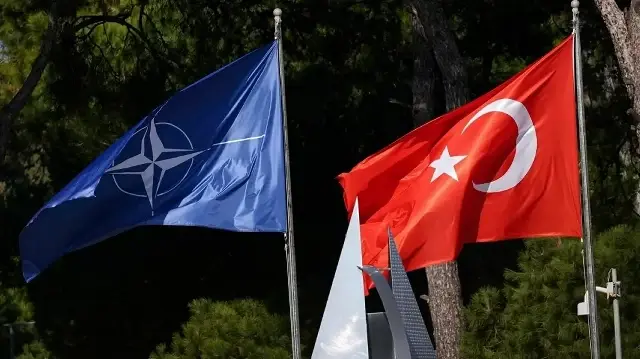
As NATO’s emerging doctrine of cognitive warfare suggests, the human mind itself has become a battlefield. Media saturation, targeted political messaging, and AI-generated content are used not just to inform or persuade, but to shape perceptions, emotions, and identities. The battles of the twenty-first century increasingly take place not on land or sea but inside the psychology of populations. Today, global events unfold with unprecedented speed. A diplomatic crisis may ignite on social media in minutes; markets react in seconds; misinformation spreads instantly across borders.
The centuries-old art of diplomacy—once a careful dance of patience, subtlety, and delayed disclosure—has become a hurried, reactive, and often chaotic enterprise. Humanity has sailed a long way from the age of merchant ships to the age of machine-driven communication. But the lesson remains the same: technologies that begin as tools of connection can, without foresight and restraint, reshape the world in ways no one initially intended.
*The views expressed in this article are the authors’ own and do not represent TDI. The contributor is responsible for the originality of this piece.

Idrees Khan
Idrees Khan holds a BS(Hons) degree in Government and Public Policy and is an alumnus of the SUSI exchange program at the University of Massachusetts Amherst. Currently, he is serving as Azerbaijan Youth ministry representative.