Islamabad (TDI): Pakistan and China have entered a new phase of cooperation, expanding beyond infrastructure to focus on production, exports, employment, and sustainable development, Federal Minister for Planning Ahsan Iqbal said on Wednesday.
Speaking at the China-Pakistan Mineral Cooperation Forum, Minister Iqbal noted that the partnership, now celebrating the 75th anniversary of diplomatic ties, has become a model of trust, continuity, and strategic depth.
He highlighted the transformative impact of the China-Pakistan Economic Corridor (CPEC) on Pakistan’s development landscape, citing advances in energy, roads, national connectivity, and the development of Gwadar Port.
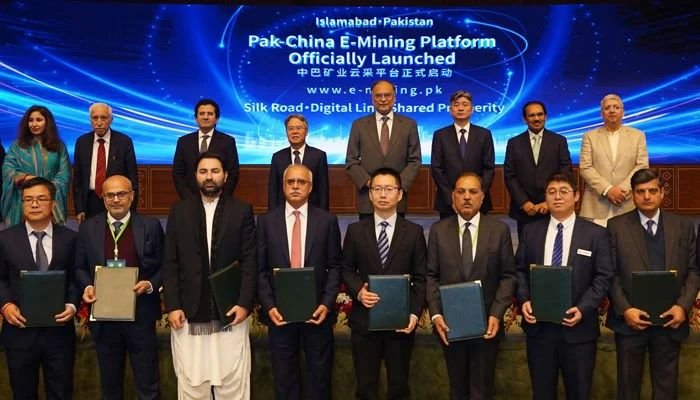
As part of deepening collaboration, Pakistan and China launched the Pak-China E-Mining Platform, a digital initiative designed to improve information sharing, project coordination, and cooperation between Pakistani authorities and Chinese enterprises. The platform aims to attract more than $10 billion in investment into Pakistan’s mineral sector.
Minister Iqbal emphasized that CPEC 2.0 aligns with Pakistan’s national economic transformation plan, Uraan Pakistan, which targets a trillion-dollar economy by 2035. During his recent visit to China, he signed a Memorandum of Understanding linking Uraan Pakistan’s “Five Es” framework with President Xi Jinping’s Five Growth Corridors, creating a strategic synergy in planning, investment, and implementation.
“The mineral sector is pivotal for achieving our export goals under Uraan Pakistan,” Iqbal said. “While Pakistan’s mineral resources are valued at around $6 trillion, current exports remain at just $2 billion annually. Through modern technology, better governance, and international partnerships, this could grow to $6-8 billion per year, creating millions of jobs.”
Read More: Pakistan, China Discuss Expanded Agri Trade and Cooperation
He stressed the need to expand cooperation with China beyond raw extraction, into processing, smelting, refining, and value addition. Successful projects such as Saindak, Dodar, and Thar, along with recent investment agreements, demonstrate growing confidence in the sector.
Sustainable and inclusive development was highlighted as a priority, ensuring resource-rich regions such as Balochistan and Khyber Pakhtunkhwa benefit through employment, education, and health facilities. Minister Iqbal also assured that the safety of Chinese citizens and investments remains a top government priority, with protective measures being implemented under the Special Investment Facilitation Council (SIFC).
The minister called on China to consider expanding access for Pakistani exports, noting that even a small share of China’s $2 trillion annual imports could significantly strengthen Pakistan’s economy. He projected that Pakistan-China trade could grow from $3 billion today to $50 billion by 2035, easing foreign exchange pressures and reducing reliance on IMF bailouts.
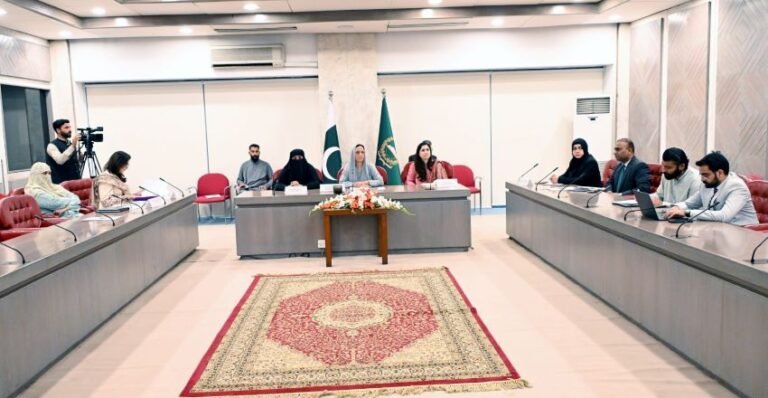
The Pak-China E-Mining Platform, launched during the forum organized by the China Chamber of Commerce in Pakistan, is expected to improve transparency, efficiency, and collaboration in the mineral sector. The event saw participation from more than 70 Chinese companies, over 100 Pakistani companies, and around 800 attendees, reflecting strong mutual interest.
Read More: Pakistan, China Defense Cooperation Promotes Regional Peace: NA Speaker
Chinese Ambassador to Pakistan, Jiang Zaidong, delivered the keynote address, reaffirming China’s commitment to investing in Pakistan’s mining sector and supporting technological and capacity-building initiatives. He emphasized sustainability, international standards, and community engagement, noting that the Saindak project alone has trained over 5,200 local employees.
The launch of the Pak-China E-Mining Platform marks a major milestone in the ongoing effort to transform Pakistan’s mineral wealth into industrial strength, export competitiveness, and shared prosperity.