

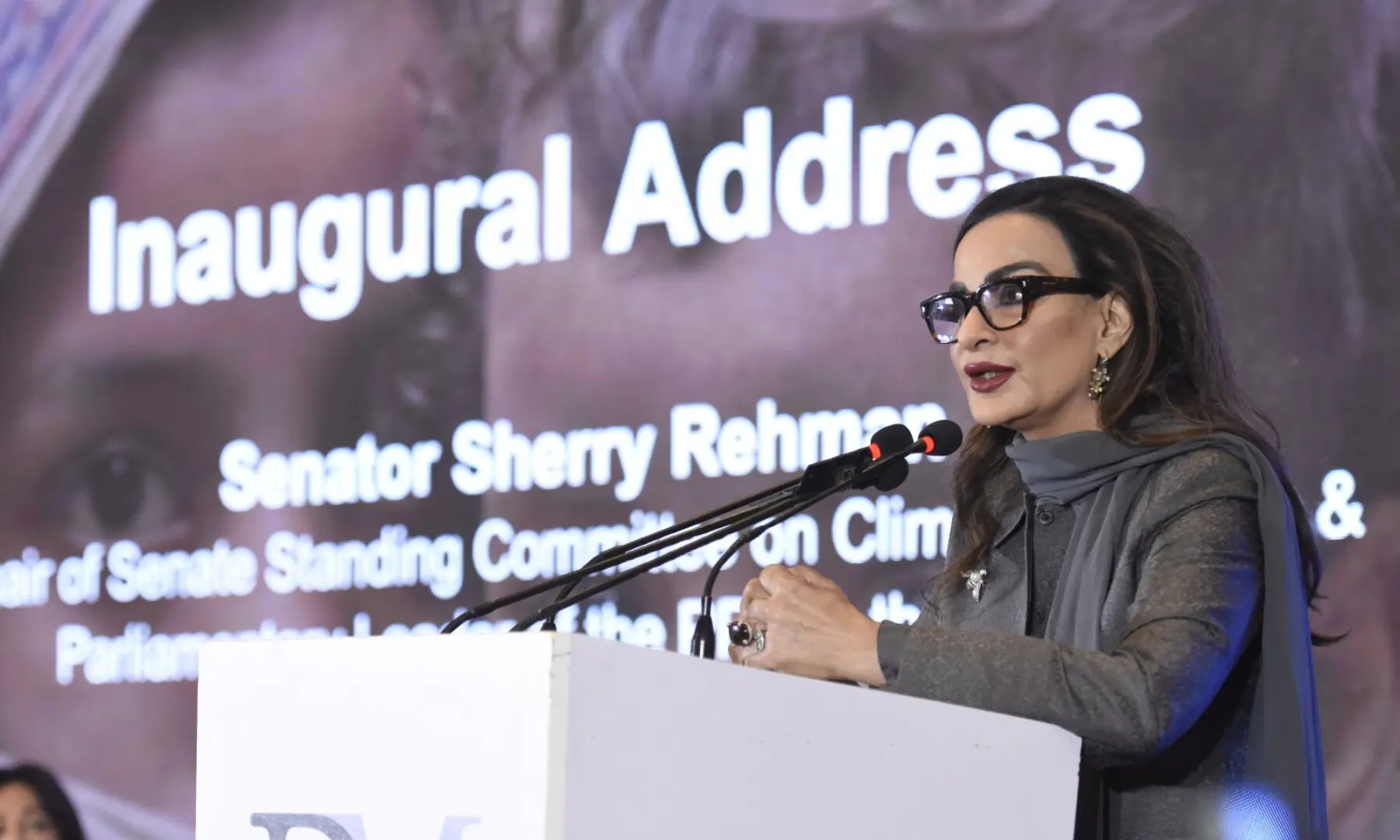
Islamabad(TDI): The Pakistan Population Summit 2025 continued for its second and final day on Tuesday, bringing together politicians, economists, development specialists, private sector leaders and experts to address the country’s rapidly growing population and its impact on national development.
Organized by Dawn Media, the summit emphasized building a shared vision as population pressures increasingly affect healthcare, food security, water availability, and employment.
The summit opened with discussions stressing that Pakistan cannot achieve prosperity if its population continues to outgrow the state’s capacity to provide essential services.
Policymakers and experts warned that when population growth exceeds available resources, even well-intentioned development initiatives can lose their impact. Comparisons with neighboring countries highlighted the urgency of treating population management as a top political priority.
Read More: World Population Day 2025 – In Numbers and Trends
The two-day summit comprised over twelve sessions that covered a wide range of issues, including achieving population balance by 2050, political commitment to population planning, regional demographic trends, human development challenges, rapid urbanization, women’s empowerment and the role of information ministries in shaping public understanding.
Several high-profile government officials led the sessions, including Finance Minister Muhammad Aurangzeb, Planning Minister Ahsan Iqbal, Minister of State for Health Dr. Malik, Information Minister Attaullah Tarar, and Karachi’s Mayor Murtaza Wahab.
Activists like Tahira Abdullah highlighted the feminization of poverty and the unpaid labor performed by women, insisting that women’s autonomy must be central to policymaking.
Experts emphasized that population balance cannot be achieved without informed women who are allowed to make their own reproductive choices. Legal expert Humaira Masihuddin stressed that forcing pregnancy on women contradicts justice and Islamic principles of consultation.
Read More: Impact of global population growth on sustainability & quality of life
Religious viewpoints were addressed by Dr. Qibla Ayaz of the Supreme Court’s Shariat appellate bench, who highlighted the need to disconnect the concept of sustenance (rizq) from population numbers.
Dr. Qibla also argued that birth spacing should focus on health, as neglecting it leads to stunted children and weakened mothers.
Mayor Murtaza Wahab noted that Krachi has grown twentyfold since 1951, placing extreme pressure on infrastructure. He called for planned housing options and the development of alternative cities to prevent low-income communities from being pushed to city fringes.
By bringing together voices from government, activism, religion and urban planning, the Pakistan Population Summit concluded with three main takeaways: a holistic approach to population growth is essential, sustained political commitment must drive population policy, and empowering women is critical to achieving sustainable development.
Tayyaba Arif
Tayyaba Arif is a student of International Relations, and takes keen interest in conflict reporting and the dynamics of regional and global affairs. She is especially committed to SDG 17, and believes in effective partnerships and promoting cooperative initiatives. She can be reached at tayyabarrif0@gmail.com

