

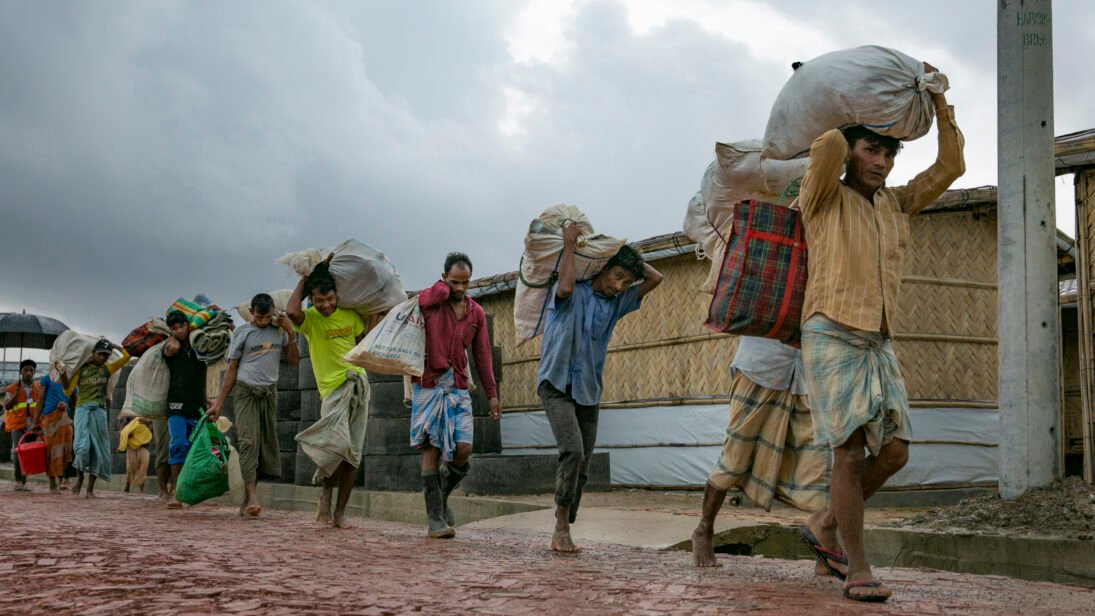
When people in South Asia talk about climate change, they often think of floods, heatwaves, and the rising price of food. What many still don’t see clearly is how these environmental changes are pushing families to leave their homes. Every year, families in South Asia are forced to leave the homes they have lived in for generations.
Bangladesh’s foreign minister spoke at the UN General Assembly about people being forced to move because of climate change. There was no argument, no debate. Just silence. Not because the issue is not real, but because most South Asian governments would rather avoid talking about it.
Climate migration in South Asia rarely looks dramatic on the surface. Instead, it happens slowly and quietly. Take the story of ‘Rashida Begum’. Her family did not ‘cross the border’. They simply moved from their village on the coast of Bangladesh to Dhaka, joining thousands of others who arrive there every single day after losing homes to floods and rising seas. Villages in the coastal belt are disappearing. Dhaka and Chattogram continue to absorb climate migrants in large numbers. It creates pressure on housing, sanitation, and employment.
In Pakistan, floods have become a regular nightmare. Entire districts in Sindh and Punjab remain underwater for weeks. When the 2022 floods hit, millions were displaced, but even today, smaller waves of displacement happen every year.
In India, heatwaves are so intense that they shut down outdoor work. Droughts that kill crops and storms that flatten homes are increasing. All of this forces people to move, usually to already overcrowded cities. Internal migration in India is massive, and climate pressure only adds to it.
In the mountain region of Nepal, landslides and unstable slopes have made life harder for the local people. Whenever rain strikes, homes and roads crumble. Families often have no option but to leave the hills for the safety of cities.
Read More: Polycentric Governance and the Future of Climate Finance for Bangladesh
There is something no one says out loud. Most South Asian governments don’t actually know how many people have been displaced by climate impacts inside their own borders. The numbers shared in conferences like “40 million displaced since 2008” come mostly from researchers abroad. They are not official national figures. This data gap is not accidental. Acknowledging displacement carries diplomatic risks. It suggests governance failures and complicates domestic migration politics.
Countries end up talking about migration without actually sharing the basic facts behind it. India and Bangladesh keep discussing border control, but neither side is working with the same information about why people are being pushed out of their homes in the first place. Pakistan and Afghanistan talk about water issues, yet they don’t work together to understand how melting glaciers will shape where people move in the coming years. Nepal sends huge numbers of workers abroad every year. Many of them leave because farming is becoming harder with the changing weather.
Countries need to share honest data so everyone understands what is actually happening on the ground.
South Asian countries share rivers, coastlines, weather patterns, and fragile ecosystems. They also share the risks that climate change brings. A disaster in one country can cause devastating effects in the neighboring country. We saw this very clearly during the 2025 floods. The rain started in northern India after an unusual monsoon cycle, but the water did not stop at the border. It travelled straight into Pakistan, overflowing rivers in Punjab and Sindh. Entire villages were submerged within hours. Thousands of families on both sides were forced to leave their homes.
Climate migration may begin within the borders, but its effects can cross borders. South Asia’s biggest cities are already facing this pressure. Places like Karachi, Dhaka, Delhi, and Kathmandu are turning into magnets for people escaping floods, heat, and crop failure. These cities were never built to handle such large numbers. When these cities struggle, the effects spill into the whole region through trade, jobs, and rising living costs.
Every foreign ministry in South Asia carries the same worry, even if no one says it loudly. India fears huge numbers of people crossing over from Bangladesh as sea levels rise. Bangladesh worries it will be blamed for a crisis it did not cause. Pakistan fears that climate-displaced families will overlap with the refugee population it already hosts. Nepal fears losing its young population as farming becomes harder. These concerns are not exaggerated
There is a lesson in our own history. India and Pakistan kept the Indus Waters Treaty alive even during wars because both knew that acting alone would only make things worse. Climate migration needs the same attention.
There is also a simple economic truth that ignoring climate migration costs far more than preparing for it. Pakistan’s 2022 floods caused $30 billion in losses and displaced millions. Studies show that if even a small fraction of that amount had been spent on early protection and planning, the damage would have been far less. Instead of seeing climate migration as a threat. The region could treat it as a chance to invest early and save later.
Read More: How Divergent Foreign Policies Limit Collective Climate Action in South Asia
Waiting for SAARC to take the lead will not work. The group has been stuck for years because of political tensions. A better model is flexible cooperation. A small group of countries working together on specific issues. Bangladesh, Nepal, and Bhutan could work on glacier melt. India and Bangladesh could focus on the delta. These small steps are easier to manage and less likely to fail. Other regions do this already, like the Mekong River countries, which keep talking even when their politics are tense.
Another big issue is the ‘protection gap’. Someone fleeing war is legally protected, but someone fleeing floods, rising seas, or unbearable heat is not. This leaves climate-affected families without rights or support. A simple regional agreement could fix this by giving displaced families temporary protection, basic services, and clear rules about return or long-term settlement.
China plays a quiet but important role. Most major South Asian rivers start in the Himalayas under Chinese control. What China does upstream affects everyone downstream, but individual countries have little influence. A united South Asian voice would carry more weight and push for better data sharing on water and glaciers.
There is a chance here. If South Asia waits until the next big climate disaster hits, cooperation will be rushed and chaotic like Europe’s migration crisis. But if the region starts now, even small steps can create trust. Success won’t mean ending migration. It simply means having shared warnings, shared planning, and calm, predictable ways to help people move safely when they must.
*The views expressed in this article are the authors’ own and do not represent TDI. The contributor is responsible for the originality of this piece.

Maryam Latif
Maryam Latif is a Microbiology graduate with a keen interest in environmental health, food security, and sustainable development.

