Navruz, as a celebration of unity and the revival of nature, has always contributed to reducing conflicts and promoting peace in the world. In the 21st century, holding joint Navruz gatherings and celebrating Navruz with all its rituals and traditions between countries can help bring countries suffering from political problems and regional conflicts closer together.
The celebration of Navruz is not only a national holiday of a nation or a region, but also an important international cultural phenomenon. The cultural basin of Navruz plays an important role in the development and strengthening of diplomatic relations, peace and regional integration. Navruz is a unifying force for peoples, nations, and civilizations, and as we have mentioned above, it is not considered a traditional holiday of one or several peoples and nations, but today it has an international status and is celebrated in most countries of the world. Celebrating it on a global scale not only helps preserve the values of ancient culture, but also strengthens and expands international cooperation.
Navruz, as a common holiday, has contributed to strengthening friendship and cooperation between countries included in its cultural sphere, both in the historical past and in modern conditions, and has always been a unifying factor for different nations of the world. The cultural basin of Navruz as a common cultural phenomenon has a history of several thousand years, but it was officially recognized at the international level in 2010.
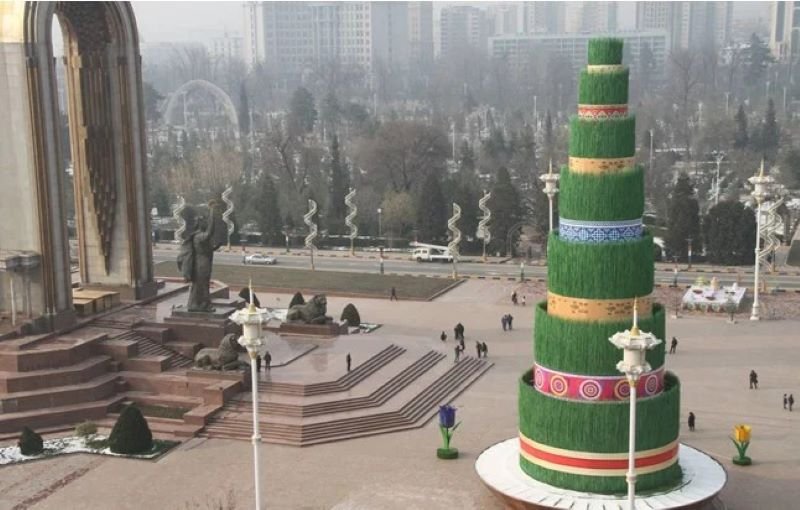
Read More: Tajik Embassy Hosts ‘Spring of Friendship’; Navruz Reception
The Navruz Basin refers to those countries and regions that celebrate Navruz as an ancestral tradition and an official national holiday. These countries share a common history and culture and celebrate Navruz as a celebration of the revival and renewal of nature, the spread of goodness, solidarity, and peace. The Navruz cultural basin includes Tajikistan, Iran, Uzbekistan, Afghanistan, Azerbaijan, Kyrgyzstan, Kazakhstan, Turkmenistan, Turkiye, Pakistan, India (especially the Kashmir region), China (in the Uyghur region), and Iraq (in the Kurdish region).
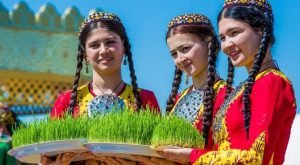
The Government of Tajikistan promotes Navruz as a force for development and strengthening regional cooperation, a symbol of friendship and peace between peoples. The Republic of Tajikistan plays a leading role in the cultural basin of Navruz and, as a country with a rich and ancient history, makes a great contribution to the celebration of this holiday, in order to develop the cultural heritage of Navruz, expand international cooperation, and present national values.
In his next Address to the Majlisi Oli of Tajikistan on the main directions of domestic and foreign policy, delivered on December 16, 2025, President Emomali Rahmon instructed officials of state departments and enterprises to establish the “International Navruz Center”, which is one of the important initiatives in preserving the memory of Aryan history and peoples of the Aryan race.
The establishment of this center takes Navruz out of the scope of a traditional holiday and gives it the status of a cultural and civilizational institution. As President Emomali Rahmon emphasized, “Navruz is not only a folk holiday, but also an eternal philosophy, an embodiment of the values of humanity, the bond of generations, and the spiritual heritage of thousands of years”. In this regard, Navruz knows no borders and is not associated with any religion or sect. Therefore, he called it a “celebration of humanity” or “celebration of human and nature” because it is a factor of high human wisdom and understanding about man’s relationship with the environment.
In essence, the establishment of an International Navruz Center in the space of countries that celebrate Navruz or are located in the Navruz cultural basin can serve as a real tool for cooperation and a unifying symbol of human civilization. According to the researchers, if the Center acts as a unifying symbol of civilization, then it will become a field of diplomatic dialogues, general conferences, and a place for Navruz performances. This is not a bad trend, but its impact in a world divided by power, economy, and technology will limit the goals and objectives of this center. However, if the International Navruz Center takes shape as a real tool for cooperation between the countries of the Navruz cultural basin, the center could become a part of regional politics.
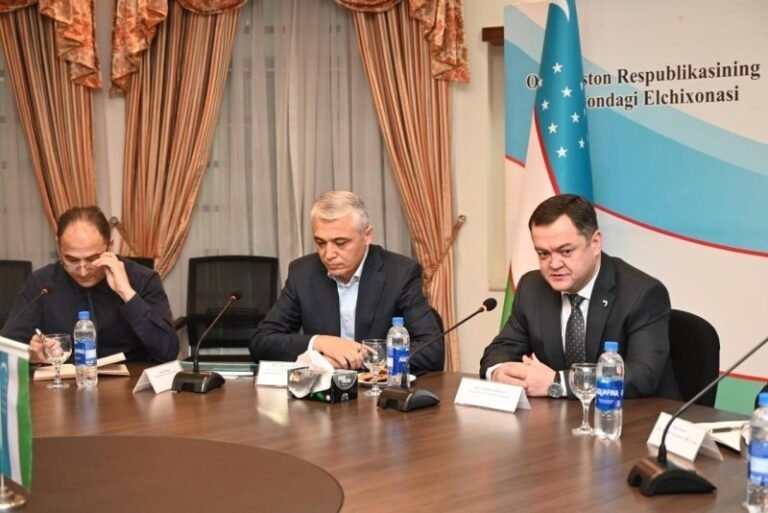
Read More: Uzbekistan Embassy in Islamabad Celebrates Navruz
In the near future, the International Navruz Center may become a regional coordination center. The absence of such a center to date has led to the fact that Navruz has not taken shape as a coordinating force between the countries of the Navruz basin. In other words, to put it simply, Navruz existed but was not a coordinating force, the common identity was fragmented and vulnerable or it was present but was not a subject. The purpose of this center in the current conditions is also to give Navruz a coordinating power, form a common identity and become a subject of cooperation. It also helps the countries of the Navruz cultural basin to take a joint position on international issues.
This center must have all the capabilities and take on the responsibility of unification and mobilization. Because its establishment will inevitably create political jealousy and lead to ideological and cultural competition. To balance the forces in the struggle of invisible forces and interest groups, the center is the only institution that is responsive to them. There is experience of such centers in other countries of the world, which help to promote their culture and civilization. In particular, in China (Confucius Center), France (Francophonie), Germany (Goethe Center), Spain (Cervantes Institute), etc. These centers and institutes have taken on a very difficult mission in difficult conditions, serving to promote the culture and spirituality of the people.
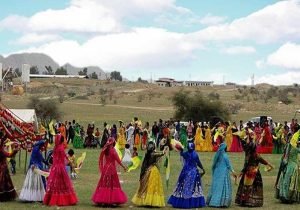
The essence of the initiative to establish the International Navruz Center in Tajikistan is to take it beyond the scope of a traditional celebration and, in the next decade, elevate it to the level of an active institution and coordinating entity for cultural and diplomatic relations.
Navruz has soft power and can serve as a means of strengthening trust, cultural cooperation and creating a favorable atmosphere for cooperation. International experience proves that cultural institutions are an effective means of protecting national interests in conditions of unfair competition. In this regard, the International Navruz Center can become a center for coordinating cultural policies of the countries of the Navruz basin, a center for developing joint scientific and research programs, a center for youth exchange, developing cultural tourism and presenting common civilizational values. Therefore, we propose that the center should have a joint management structure with the participation of representatives of the countries of the Navruz basin in order to develop long-term programs and have transparent coordination mechanisms.
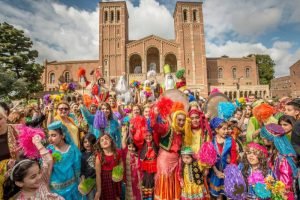
In general, the establishment of the International Navruz Center can contribute to strengthening a common cultural identity, expanding regional integration, and forming a coherent position on international issues. The effectiveness of this center will depend on the institutional level, professional independence, and the ability to transform Navruz from a cultural symbol into a subject of cooperation. Since Tajikistan has promoted this initiative, it can be said with confidence that this center will achieve its goals and objectives and fulfill its great tasks and civilizational mission.

Iskandar Sharifov
Iskandar Sharifov is a researcher at the CIS Department of the Institute for the Study of Asian and European Issues.