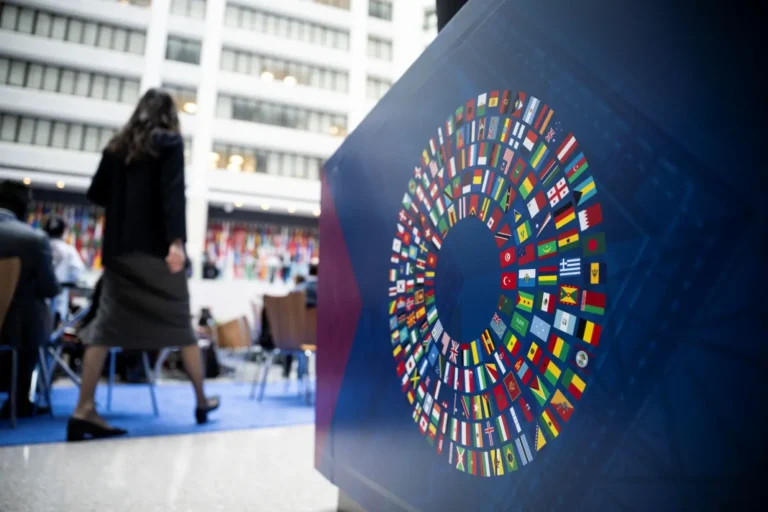
In the contemporary era, the world has grown more fragmented, with the gradual erosion of multilateralism. The surge in the inability of the international institutions to respond effectively to global crises not only showcases the failure of multilateralism but also the deteriorating political commitment of influential states to cooperative global governance.
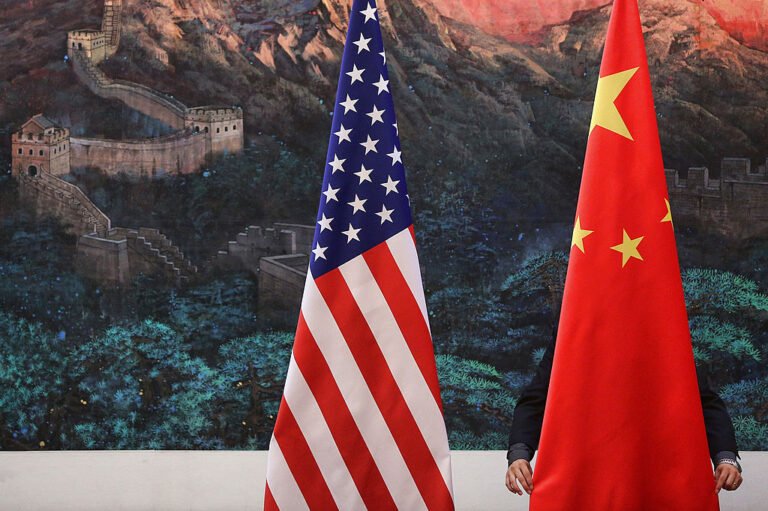
The diminishing multipolarity became quite evident from the recent military escalations, initiated from the Gaza apartheid to the recent US-Israel and Iran conflict. The economic warfare in the form of tariffs was also observed as a part of non-kinetic conflict. The examples include the U.S-China trade war, U.S sanctions on Iran and Russia, and the imposition of high tariffs globally.
From 1815 to 1880, British rule was considered the superpower, capturing most of the land and resources. The empire ruled territories across Asia, Africa, the Middle East, and the Americas. The prime mode of asserting its control was through colonialism, trade and naval dominance. The British Imperial Rule is often termed as Pax Britannica. Unfortunately, like every empire, the British Empire met its downfall during the Second World War (WWII), birthing a new global order through the creation of the United Nations in 1945.
The purpose of establishing such an organization was to avoid wars and resolve conflicts through negotiation, dialogue, and diplomacy. The inauguration of the UN was the start of a new global order, with the beginning of decolonization of colonized states.
From the fall of the Imperial rule to the creation of the UN, the world became dynamic, liberating states from horrific colonialism. This dynamism brought major changes to the world map, as independent states began to establish themselves with newly found sovereignty and independence. Soon after the emergence of nation-states, the world was divided into two distinct segments carrying big ideological differences, namely Capitalism and Communism. This time around, the fragmentation was purely ideological, leading to the eruption of the Cold War between two sovereign states, i.e., the United States of America (USA) and the Soviet Union (USSR).
The war disintegrated the Soviet Union into multiple nation-states and raised a unipolar world, with the U.S as the new hegemon. The unipolar world from 1991 onwards saw an expansion of democracy, globalization, and the free market system. The fate of unipolarity, like other orders, also succumbed to the ever-changing international environment, making it more fragmented, with the growing dominance of China in capturing the global market.
Read More: Davos 2026: A Spirit of Dialogue Meets Contested Multilateralism
The emergence of China heightened the strategic anxiety of the US, as it openly threatened the hegemony of the U.S with its economic might. It is intriguing to observe that the world also wanted a break from unipolarity, as little resistance was observed in the way of China as an emerging influential state, reshaping the power balance.
The point to ponder is that from the events leading up to the formation of the UN, and successfully relieving the world of imperial rule by establishing proper institutions to halt future wars, the proportion of conflicts has grown. The reason is the paralysis of such institutions due to an unequal power balance.
Unfortunately, institutions such as the UN have failed repeatedly to prevent wars and provide a sustainable resolution to seal the leakage spots leading to potential escalation. The recent war inflicted on the people of Palestine, followed by the US-Israel-Iran standoff, showcases the failure of the United Nations. The numbness of the United Nations in maintaining global peace and order is reprehensible.
The irony lies in the acceptance of the world to allow the powerful states to do whatever they see fit in pursuit of their national interest, ultimately feeding on realism. It is when the principle of international anarchy persists, allowing the influential states to invade the sovereignty of other states to safeguard their national interests. In this light, the world has become increasingly fragmented in its national pursuits, rendering the concept of collectivism not worth a hill of beans.
This shift has caused a surge in recent escalations among multiple states due to conflicting ideologies and interests, fortifying fragmentation and undermining multilateralism to its core.
The abrasion of multilateralism is not a distant concern but a reality today. As global institutions weaken and powerful states act with increasing self-interest. The collective security ensured by such institutions continues to fade, leaving minimal traces for the future of a stable, multipolar and collective world. The fragmentation will continue to grow in the future, driven by narrow national interests.
The future has limited the boundaries for cooperation and collaboration. To pursue collectivism, political commitment needs to be cultivated from scratch with accountability, mutual trust, and genuine multilateral agreement that is feasible for the world to implement. This way, multilateralism might have a chance to bloom again, with a proper structure, coherence and order.
*The views presented in this article are the author’s own and do not necessarily reflect the views of The Diplomatic Insight.

Farazay Zia
Farazay Zia is a student of Government and Public Policy Department at the National Defense University, Islamabad. She can be reached at farazay.zia03@gmail.com