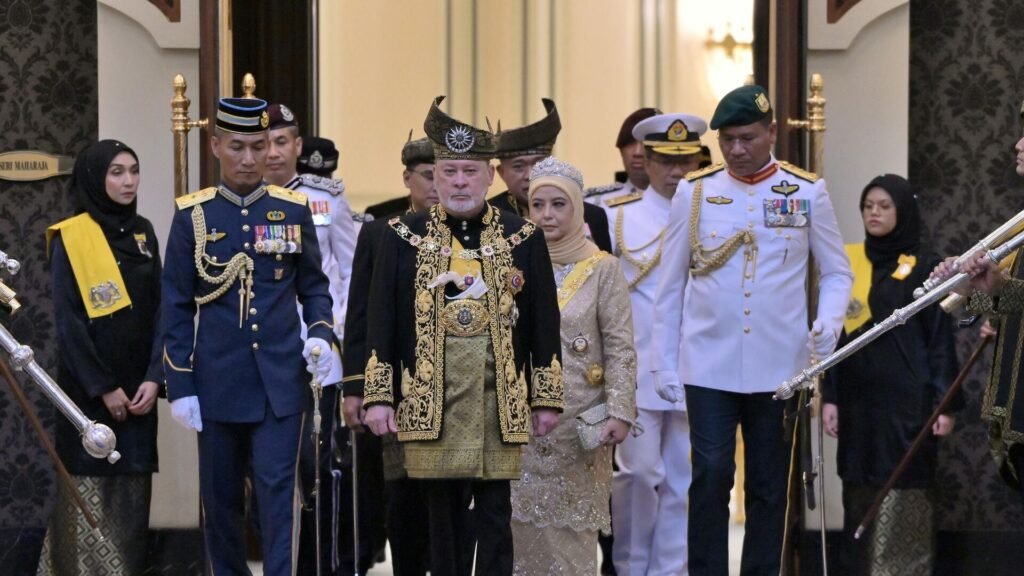
In recent years, Malaysia has quietly but decisively expanded its footprint in international diplomacy. Malaysia is a constitutional monarchy with a unique rotational kingship, headed by the Yang di-Pertuan Agong, who plays both ceremonial and diplomatic roles. The current king, Sultan Ibrahim ibni Almarhum Sultan Iskandar, from the southern state of Johor, was coronated in 2024 and will maintain his role as head of state until 2029.
On January 25, Sultan Ibrahim departed Malaysia to travel to Saint Petersburg after being invited to Russia by President Putin. The king’s visit to Saint Petersburg marks his second official trip to Russia, following a landmark state visit to Moscow and Kazan last August. That visit was historic: it was the first time a Malaysian head of state had formally engaged with the Russian Federation, signaling Malaysia’s intention to cultivate strategic relationships beyond its immediate Southeast Asian neighborhood.
A second invitation to Russia within one year highlights Malaysia’s growing influence and nuanced approach to global affairs, positioning Kuala Lumpur as a key interlocutor between East and West.
Malaysia’s diplomatic engagements over the past year illustrate its remarkable ability to navigate complex global dynamics. In October 2025, the country hosted the ASEAN Summit, an event of growing importance in Asia-Pacific geopolitics. The summit was attended not only by fellow Southeast Asian leaders but also by major global figures, including former U.S. President Donald Trump and Japan’s new Prime Minister Sanae Takaichi, underscoring Malaysia’s capacity to convene influential leaders on the international stage.
At the summit, Malaysia oversaw the signing of the Kuala Lumpur Peace Accord, a temporary resolution to a longstanding border dispute between Cambodia and Thailand. Although tensions between the two nations resurfaced a few months later, the Accord demonstrated Malaysia’s ability to bring parties to the table and provide a framework for dialogue, reinforcing its diplomatic credibility and soft power.
Read More: Malaysia to Ban Social Media for Under-16’s From Next Year
What makes Malaysia’s diplomacy particularly noteworthy is its breadth of engagement. Within a single year, the country’s leadership has met with not only Russian President Vladimir Putin and former U.S. President Donald Trump, but also Japan’s Prime Minister Sanae Takaichi and China’s Premier Li Qiang, showcasing a rare ability to balance relationships across divergent geopolitical spheres. Such engagements are not merely symbolic; they reflect a broader strategic vision that maintains Malaysia’s autonomy while allowing it to participate actively and credibly in regional and global discussions.
Beyond state visits and summitry, Malaysia has also been vocal in addressing pressing international crises. Most recently, it has contributed to global discourse on Israel’s actions in Gaza, advocating for accountability and humanitarian intervention.
Malaysia has long refused to recognize the State of Israel until a two-state solution is reached and prohibits Israeli citizens and Israeli-registered cargo ships from visiting the country. Despite these bold policies, Malaysia continues to play a prominent role in international affairs, adding a moral dimension to its diplomatic profile.
The king’s visit to Saint Petersburg is therefore more than ceremonial. It represents a continuation of Malaysia’s proactive engagement in international affairs, combining cultural diplomacy, such as through visits to institutions like St. Petersburg’s Hermitage Museum, with strategic dialogue. By fostering relationships across diverse political and cultural contexts, Malaysia demonstrates that small or medium-sized states can exert outsized influence on the global stage.
Malaysia’s growing visibility challenges conventional assumptions about which countries “matter” in global politics. Often overshadowed by regional heavyweights like China, India, or its larger neighbor Indonesia, Malaysia is proving that a combination of historical ties, strategic mediation, and principled stances on global issues can amplify a nation’s influence. Observers should take note. While the Malaysian monarchy may not yet have the worldwide recognition of other royal houses, its unique domestic and international role positions Malaysia as a quietly powerful diplomatic actor.
In conclusion, the king’s recent journey to Russia is emblematic of Malaysia’s rising profile in world affairs. Through high-level engagements with global leaders, effective facilitation of regional agreements, and principled positions on international conflicts, Malaysia is staking a claim as a thoughtful and influential player in diplomacy. The world would do well to watch Kuala Lumpur closely, as the country continues to navigate the challenging but consequential currents of 21st-century international relations.
*The views presented in this article are the author’s own and do not necessarily reflect the views of The Diplomatic Insight.