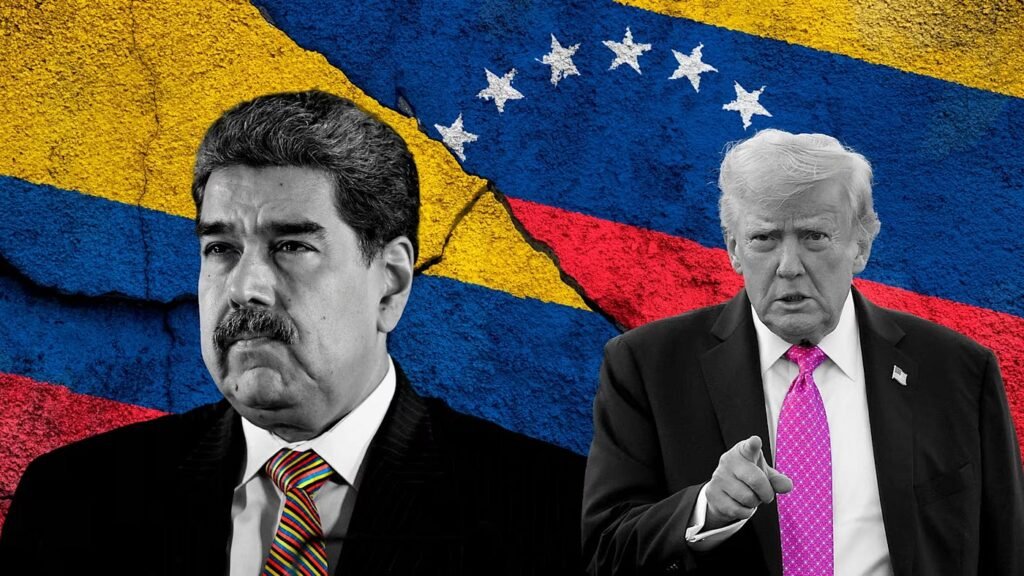
The recent capture of Venezuelan President Nicolás Maduro and his wife mark another chapter of instability and regime change in Latin America and have reestablished uncertainty across South America and exposed the vulnerability of its political system. Washington accused Maduro for being complicit in nacro-terrorism under international law, and US President Donald Trump confirmed the charge. But more than that, the real message here is political. A US Department of State statement by Secretary of State Marco Rubio, telling Cuban leaders to be worried, clearly shows that this is not about one man, but about punishing any government that resists US authority.
And that means a return to the 1950s-60s style of regime change in Latin America and this time, not just through covert means. Since the Monroe Doctrine, the United States has considered South America to be its “backyard” and a place where sovereignty has always been conditional, not absolute. This latest event simply continues that history. The United States has intervened (directly or indirectly) in Chile, Brazil, Argentina, Bolivia, Paraguay, Uruguay, Peru, Ecuador, Colombia, Venezuela and Guyana depending upon how intervention is defined. What is different now is not the intent but the defiance of the action.
Why Venezuela is at the center of the current crisis stems from the fact that Venezuela is one of the biggest oil producer in the world producing between 900,000 and 1,100,000 barrels of oil a day according to the Organization of Petroleum Exporting Countries (OPEC), with production lately being around one million barrels a day. That makes it an important player in the global energy wars and puts it squarely in the crosshairs of those who would seek to exploit that oil for their own purposes. Maduro’s defiance of the United States put him directly at odds with the U.S.’s strategic and corporate interests in the region.
This conflict did not start with Maduro coming to power. Under Hugo Chavez, Venezuela pursued aggressive socialist style resource nationalism reclaiming control of the oil sector. U.S. linked companies like ExxonMobil saw this as a threat to their profits, contracts, and investors. These competing interests exposed a larger dispute between the idea of state sovereignty and the power of global capitalist system. When Venezuela nationalized its oil assets, Exxon Mobil used global legal mechanisms (designed to protect capital not national development) to withdraw from Venezuela, taking the case to international arbitration. In terms of economics, the dispute between Venezuela and Exxon Mobil represented a larger struggle between neoliberal energy markets and state led oil revenues.
Venezuela wanted to get rid of foreign actors from its oil revenues and utilize the profit into its social programs. Exxon Mobil, on the other hand, was all about looking out for its investors and making sure its investments were safe. What started as a financial disagreement ended up being a bigger clash tied to the whole global capitalist system. From a geopolitical perspective, the Exxon Mobil dispute helped reinforce Washington’s view of Venezuela as hostile to investment and to international norms.
Read More: Venezuelan Opposition Leader Machado Gives Trump Her Nobel Medal
This provided justification for U.S. sanctions, diplomatic isolation and increasing pressure on the Caracas government. Venezuela responded to this pressure by strengthening its ties with China and Russia a decision that was later cited by the United States to justify further intervention. This pattern showcase’s how economic pressure and geopolitical alignment can be used to weaken non-compliant states.
Certainly the most disturbing feature of this episode is the precedent it establishes. Comments made by President Trump regarding the administration of Venezuela suggest that the U.S. intends to effectively administer Venezuela to prevent China and Russia from influencing the country and represent a clear rejection of the principle of equal sovereignty among states. The United Nations Charter article 2(4) explicitly prohibits the use of force against a state’s political independence and the actions taken by the United States ignore that principle. By doing so, the U.S. undermines the very legal framework that it claims to support.
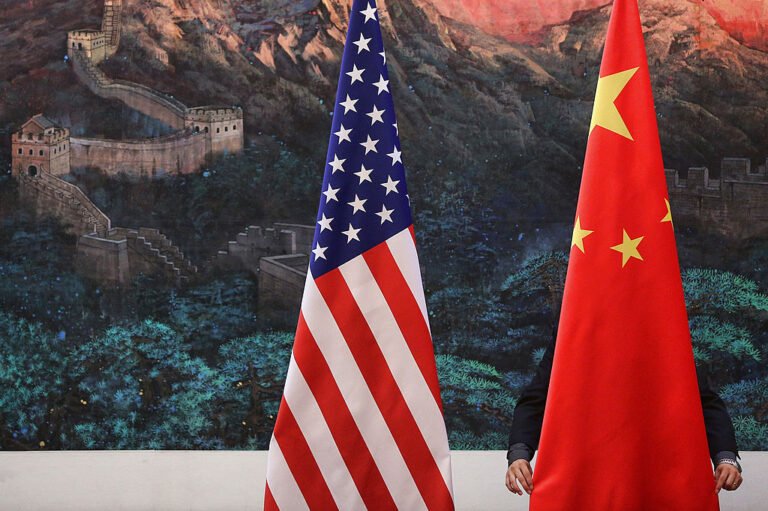
The implications of this episode extend far beyond the Americas if the removal of a sitting head of state can be justified based on strategic or ideological considerations, what limits the ability of China to apply the same logic to Taiwan? What limits the ability of Russia to expand its actions in Eastern Europe under the guise of security and defense? The erosion of legal standards in one region will ultimately accelerate their erosion in all regions.
One of the most disturbing aspects of this episode is the likelihood of internal complicity. It is difficult to believe that a foreign power could remove a sitting president without some form of complicity from within the state. The Venezuelan military, the Presidential Guards, and the senior military leadership appear to have presented little to no opposition to the U.S. operation. In addition, the Army Chief of Staff, several key commanders, and the Vice President of Venezuela appear to have been unharmed during the operation. Vice President Rodríguez’s rapid assumption of power, followed by his reported immediate contact with US Secretary of State Marco Rubio, and subsequent reported offer to “do whatever you need,” followed by Release of political prisoners in Venezuela to please united states strongly suggests that the transition of power was planned not chaotic.
There are several factors that suggest there may have been an internal role in the removal of Maduro. Venezuela’s military had long suffered from shortages caused by extreme U.S. sanctions which may have weakened loyalty among Venezuelan soldiers, creating a climate in which an internal coup might occur. To address past concerns of coups, Maduro attempted to make Venezuela coup-proof by creating small, loyal units of the military and establishing divisions within military units which highlighted the internal fractures of the state. Located near Caracas, Puerto Cabello is Venezuela’s largest naval base, equipped.
Read More: US Raid to Capture Maduro Left 75 Dead in Venezuela
However, while these radar systems are outdated in terms of technology, they would still have provided some indication of U.S. military movement toward the capital Additionally, it is possible that some members of the Venezuelan military knew of the impending operation in advance or tracked the incoming attack, yet chose not to respond either due to internal complicity, indecision, or splits in the ranks of the military. The possibility of internal complicity further highlights the potential role that internal actors played in enabling the raid.
According to President Trump, the U.S. operation included more than 150 aircraft from multiple branches of the U.S. military including fighter jets, bombers, helicopters, drones, and intelligence platforms. The U.S. lost no personnel in the raid, a feat that is remarkable given the large number of aircraft involved, the complete lack of resistance from Venezuelan forces, and the smooth transfer of power. All of this adds to the suspicions surrounding the events of the raid and supports the contention that internal actors may have assisted in the removal of Maduro.
Ultimately, the lessons learned from Venezuela’s crisis reveal a world order that is less based on the rules of international relations, and more of a hierarchical system of power that relies on both external intervention and internal fissures to create vulnerability in states that cannot maintain their independence. Sovereignty becomes a privilege of strong states and weak states particularly those with fractured militaries or compromised leadership become increasingly vulnerable to manipulation and the selective application of international law.
In South America, this signals a renewed era of coercive diplomacy and the externally directed removal of regimes in which internal actors may play a willing or voluntary role. Globally, the episode indicates the growing acceptance of the use of force and subversion of sovereignty as legitimate tools of governance and demonstrates that a state’s independence can be undermined from within just as easily as it can be challenged from outside.
*The views presented in this article are the author’s own and do not necessarily reflect the views of The Diplomatic Insight.

Muhammad Basim Dilshad
Muhammad Basim Dilshad is an independent researcher and analyst with a strong interest in geopolitics; especially developments in Latin America and the Middle East. He is currently studying International Relations at Bahria University, where his academic work focuses on global power dynamics, regional conflicts, and emerging political narratives. He can be reached at basimdilshad6@gmail.com