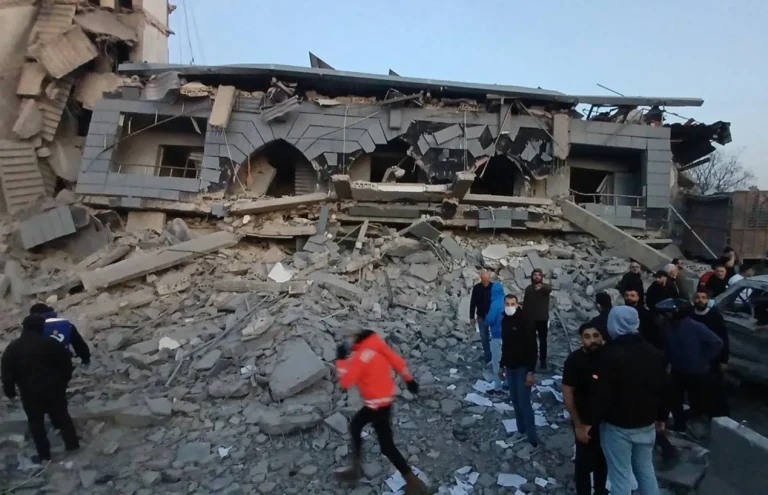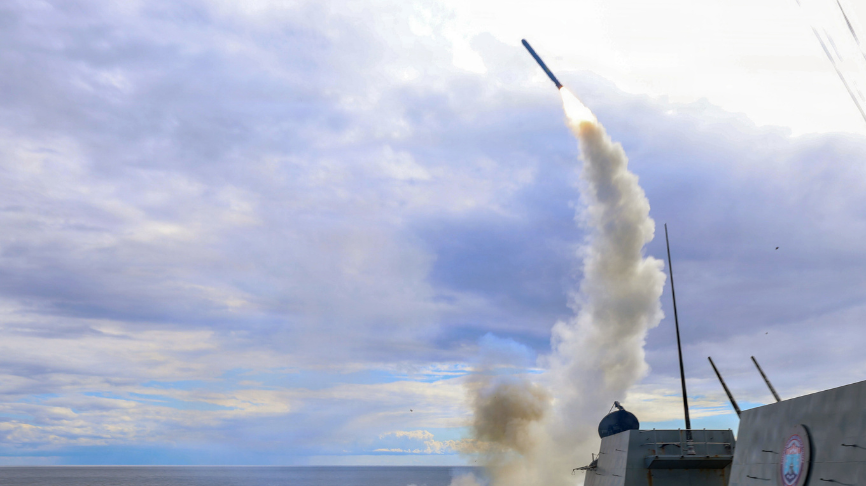
The joint military action by Israel and the United States, named Operation Lion’s Roar and Epic Fury, targeted nuclear sites, missile facilities, Islamic Revolutionary Guards Corps bases, naval assets, and top leadership (including killing Supreme Leader Khamenei); causing hundreds of deaths, severe military degradation, and Iranian missile retaliation against Israel and Gulf states.
Both states justify their actions under Article 51 of the UN Charter, which pertains to the prevention of an imminent threat and self-defense. It raises the number of scholarly debates in the interpretation of international law, including jus ad bellum and jus in bello.
The first debate under jus ad bellum unveils whether the 28 Feb strikes by the U.S. and Israel violated the Article 2(4) prohibition on the use of force against any state or fell within the Article 51 of UN Charter which says an inherent right of individual or collective self-defense if an armed attack occurs against a UN member state, allowing them to use force until the Security Council acts.
The second debate is about preventive war or anticipatory self-defense: The U.S. and Israel justified their actions using the “Bush Doctrine” of preventive self-defense, arguing that striking Iran’s nuclear facilities, ballistic missiles, and leadership were necessary to prevent a future “nuclear breakout” and an existential threat. The U.S. framed its involvement in Operation Epic Fury as a collective self-defense measure for Israel to avert the Iranian threat.
The third debate discusses the “Ring of Fire” theory, which posits that the strikes were part of an ongoing armed conflict established through Iranian-linked proxy engagements (the “ring of fire”). However, the critics argue that for self-defense to be lawful, an “armed attack” must actually occur or be truly imminent.
Read More: President of Peace vs President of War: Separating Truth from Rhetoric
Since there was no evidence Iran had prepared a nuclear strike, the UN has classified these operations as preventive war, which is a “war of choice” based on future capability rather than a lawful reactive strike. Moving to proxy warfare as a continuous armed attack; proxy attacks count as a state’s armed attack only if the state clearly controls or directs those proxies.
There are two debates in Jus in bello. Firstly, the U.S. and Israel targeted nuclear facilities and infrastructure. An attack on such sensitive sites may cause the release of radioactive material and subsequent severe losses among the civilian population, which falls under the Protocol I, Article 56, which prohibits attacking works or installations containing dangerous forces. The second debate is about the principle of distinction, which distinguishes between combatants and civilians. The nuclear scientists fall under the civilian category.
Article one of the U.S. constitution grants Congress the exclusive power to declare war, raise and support armies, maintain a navy, and make rules for the military. Article II declares that the President can exercise Commander-in-Chief authority to declare war or conduct strikes without seeking a formal Authorization for Use of Military Force (AUMF), justifying it as a matter of national interest.
However, the president submits a report to Congress within 48 hours, consistent with the War Powers Resolution (WPR), which governs the introduction of forces into hostilities. Generally, such deployments are limited to 60 days unless Congress authorizes a longer period or declares war. It relied on inherent constitutional powers rather than legislative approval.
In retaliation strikes, Iran has also violated Article 2(4) of the UN Charter, the threat or use of force against the territorial integrity or political independence of any state. Iran’s attacks on the sovereign territories of the Gulf states, UAE/Dubai, Bahrain, Qatar, Kuwait, Oman, and Saudi Arabia (not direct parties to the initial US-Israel strikes) constitute aggression against non-involved or neutral nations.
Read More: Trump’s Shifting Stance on Iran War Deepens Uncertainty in Washington
Iran’s response under Article 51 self-defense, inherent right of self-defense against armed attack in response to the initial US-Israel strikes, attacks extended to civilian infrastructure (e.g., Dubai airport/hotels, Bahrain apartments, Oman ports, Qatar facilities) and non-military targets in third countries, which violates customary law and Geneva Conventions Additional Protocol I, Articles 48, 51, 57 based on the principle of distinction, proportionality, and precautions.
Furthermore, the strait is primarily regulated under the United Nations Convention on the Law of the Sea (UNCLOS). Article 38 of UNCLOS guarantees all ships and aircraft the right of continuous and expeditious transit. Neither the coastal states nor the other states can suspend the transit passage.
However, as a consequence of US-Israel strikes, Iran imposed a blockade on the Strait of Hormuz, which disrupted energy supply to the globe. Because commercial sea routes are strategic flashpoints, it has critical implications for neutral states like Pakistan. The risk of accidental involvement in the conflict and the chances of economic disruption become high for the neutral states.
Both the attacks and retaliations “undermine international peace and security” and breach the UN Charter. The international community, particularly in the Global South and among allies should commit to the rules-based order and the path forward demands may urgently reaffirm the UN Charter’s core principles through diplomacy, de-escalation, accountability through international platforms, and reforms to prevent such escalations from becoming the new normal.
*The views presented in this article are the authors’ own and do not necessarily reflect the views of The Diplomatic Insight.

Suffian Zafar
Suffian Zafar is an Mphil scholar of International Relations at the University of Punjab, Lahore. He is currently working as a Junior Research Fellow at the Maritime Centre of Excellence MCE. He can be reached atsuffianzafarmce@gmail.com

Laraib Ali
Laraib Ali is a Research Associate at the Maritime Center of Excellence-MCE, Pakistan Navy War College-PNWC.