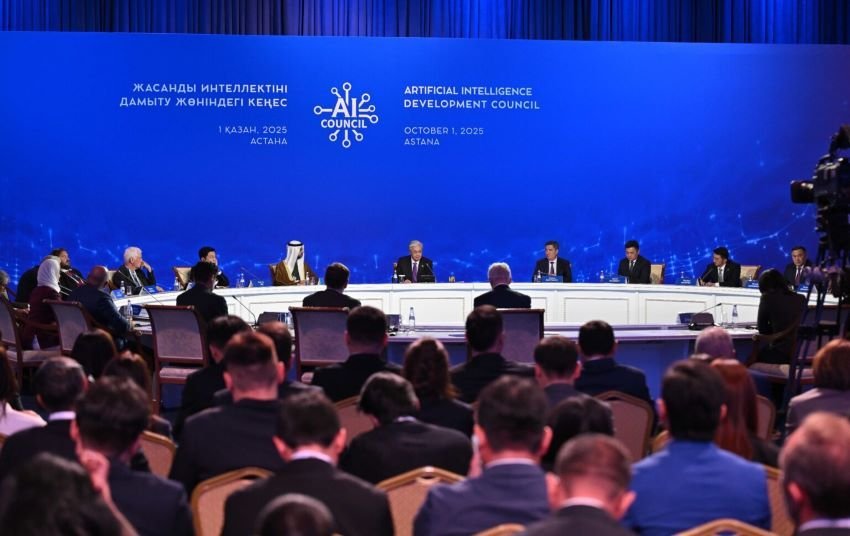
Astana (TDI): Kazakhstan is moving ahead with plans to set up a dedicated research university for artificial intelligence (AI), with concrete proposals expected by the end of 2025, President Kassym-Jomart Tokayev announced during the first meeting of the Artificial Intelligence Development Council in Astana.
Tokayev said AI is becoming a decisive force in shaping economies, governance, science, and education, and is critical to national competitiveness and sovereignty. He stressed the need for a specialized institution to address all aspects of AI research and application.
“This institution should be granted special status, and it is important to attract leading global universities as partners. I instruct the government to prepare concrete proposals by the end of this year,” Tokayev said.
The university will focus on training highly skilled specialists capable of applying AI across all sectors of the economy. It is also expected to become a hub for science, education, innovation, and international cooperation, providing students access to world-class education within Kazakhstan instead of going abroad.
Tokayev urged existing universities to accelerate training in advanced technologies, pointing to the AI-Sana program, through which over 440,000 students have already received AI certification. He said such initiatives could transform student projects into startups with international potential.
Read More: Kazakhstan, Germany Extend Business Cooperation Program Until 2028
Currently, more than 63,000 students are enrolled in IT disciplines at 79 Kazakh universities, and AI has been introduced as a separate subject. Local researchers last year developed KazLLM, a large language model for the Kazakh language. Still, Tokayev emphasized the need for a central coordinating institution, citing the UAE’s Mohamed bin Zayed University of Artificial Intelligence as a model.
The president highlighted AI’s transformative potential in education, particularly through personalized learning systems that tailor study programs to individual strengths and weaknesses. He said such tools could narrow gaps between urban and rural schools and provide better support for students with special needs.
However, Tokayev also warned against overreliance on AI. “Relying too heavily on neural networks, students may lose skills in critical thinking and independent analysis. AI should enhance the learning process, not replace its fundamentals,” he cautioned, urging safeguards to protect academic integrity.
Read More: Kazakhstan to Establish Nuclear Science Cities in Almaty, Kurchatov
He also proposed the creation of digital student profiles to track academic performance, skills, and achievements. Integrated with the future AI university, such a system would help optimize curricula and support career planning.
Kazakhstan has already taken steps toward AI governance, recently creating a Ministry for Artificial Intelligence Development. Tokayev has also called for the establishment of an international body to regulate AI ethics and draft global legislation for its use.