Every year, February 5th is observed as Kashmir Solidarity Day and holds much significance in Pakistan. However, outside the region, it may just be another international date. For Kashmiris living under the rule of Indian illegal occupation, it is a unique moment in time where the voices of the oppressed Kashmiris can be heard across the globe. This day, the voices of Kashmiris illustrate a harsh reality that should trouble the conscience of all countries claiming to defend the values of international law and human rights.
Since 1948, the people of Jammu and Kashmir have been struggling for the right to self-determination, guaranteed to them by the United Nations General Assembly (UNGA) Resolution 47 and subsequently reinforced by several resolutions of the United Nations Security Council (UNSC), consistently denied to them. Instead of allowing the people of the Indian Illegally Occupied Jammu and Kashmir (IIOJ&K) to use negotiation to resolve their political disputes, they have been subject to an ever increasing repressive military occupation, which has reached a new level of repression, especially since India, in August 2019, unilaterally abolished the autonomous status of the region, contrary to its obligations and the provisions of international law.
Since then, the IIOJ&K has become one of the most heavily militarized regions of the world. The Public Safety Act and the Unlawful Activities (Prevention) Act are draconian laws that grant authorities broad powers to arrest and detain individuals without formal charges, trial, or access to legal representation. Regularly, young men are arrested from their homes in the dead of night, causing immense fear for their family members. Journalists, lawyers, and other human rights advocates are frequently targeted by the government because of their work. In the eyes of the ruling authority, every Kashmiri who speaks publicly is suspect and every expression of dissent, regardless of whether violent or peaceful is described as “terrorism”.
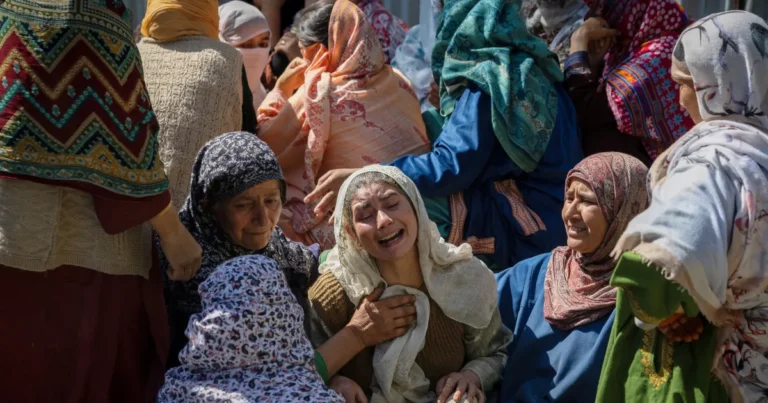
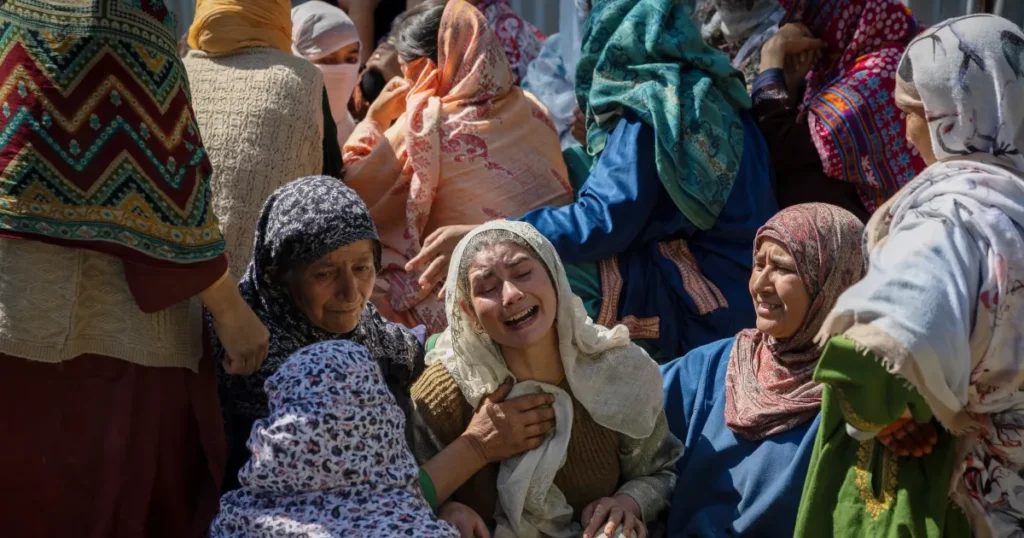
This is not speculative; these are documented abuses, as reported by numerous UN Special Rapporteurs and major international human rights organizations. Arbitrary arrest, torture while detained in police stations, enforced disappearance, extrajudicial killings, and collective punishment in the form of home demolitions and confiscation of property are common occurrences for thousands of Kashmiri families. It is not abnormal for children to remember soldiers knocking on the door, curfews, and funerals, and for mothers to dread every phone call.
India maintains this machinery of oppression in the name of “countering terrorism” and “national security.” However, no state can use these labels to justify a breach of international law obligations. A state’s struggle against terrorism does not give it a license to disregard the rights of an entire population, to restrict peaceful political activism, or to alter the status of a disputed territory contrary to the provisions of the UNSC Resolutions. If such claims were accepted without scrutiny, any occupying power, wherever situated, would be able to rely upon a “security” label to legitimize whatever actions it wished.
Read More: India Keeps Distance from Trump’s ‘Peace Board’ Amid Fears of Kashmir Mediation
The repercussions of this injustice do not end with Kashmir. They pose a threat to the delicate peace of South Asia, a region in which two nuclear-armed neighbors, India and Pakistan, continue to be mired in a bitter dispute. Each escalation across the Line of Control (LOC) and every punitive action taken in the Valley increases the likelihood of a broader conflict. All those who advocate for a policy of either silence or “strategic patience” about the international community regarding the long-standing dispute in Kashmir must consider the potential cost of allowing a long-simmering conflict to boil over without external intervention.
The world must correct the misuse of words, and IIOJ&K is NOT “an internal affair” of India; it remains an internationally recognized issue before the UNSC. Whatever promises were made to the people of Kashmir; the Indian government has nullified them by changing the constitution. The rights of the people of Jammu and Kashmir and their future remain undetermined.
The world must also treat the human rights abuses occurring in the IIOJ&K with equal urgency as abuses in other parts of the world. The UN Human Rights Council should immediately begin an independent international investigation to document human rights abuses and identify those responsible. All UN member states must demand that the UN Special Rapporteurs and humanitarian organizations have unimpeded access to IIOJ&K. Double standards in defending human rights undermine the legitimacy of the international community’s commitment to human rights and the rule of law.
Countries that want to sustain a rules-based international order need to be instrumental in their actions and principles. The failure of quiet diplomacy and mute concern to change the on-ground realities of IIOJ&K demonstrates that there are no longer any consequences for violating international humanitarian law or human rights law. Silence in the face of oppression is not neutrality; it is compromise.
Finally, the international community should put Kashmiris at the center of discussions about the Kashmir dispute. The fate of Kashmiris has been decided upon for far too long without active participation by Kashmiris. The world must hear and respond to the voices of political leaders, civil society, and young people who seek dignity and opportunity but refuse violence. A consensus-based resolution to the Kashmir conflict may be durable and cannot be imposed on gun point by one-sided directives. Today, Kashmir stands at a crossroad between a future defined by the free will of the people of Kashmir and a future imposed by force. It is the collective responsibility of the international community to ensure that the first option, and not the second, comes into effect.
*The views presented in this article are the author’s own and do not necessarily reflect the views of The Diplomatic Insight.

Musavir Hameed
Musavir Hameed is currently serving as Research Officer at Balochistan Think Tank Network, Quetta and can be reached at musavirkhan88@gmail.com