Tokyo (TDI): Japan will begin releasing oil from its national strategic reserves on Thursday, as the ongoing Middle East conflict continues to disrupt energy supplies through the Strait of Hormuz.
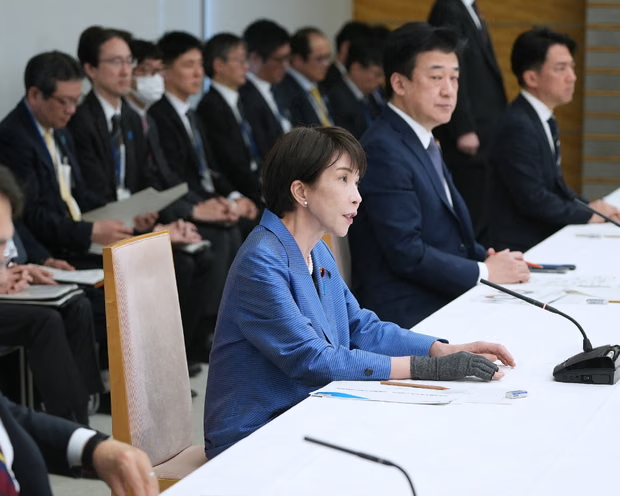
Prime Minister Sanae Takaichi announced that the government has already started releasing privately held reserves on 16 March. Releases from jointly held stockpiles with oil-producing countries are also scheduled to begin later in March.
The total release amounts to about 80 million barrels equivalent to 45 days of domestic demand as part of efforts coordinated with the International Energy Agency. Takaichi, writing in a post on social platform X, said “Through these measures, we will respond with all our might to minimize the impact on economic activities.”
Japan imports more than 90% of its crude oil from the Middle East, with around 70% of supplies typically passing through the Strait of Hormuz. The effective closure of the waterway has driven global oil prices to their highest levels since 2022 and raised concerns over fuel shortages.
ホルムズ海峡における航行の安全の確保を含む中東地域の平和と安定の維持は、エネルギーの安定供給の観点も含め、日本を含む国際社会にとって極めて重要です。… pic.twitter.com/ychGb6J1rh
— 高市早苗 (@takaichi_sanae) March 24, 2026
Industry Minister Ryosei Akazawa said vessels carrying jointly held oil from Saudi Arabia are heading to Japan while bypassing the blocked strait. Two tankers from the Red Sea and one from outside the Middle East are expected to arrive in the coming weeks.
The government has introduced subsidies to cap gasoline prices and advised consumers against hoarding essential items such as toilet paper.
Japan has undertaken its largest-ever release of crude oil from strategic reserves, surpassing the amount used following the 2011 Fukushima nuclear disaster, when widespread power shortages prompted emergency energy measures.
As of 2025, Japan’s strategic reserves amounted to 254 days of domestic consumption, providing a significant buffer amid global supply uncertainties.
Japan is currently as one of the four countries severely affected by the ongoing disruptions in the Strait of Hormuz, given its heavy reliance on energy imports passing through this critical chokepoint.

Muhammad Usman Hashmi
Muhammad Usman Hashmi is a researcher in International Relations, focusing on climate diplomacy, global governance, and political economy in the Global South. He has contributed to policy dialogues with the Foreign Policy Community of Indonesia and serves as a Senior Research Fellow at the International Council on Human Rights, Peace and Politics. He is also associated with Rethinking Economics Islamabad, contributing to research on development and sustainability. He can be reached at musmanhashmi99@gmail.com