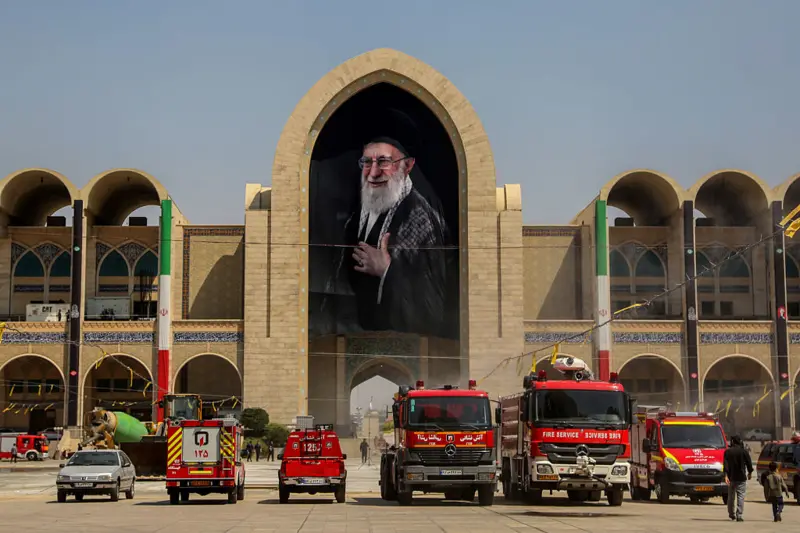
The funeral of Iran’s late Supreme Leader Ayatollah Ali Khamenei is far more than a religious ceremony. Stretching over seven days and across multiple cities in Iran and Iraq, the carefully choreographed events are designed to serve important political, diplomatic and symbolic purposes at a critical moment for the Islamic Republic.
Coming just months after the military confrontation with Israel and the United States, and amid a leadership transition in Tehran, the ceremonies provide Iran’s ruling establishment with an opportunity to demonstrate continuity, project stability and reinforce the legitimacy of the country’s new leadership.
The ceremony is more than a funeral. State funerals have always carried political significance in the Islamic Republic. However, the scale of Khamenei’s funeral reflects the extraordinary importance of the figure being buried. As Iran’s Supreme Leader for more than three decades, Khamenei was not only the country’s highest political authority but also the central figure around whom the Islamic Republic’s power structure revolved.
By extending the ceremonies over several days, from Tehran to Qom, Najaf, Karbala and finally Mashhad, the government is transforming the funeral into a national and regional event rather than a single day of mourning. The message is clear: despite the loss of its most influential leader, the state remains firmly in control.
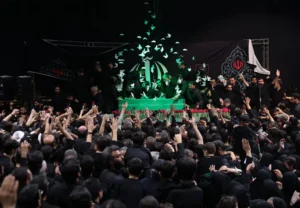
One of the government’s primary objectives is to showcase public support. Officials have predicted that millions of people will participate in the funeral processions, while state media is expected to highlight images of massive crowds across the country. Such visuals serve two audiences simultaneously.
Domestically, they reinforce the narrative that the Islamic Republic continues to enjoy broad public backing despite years of economic hardship, sanctions, political unrest and social dissatisfaction. Internationally, they counter perceptions that Iran has been weakened by recent military setbacks or internal divisions.
Whether the turnout fully reflects public sentiment or is influenced by state mobilization, the images themselves are likely to become one of the defining narratives of the funeral.
Perhaps the most important political objective is to strengthen the legitimacy of Khamenei’s successor, Mojtaba Khamenei. Leadership transitions in authoritarian and revolutionary systems often present moments of uncertainty. Tehran appears determined to avoid any perception of instability. The funeral ceremonies therefore become an opportunity to symbolically transfer authority from one era to the next.
Even if the new Supreme Leader maintains a limited public profile during the ceremonies, the state apparatus, from senior officials to the Revolutionary Guards, religious institutions and state media, is expected to frame the transition as orderly, constitutional and fully supported by Iran’s political establishment.
Read More: Tehran Emerges Stronger as US-Iran Deal Reshapes Post-War Balance of Power in Middle East
The funeral also comes after one of the most difficult periods in Iran’s recent history. The leadership is likely to use the occasion to argue that external military pressure has failed to weaken the Islamic Republic. Official speeches are expected to emphasize resistance, national sovereignty and continuity, presenting Iran as a country capable of absorbing major shocks while preserving its political system. This narrative is aimed not only at the Iranian public but also at regional rivals and Western governments.
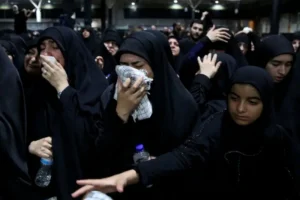
The attendance of foreign delegations serves another strategic purpose. Representatives from countries including Pakistan, China, Tajikistan, India and Afghanistan as well as officials from allied regional groups allow Tehran to demonstrate that it remains diplomatically connected despite years of international isolation. For Iranian officials, every visiting delegation becomes evidence that the country continues to play an influential role in regional affairs.
The itinerary itself carries deep symbolic value. Beginning in Tehran, continuing through the religious center of Qom, then moving to the Iraqi holy cities of Najaf and Karbala before concluding in Mashhad, the funeral connects some of Shiite Islam’s most sacred locations. This route reinforces Iran’s long-standing claim to leadership within the Shiite world and highlights the close religious ties between Iran and Iraq. It also underscores that the Supreme Leader’s influence extended beyond Iran’s national borders.
Read More: How Iran Came Out on Top?
Iran’s leadership has consistently portrayed the Islamic Republic as a state built on sacrifice and resistance. The funeral provides an opportunity to revisit that narrative. Officials are expected to frame Khamenei’s life as part of the broader revolutionary struggle that began in 1979, linking his legacy to the country’s identity, regional policies and confrontation with external adversaries.
Such messaging seeks to reinforce ideological cohesion at a time when younger generations have become increasingly distant from the revolutionary ideals of the state’s founders.
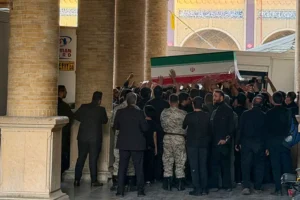
While the ceremonies offer political opportunities, they also carry risks. If public participation falls significantly below official expectations, critics could interpret it as evidence of declining popular support. Heavy security measures, restrictions on movement and tightly managed media coverage may also invite scrutiny from international observers.
Moreover, while foreign delegations demonstrate diplomatic engagement, the absence of many Western leaders will reinforce the reality that Iran remains politically isolated from much of Europe and North America.

Farkhund Yousafzai is a seasoned journalist and analyst with over a decade of experience in the media industry. He specializes in national politics and international relations and regularly contributes as an analyst to national and international media outlets.