Jakarta (TDI): Indonesia has stepped up cooperation with neighboring countries to address the spread of wildfire haze across borders, with Jakarta stressing the importance of regional coordination and stable bilateral relations.
Indonesian Foreign Ministry spokesperson Vahd Nabyl A. Mulachela said Indonesia was prioritizing cooperation with neighboring countries, particularly on environmental issues with cross-border impacts such as haze pollution.
He said Indonesia continued to implement measures under the ASEAN Agreement on Transboundary Haze Pollution (AATHP), the regional framework for tackling the spread of smoke and haze from land and forest fires.
The ASEAN Secretariat, serving as the interim office of the ASEAN Coordinating Center for Transboundary Haze Pollution Control, declared a regional Alert 3 on August 26.
Under the alert, all ASEAN member states are required to submit daily situation reports, including maps showing the movement and trajectory of haze, and share the information with other member countries.
Read More: EU, ASEAN Discuss Cooperation on Health Emergency Preparedness
Indonesia has continued to meet these reporting requirements by providing hotspot data, environmental conditions, indications of haze movement and updates on measures being taken to control forest and land fires.
Nabyl said regular meetings were also being held among the relevant authorities to assess the haze situation and coordinate further action.
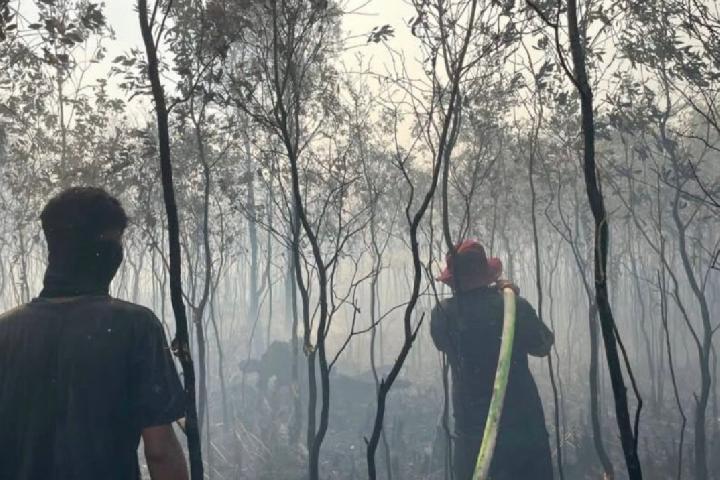
The Indonesian government is simultaneously implementing measures at the domestic and regional levels to contain wildfires and reduce their environmental and public health impacts.
According to data from Indonesia’s Ministry of Forestry, hotspots increased sharply in several provinces by September 1. West Kalimantan recorded 859 hotspots, up from 273, while Central Kalimantan rose from 253 to 623.
South Sumatra recorded 89 hotspots compared with 20 previously, while South Kalimantan increased from 22 to 73. Jambi rose from zero to four hotspots, while Riau continued to report no hotspots.
The spread of wildfire haze has also affected neighboring countries, with haze reaching Malaysia’s Sabah and Sarawak, as well as Singapore and Brunei.
Read More: Thailand to Promote ASEAN Innovation Gateway at Nordic Tech Week
Reports have also indicated that the haze has reached parts of the Philippines, including the capital Manila, highlighting the wider regional impact of Indonesia’s wildfire season.
The latest situation has underscored the need for ASEAN countries to maintain close coordination, timely information sharing and joint efforts to limit the cross-border effects of forest and land fires.