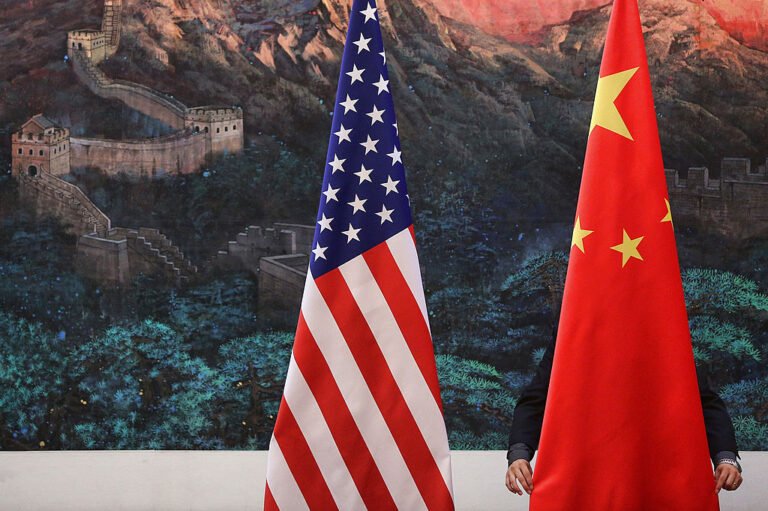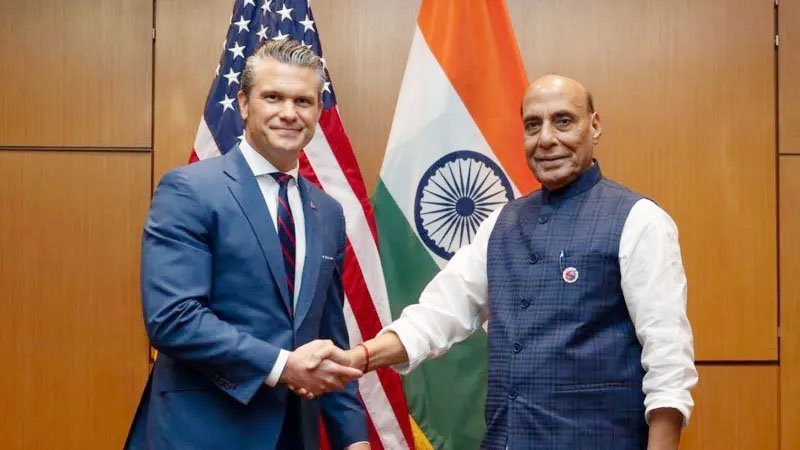
In October 2025, the United States and India renewed their defence agreement for the next 10 years. The two sides view this pact as key to their broader regional and global interests, especially in the broadly perceived Indo-Pacific region, where Washington and New Delhi perceive China`s growing influence as a challenge to their interests.
This increasing cooperation between the US and India is leading the BRICS towards internal disintegration, a crisis of identity, and a direct challenge to its unity and objectives.
The group was formed in 2009 to challenge the Western powers’ dominance in international institutions, such as the World Bank and the Group of Seven (G7). The group has sought to reform the current global order and reduce dependence on the US dollar.
India is a member of BRICS and has simultaneously established a strategic partnership with the US, thereby fracturing the foundation of the group. Since the formation of their strategic partnership in the early twenty-first century, the US and India have signed several defense agreements.
India has emerged as one of the top importers of US military equipment in recent years. The two sides have signed four foundational agreements—LEMOA, COMCASA, ISA, and BECA— under which the US is providing India with support in logistics, intelligence sharing, and interoperability. This increased cooperation between Washington and New Delhi shows India`s tilt towards the West.
However, the Indo-US deepening cooperation has direct implications for the internal dynamics of BRICS. India, on the one hand, is a staunch advocate of settling bilateral trade within the BRICS in their local currencies. On the other hand, it is reluctant to support the de-dollarization narrative and replace the Dollar-dominated international system with Chinese currency.
BRICS includes close partners of the US, India, and the UAE. Also, China, the US’s main strategic competitor, is complicating the group’s internal dynamics. China and India, as members of the group, and India’s reduced dependence on Russian oil due to high tariffs are challenging BRICS to find consensus on a range of critical issues.
On the one hand, increasing defense cooperation with the US and on the other, replacing the US-led world order shows India`s guileful balancing approach. However, its engagement with the US also shows that India`s strategic autonomy has faded away.
Ostensibly, the renewed pact shows that India’s geopolitical ambitions lie with the US and Western partners, and its foreign policy failure to navigate between external pressure, is weakening India’s influence within BRICS.
Arguably, the new US and India defense pact may fail to counter unilateral tariffs discussed in the joint summit, making the BRICS Agenda weak. Washington’s sanctions on Russian oil companies, including Lukoil and Rosneft, are moving India away from a Russian-centric approach towards a more U.S.-centric one.
Historically, Russia has been a primary supplier of military and defense equipment to India. However, reduction in reliance on Russian military hardware is gradually eroding mainly due to India`s growing relationships with the US and its allies, such as Israel and France.
Furthermore, western sanctions on Russian oil following Russian invasion of Ukraine which have disrupted supply chains, and threats of further hiking tariff over continued purchase of discounted Russian oil, compels India to reduce its imports, further deepening disintegration under the BRICS.
This reflects how external pressure reshapes strategic calculus, demonstrating Indian compromises on its strategic autonomy, which is no more sovereign in their decisions. Balancing revisionists among the BRICS while increasing American pressure on trade, security narratives, and reliance on advanced American technology illustrates India’s struggle to balance BRICS and its defense pact with the US
The India-China strained relationships are another factor. Tensions are escalating within the BRICS forum as China and India are on the brink of a diplomatic standoff over several issues, including India’s opposition to the Belt and Road Initiative (BRI), its longstanding border conflict in the Galwan region, and the intensifying competition for economic and geopolitical influence in the Global South.
In this context, a key objective of the US-India defense pact is to establish a balance of power in the Indo-Pacific region against their mutual adversary, China. Additionally, this pact aims to prevent BRICS from developing into an anti-Western organization.
The US-India defense agreement aims to strengthen security dynamics in the Indo-Pacific while undermining the BRICS’ capacity to serve as a counterbalance to the G7 on security matters and to shift BRICS from a Geopolitical to a more Geoeconomic platform.
Such engagements reduce India’s alignment towards Russia and China and discourage it from pursuing any security or military alliance under BRICS, as a result, the BRICS platform is likely to be used for economic engagement and an alternate payments mechanism, rather than a security bloc or defense alliance against the G7, thereby deepening grievances among members.
In conclusion, Indian Foreign policy has seen a change from neutrality towards selective alignment, especially after the US-India defense pact, which is significantly fracturing BRICS. President Donald Trump`s pressure for a trade war and weaponizing tariffs has brought India to align with the US, directly affecting the internal dynamics of BRICS.
However, it clearly questions India’s strategic autonomy, whether or not it is autonomous in its decisions. It clearly demonstrates a counterproductive measure of targeting the BRICS coalition.
*The views expressed in this article are the authors’ own and do not represent TDI. The contributor is responsible for the originality of this piece.