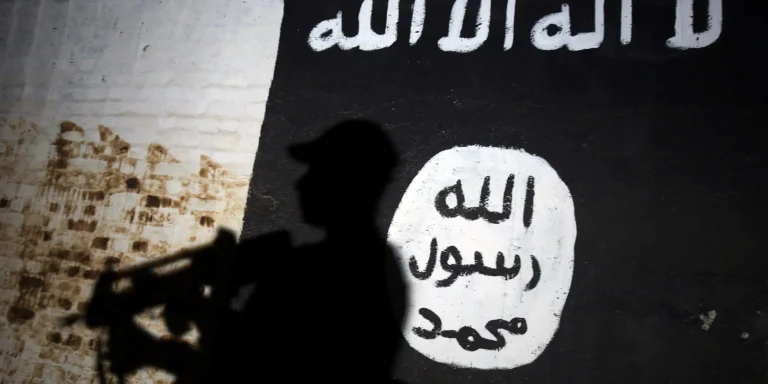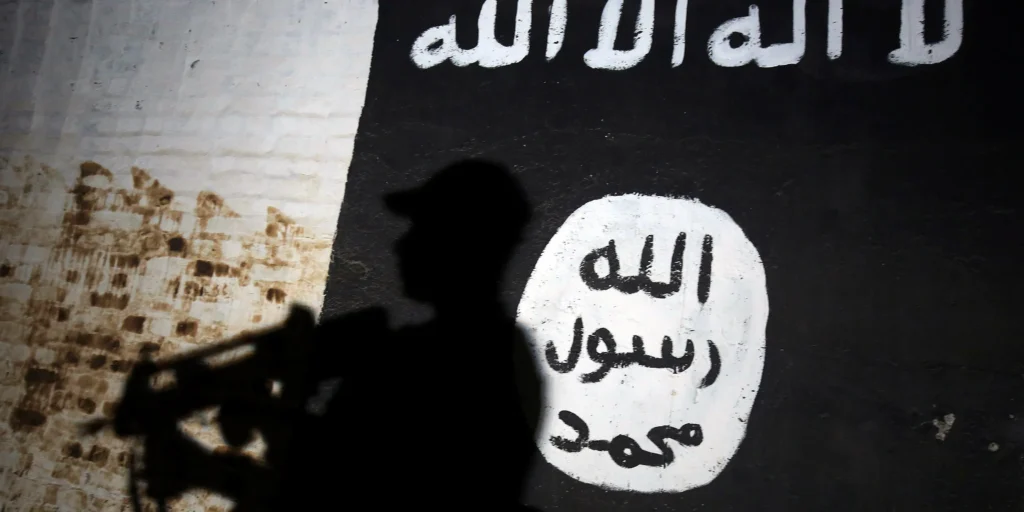
When the Islamic State lost its territorial “caliphate” in Iraq and Syria in 2019, the received wisdom was held among policymakers and large parts of the global public that the organization was entering a phase of terminal decline. The implosion of its central territorial project was widely described as a strategic failure that would cut ISIS down to the ranks of spurious terrorist groups, capable of sporadic violence but no longer able to determine the course of conflict.
That assumption has proven terribly flawed. Rather than fading away, the Islamic State adapted, decentralized and realigned its strategy to areas where state weakness, poor border management and unresolved local grievances provided fertile ground. Nowhere has this adaptation been more obvious–or more significant–than in Africa.
Over the past several years, Africa has become the hotbed of Islamic State-connected violence in the world. From the deserts of the Sahel and the islands of Lake Chad to the forests of eastern Congo and on the gas-rich coastline of Mozambique, ISIS affiliated groups have broadened their operational reach, become more lethal in their attacks, and burrowed themselves into local conflict ecosystems.
This growth is not the result of one coordinated invasion from abroad, but is the product of a franchising model, whereby groups rooted in particular countries can associate themselves with the Islamic State’s global brand without renouncing autonomy in terms of tactics, recruitment and management. The result is a diffuse-yet-resilient network of “provinces” all of which are responsible for ISIS’s global perseverance well after the fall of its Middle Eastern stronghold.
The Islamic State’s strategy in Africa is part of a larger change in the working methods of transnational jihadist movements in the post-caliphate era. Instead of prioritizing large-scale territorial control, ISIS has focused on the task of insinuating itself within pre-existing insurgencies and conflict zones, providing ideological legitimacy, media amplification and a shared identity in return for loyalty.
In Africa, this model has resonated particularly strongly due to the presence of many of the conditions that fuel insurgency, including political exclusion, abusive security forces, economic marginalization and communal violence, which have still not been resolved. ISIS has not been the source of these problems, but it has shown great skill in exploiting them.
The Sahel colorfully demonstrates the dynamic. Stretching across Mali, Niger and Burkina Faso, that region has become one of the world’s most deadly conflict zones. Islamic State-linked militants, commonly traced to the group that was previously known as Islamic State in the Greater Sahara, have evolved from mobile raiding groups to more organized insurgent groups.
Read More: US Begins Transferring of Islamic State Detainees from Syria to Iraq
These factions have enjoyed the collapse in civilian protection, the withdrawal or reconfiguration of international military support and the political upheaval brought about by successive coups. As authority from the state withdraws from the rural areas, ISIS-aligned fighters have moved in and imposed their own systems of taxation, coercion, and control. Villages are forced to pay “zakat,” traders are taxed at check points and communities resisting are subjected to mass violence. This is not just terrorism, it is insurgent government brought by fear.
At the same time the Sahel has become the scene of fierce competition between jihadist movements. ISIS-affiliated groups and networks affiliated with al-Qaeda, especially Jama’at Nusrat al-Islam wal-Muslimin (JNIM), compete for control of territory, resources, as well as recruits. This rivalry has led to increasing brutality, as each side wants to prove its strength and purity of ideology. Civilians are frequently caught in the middle of these competing armed actors and lack a) the protection of overstretched state forces. The strategic importance of the Sahel is not just in the extent of violence, but rather in the way that ISIS has imposed itself as a lasting alternative power in an area where the state effectively has collapsed.
A rather similar pattern, originating in a different set of local dynamics, can be observed in the Lake Chad Basin. Here, the Islamic State West Africa Province was formed after the Boko Haram broke apart following their pledge of allegiance to ISIS in 2015. Over the years ISWAP differentiated itself from its predecessor by taking a more disciplined approach to governance and military activities.
While Boko Haram was infamous for its indiscriminate violence against Muslim civilians, ISWAP has often tried to build local support (or at least acquiescence) through regulation of violence, provision of limited services, and targeting of military rather than civilian targets. This strategy has enabled the group to hold on in the face of sustained counterinsurgency operations by Nigeria, Chad, Cameroon and Niger.
Recent years have witnessed ISWAP to intensify its attacks on military bases, exploiting poor logistics, lack of morale, and outposts. These issues of assaults are not only tactically important, they are also damaging psychologically as they strengthen the view that the state is incapable of defending its own forces, much less civilians. The group also has shown signs of technological adaptation with the use of drones for reconnaissance purposes, as well as propaganda purposes. Such innovations represent a wider trend: ISIS affiliates are learning organizations in Africa, and able to draw lessons from other conflict zones and adjust their tactics accordingly.
In Central Africa, the Democratic Republic of Congo shows to be another important front of ISI’s African expansion. The Islamic State’s Central Africa Province is highly linked with the Allied Democratic Forces, a rebel force militant with Ugandan origins that pledged allegiance to ISIS in 2019. Eastern Congo’s chronic instability, characterized by a dense web of armed groups, weak state presence and long-standing communal violence, has created an ideal situation for ISIS-linked militants to operate in.
In this regard, affiliation with ISIS has acted less as a source of ideological change and more as a force multiplier that enhances the visibility and lethality of the group by using propaganda methods worldwide.
Read More: Saif al-Islam Gaddafi Shot Dead in Libya
Attacks blamed on ISCAP in eastern Congo have been especially brutal in many cases where the crime has been committed against civilians and large scale casualties. Despite joint military operations between Congolese and Ugandan forces, the group has been difficult to crush. Military pressure has tended to disorganize militant units instead of wiping them out, sending the fighters into remote areas where they still carry out ambushes and massacres. The experience of Congo highlights a recurring difficulty in counterterrorism which is when the lack of sustained governance coupled with civilian protection can continue to result in perpetuating cycles of violence through military interventions alone.
Southern Africa is the other variation of the ISIS phenomenon. In the province of Cabo Delgado in Mozambique, communities have been devastated, hundreds of thousands of people displaced as a result of an IS aligned insurgents. The conflict ties deeply into local ills of economic exclusion, governance failures and feelings that the benefits of natural gas development have been outside of the reach of local populations. ISIS’s presence in Cabo Delgado has attracted much international attention, not least due to the presence of strategic energy projects in that area and the presence of foreign forces, especially Rwandan.
Whilst these interventions have been successful in retaking of some territories and in securing key infrastructure, they has not been successful against the problem of the insurgency in themselves. Displacement persists as well as acute humanitarian needs, and militants have retained the capacity both to regroup and attack vulnerable communities. The Mozambican case illustrates how developmental failures and the prospect of recruitment and the fueling of continuing insurgent violence against areas associated with socio-economic fault lines are able to provide an inroads for ISIS to plant their roots.
Even in areas where ISIS is a secondary player, like Somalia and North Africa, the ISIS presence has complicated already shaky security situations. In Somalia, there is a small but consistent group of Islamic State members who are active alongside the much larger group, al-Shabaab. Though ISIS-Somalia has shown the ability to conduct high-profile attacks and exploit political divisions between federal and regional authorities.
In North Africa security services have managed to disrupt several ISIS-linked cells but there remains concern about the ability of the group to use smuggling networks, online radicalization and instability in the region to regenerate itself.
Across these various theatres, there are some common conditions that explain the place Africa is occupying in ISIS’s post-caliphate strategy. Weak and disputed authorities at the state level is the most important factor. In many areas where it has caused the problem, citizens experience the state more as coercion or neglect than service provision and justice. In such environments, ISIS and its affiliates as providers of order – however cynically – exploit grievances towards corrupt elites and abusive security forces.
Geography also matters. Vast, ill-governed borderlands, thick forests, deserts, and coasts ease the movement of militants and make them difficult to keep track of. Political instability and coups, as well as disputed transitions, also weakens regional security cooperation, as gaps emerge which transnational militants readily exploit.
Read More: Al-Shabaab’s Enduring Threat in a Changing Horn of Africa
Financing is another dimension that is important. Contrary to popular assumptions, ISIS branches in Africa have not entirely relied on foreign money to finance their operations. Instead, they live off the local revenues: extortion, taxation, smuggling, kidnapping, control of the trade routes. These financial practices are very much rooted in the local economies, and are hard to disrupt with sanctions alone. While international efforts to target ISIS’s financial facilitators have stepped up, notably in concerted approaches to sanctions and regulatory efforts, a key challenge is that of the durability of local coercive economies, which requires that financial pressure be accompanied by governance reforms to be effective.
Government responses to ISIS in Africa have been erratic. Military operations can quell violence for a period of time, but without corresponding investments in governance, justice and economy, insurgent groups will re-emerge. Regional cooperation, which is a key to tackling cross-border militancy, has been eroded in parts by political rivalries and changing alliances. Civilian protection is inconsistent and numerous allegations of security forces abuses often undermine public trust, what plays an implied role in adding room towards extremist narratives.
Looking to the future, the future of ISIS in Africa will more depend on whether the African states, and partners, respond to the vulnerabilities that jihadist movements rely on-the types of structural vulnerabilities that lead to underdevelopment and conflict-and less on what the central command decides. In some theatres, the ISIS affiliates may consolidate control and develop their governance structures.
In others difficult to sustain pressure and improved local governance could control their reach. Yet the bigger message is clear: ISIS’s advance into Africa is no bright flash in the sky, but emblematic of the political and security failures that will likely persist for a long time.
The rise of ISIS in Africa should therefore be understood, not as the spread of the ideology of a foreign group on its own terms, but as a warning about the costs of unresolved conflict, exclusion and state weakness. As long as vast segments of the population will remain unprotected, marginalized and non-connected to institutions which have some credence, groups like ISIS will find ways to adapt, embed and survive. The defeat of the caliphate did not put an end to the Islamic State’s project, it transformed it. Africa has been the epicenter of that transformation with implications far beyond the continent itself.
*The views presented in this article are the author’s own and do not necessarily reflect the views of The Diplomatic Insight.

Atiqullah Baig Mughul
Atiqullah Baig Mughul is a graduate in International Relations, specializing in security studies, Middle East politics, diplomacy, and policy-oriented geopolitical research. He can be reached at atiqullahmughal18@gmail.com