An exclusive report by Mahmoud Assamiee from Taiz and Faisal Hassan from Al-Makha, Yemen.
Fears have resurfaced over the safety of international shipping lanes in the Red Sea following suspicious military movements by the Iran-backed Houthi militia.
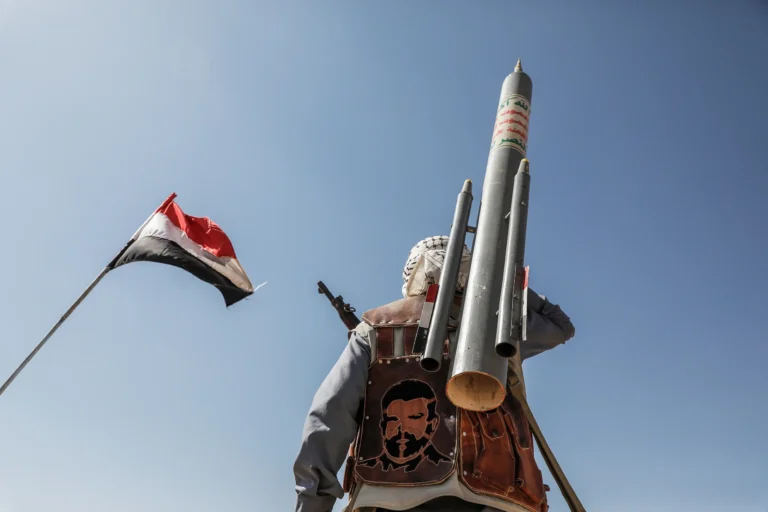
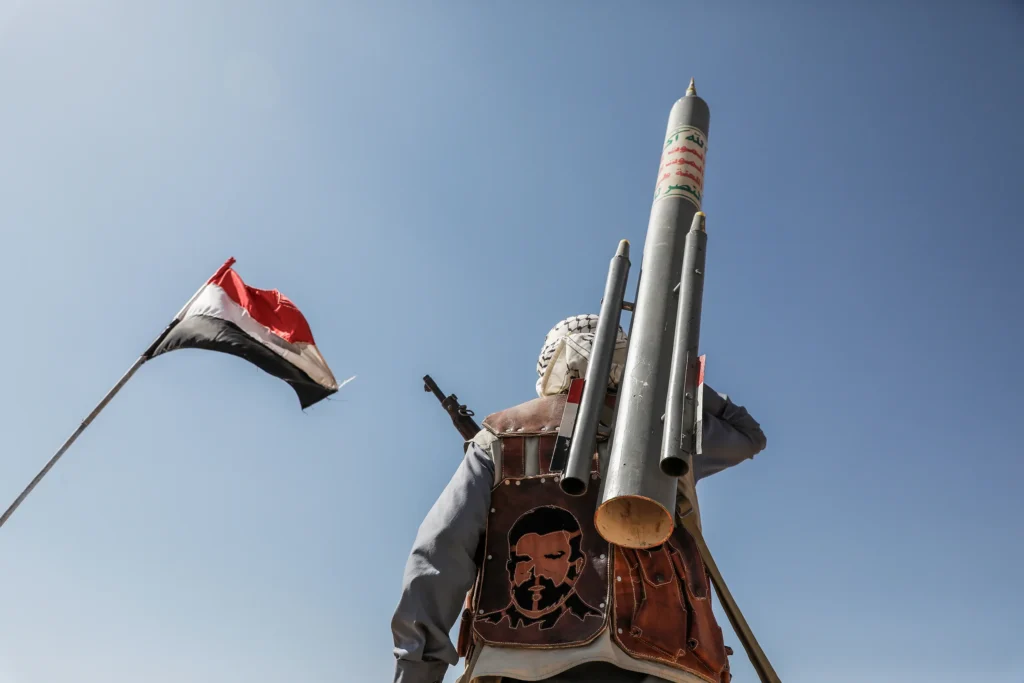
Field sources revealed that the militia has expanded the deployment of its missile launch platforms in strategic areas in northwestern Yemen, following its threats to target commercial vessels in the Red Sea should Iran come under U.S. attack.
According to Yemeni journalist Fares Al-Himyari’s post on X, four missile-launch platforms were detected being relocated from their strongholds in Harf Sufyan district in Amran province, northern Yemen, to be repositioned in Al-Jar farms in Abs district, Hajjah province, northwest Yemen.
Al-Jar farms in Abs are known for their dense mango tree cover, which provides natural camouflage against drones and reconnaissance aircraft; explaining why the militia selected this site in particular.
This location also gives the militia direct and dangerous oversight over international shipping lanes due to its proximity to the Red Sea. The Houthis also maintain a military base there staffed with foreign experts believed to be Iranian.
Yemeni activist Hani Al-Khaled said that the Houthi movements are not merely logistical steps but a combat repositioning, adding that relocating missile platforms near Abs reflects an intentional move closer to the Red Sea theater; effectively reducing warning time and raising the readiness level of the maritime threat.
Read More: Senior Military Commander Survives Suicide Bombing in Aden, Yemen
These developments come amid escalating regional tensions. The Houthis had previously threatened to target commercial ships in the Red Sea and Bab al-Mandab if Tehran were to come under U.S. military attack, indicating that the militia’s movements are linked to broader regional developments.
Yemeni activists criticized the Houthi actions as serving Iran’s agenda. Activist Abd Al-Nasser Al-Ahdal said the Houthis are moving missile platforms to Hajjah in preparation for threatening shipping in defense of Iran.
Al-Ahdal, a human-rights activist from Yemen’s west coast, considered the move as evidence of the militia’s determination to support Iran’s agenda despite being fully aware of the consequences—including being subjected to heavy airstrikes.
He described the militia’s actions in these vital areas as reckless and as sacrificing regional security and stability for the sake of Iran.
Beyond security concerns, observers warned that militarizing coastal areas such as Abs will negatively impact the livelihoods of local communities, restricting fishermen’s movement and preventing them from earning their daily income, further worsening an already deteriorating humanitarian crisis.
A Large Missile Arsenal
The Houthis possess a considerable arsenal of naval missiles, including anti-ship cruise missiles believed to have been supplied with Iranian support.
This arsenal includes Mandab-class missiles, Houthi-modified versions of the Iranian Noor missile, itself derived from the Chinese C-802.
The militia has previously used such missiles in attacks on commercial ships and oil tankers in the Red Sea and the Bab al-Mandab strait in past years.
Military estimates suggest that the range of these missiles lies between 120 and 200 kilometers, placing vast sections of international shipping routes within their threat zone, raising serious concerns for global shipping companies.
The Iran-backed militia also possesses land-to-sea Quds cruise missiles in various versions, previously used to strike maritime and coastal targets, as shown in footage released by the group.
International reports warn that these capabilities pose a direct threat to the security of international navigation and highlight the Houthis’ role in regional tensions. Many Yemeni activists on social media believe that Houthi movements expose Yemenis to the danger of airstrikes.
They fear international retaliation against the militia’s actions, which could put civilians at risk, similar to what happened in September of last year, when more than 78 Yemenis were killed and 211 injured, some critically, following Israeli strikes on Houthi locations in Sana’a. The strikes were retaliation for missile launches toward Israel.
Military Buildup Toward Taiz and Marib
According to the news website Erem News, the Houthis have sent reinforcements to southern Marib in an attempt to seize the oil and gas-rich eastern province, which has been a major military stronghold resisting Houthi advances since the war began in 2016.
In Taiz, near Bab al-Mandab, the Houthis launched an artillery attack accompanied by militia fighters attempting to infiltrate the city from the east last week.
This effort aimed to reach strategic military sites overlooking the Red Sea and Bab al-Mandab in Al-Turba area west of the city. According to Taiz’s media center, the national army repelled the attack and killed five Houthi fighters who attempted the infiltration.
The Houthis are reportedly digging tunnels and heavy-weapons storage facilities, possibly for ballistic missiles, inside the mountains of Naqil Al-Sayyani in Ibb province, overlooking Taiz from the north.
These sites could be used to launch missiles toward the coastal city of Al-Makha on the Red Sea or toward the Bab al-Mandab strait due to their proximity.
Read More: The Decisive Retake of Hadhramout by Saudi-backed Forces in Yemen
Residents have warned through journalists and activists on social media of excavation noises and explosions in the mountains near their villages in Al-Sayyani area, expressing fear that Houthi militarization will bring destruction to Ibb, a province that has largely avoided major conflict since falling under Houthi control in early 2016 without fighting.
Simultaneously, security reports indicate increasing cooperation between the Houthis and Somali pirate groups, including providing pirates with advanced technologies. This cooperation appears to be part of Houthi efforts to expand maritime attacks in the Red Sea, Gulf of Aden, and the Arabian Sea.
International research centers have warned that any collaboration between Somali pirates and the Iran-backed Houthi rebels could pose a severe threat to maritime security in the Horn of Africa and undermine global efforts to secure one of the world’s most important shipping corridors.
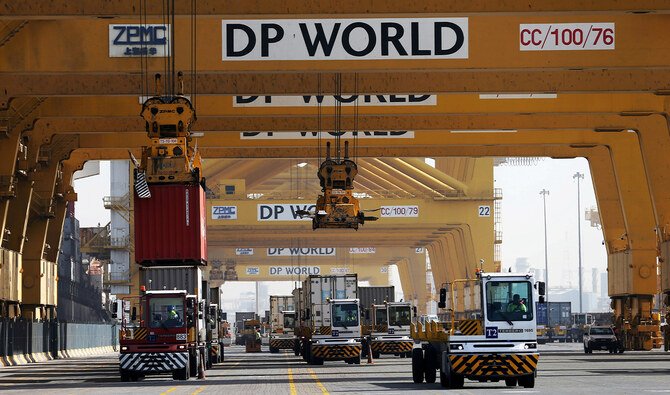
The Red Sea and Bab al-Mandab are among the world’s most critical shipping routes, with a large portion of global energy and goods passing through them, making any military escalation a matter of close regional and international monitoring.
These developments come at a sensitive time. Global shipping companies had just begun testing safer return routes to the Red Sea. However, these recent movements, and the militia’s alignment with regional agendas, may jeopardize hopes of restoring normal navigation through one of the world’s most vital economic arteries.

Established in December 2008, The Diplomatic Insight is Pakistan’s premier diplomacy and foreign affairs magazine, available in both digital and print formats.