Riyadh (TDI): Yemen’s Houthi movement claimed responsibility for missile and drone attacks on two Saudi oil tankers in the Red Sea on Thursday, opening another front in the escalating Middle East conflict as the United States carried out strikes on Iran for the 12th consecutive day.
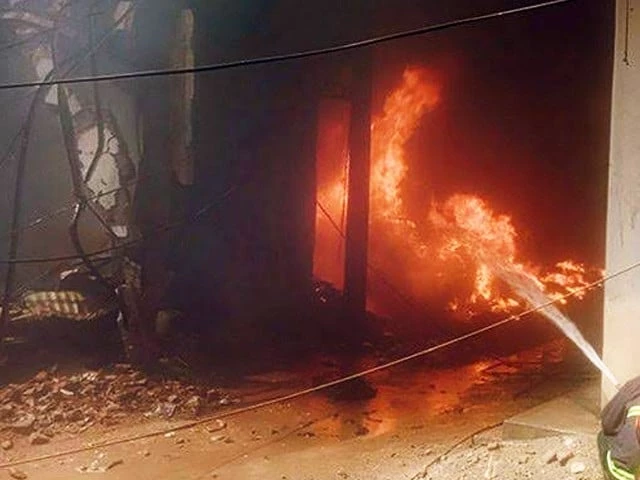
Saudi Arabia confirmed that one of the targeted tankers, Encelia, caught fire after coming under attack while sailing in the Red Sea. According to the Saudi Press Agency (SPA), the blaze broke out at the vessel’s bow, but all crew members were safely evacuated. Saudi authorities said the vessel had been secured and measures were being taken to prevent environmental damage, describing the attack as a violation of international law.
The Houthis said they targeted the Saudi-flagged Encelia and Layla with ballistic missiles, cruise missiles and drones, claiming the ships had violated a naval blockade the group recently imposed on Saudi Arabia in the Red Sea. The group also claimed that around 10 commercial vessels were forced to turn back because of the blockade.
Maritime security agencies confirmed the Encelia transmitted a distress signal after being struck by a missile near Saudi Arabia’s Jizan port. The United Kingdom Maritime Trade Operations (UKMTO) also reported an incident involving a tanker hit by an unidentified projectile in the same area, though it did not identify the vessel.
Read More: A War at Sea: From Hormuz to Bab el-Mandeb
The latest attack comes a day after Pakistan strongly condemned Houthi threats against Saudi Arabia and commercial shipping in the Red Sea, warning that any hostile act targeting Pakistan’s maritime interests would be treated as a serious threat to national security. Islamabad also reaffirmed its support for the safety of international shipping through the strategic Bab al-Mandeb Strait, a vital route for Pakistan’s trade and energy imports.
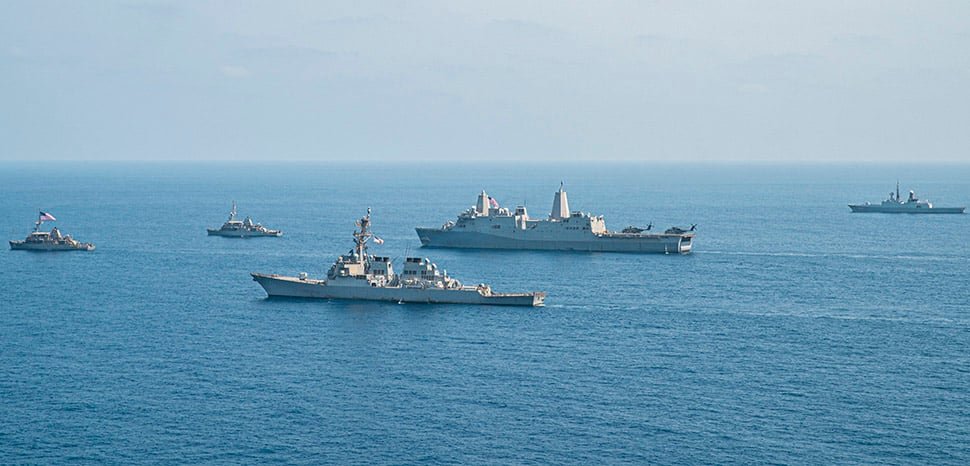
Meanwhile, the United States continued its military campaign against Iran, launching strikes for a 12th consecutive night. US Central Command (CENTCOM) said American forces targeted Iranian maritime assets, missile and drone storage facilities, coastal surveillance sites and air defense systems in an effort to further weaken Tehran’s ability to threaten commercial shipping.
CENTCOM added that US naval forces have redirected nine commercial vessels and disabled one ship as part of their renewed maritime blockade aimed at restricting Iranian port operations.
The conflict has also intensified around the Strait of Hormuz. US President Donald Trump warned that Washington would target Iranian infrastructure, including bridges and power plants, in response to any attacks on commercial shipping. Iran’s military responded by threatening to strike regional oil, gas and electricity infrastructure and vowed to prevent the export of “even a single drop of oil” if the threats were carried out.
Read More: Pakistan Condemns Houthi Threats to Saudi Arabia, Commercial Shipping
Iran’s Revolutionary Guards later reported an explosion involving oil tankers on a mined route south of the Strait of Hormuz, claiming one tanker caught fire while two others retreated. The Guards declared that the strategic waterway remained under Iranian control and effectively closed to tanker traffic without Tehran’s approval.
Iranian media also reported fresh US strikes near Bushehr, home to the country’s only operational nuclear power plant, while officials in Khuzestan province said a missile strike on the Shalamcheh border crossing with Iraq killed two people and wounded 11 others.
The latest developments underscore the growing risk of wider regional instability, with tensions now threatening both the Strait of Hormuz and the Red Sea, two of the world’s most critical maritime energy corridors.