Once again, Lebanon became a battleground in neighboring conflicts, as Hezbollah shot the first fire towards Israel in the Iran war on 2nd march, breaking the ceasefire between Israel and Hezbollah which was agreed on November 2024. But, Hezbollah isn’t the sole representative, nor the main political actor of Lebanon, which we often think.
Lebanon is a country with diverse demography; with 27% of Sunni, 27% of Shiite, 21% of Christian, and other Greek Orthodox, Maronite Christians, Greek Catholic, Alawite and Druze make up around 25% of the country. To address these religious polarities in the country, Lebanon has a complex governance system which reserves the Presidency for Maronite Christian, the Prime Minister for a Sunni Muslim, and speaker of the parliament for a Shia Muslim.
Even in the latest general elections of 2022, the Hezbollah allied political party lost to opposition, only retaining the allocated 27 Shiite seats out of 128. But, still Hezbollah plays a crucial and paradoxical part in Lebanon’s politics and its security. The Shiite militia Hezbollah or ‘The Party of God’ rose into prominence in the 1980s when Lebanon was facing a civil war, and Israel’s invasion of Beirut.
Hezbollah, with the help of the Iranians, drove out Israeli forces to southern Lebanon, where Israel occupied 10% of Lebanon’s territory up to the Awali River. However, Israel always claimed they wanted to create a safe zone of Israel-Lebanese border, but the border was never permanent due to frequent Israeli invasion in Lebanese territory. From 1982’s Beirut invasion to occupying Southern Lebanon, Israel occupied and stayed in Southern Lebanon until 2000.
In May 2000, Israel withdrew forces from Southern Lebanon and the United Nations created a buffer zone called ‘The Blue Line’. Hezbollah rejoiced as a clear victory and established their presence in Lebanese security and politics. From then on, it became strongly embedded in Lebanese’ population that Hezbollah is the only effective force against Israel and because of that, people, especially the southern Lebanese supported and voted for Hezbollah on several occasions.
Read More: Lebanon Must Not Become ‘Another Gaza’, Warns UN Chief
In 2006, Israel again started a war with Hezbollah through American-style ‘Shock and Awe’, which Israel named itself ‘Dahiya Doctrine’ which basically means exacerbating extreme civilian casualties so that civilians turn against Hezbollah. But, that PSOYP failed, as did Israel’s 34 days of war with Hezbollah.
The war ended with UN passing resolution 1701 in the General Assembly, which issued to ‘disarm’ Hezbollah and withdraw all forces from the south of Litani River, a very strategic position of Lebanon’s southern border. Due to popular support at that time, and Lebanon’s security dilemma, it didn’t pressurize Hezbollah to withdraw, nor to disarm, as they effectively secured the southern border for years.
But Hezbollah’s reputation declined after its participation in the Syrian civil war. Meddling with other countries’ domestic affairs just to serve Iranian interests resulted in at least 20% of decline of their popularity in Lebanon. Many Christians and Sunnis rejected Hezbollah’s role in Syria, both militarily and politically.
After that, when another war broke out in 2023 in Gaza, Hezbollah tried to restore its image by providing limited support to Hamas as part of their military aid to Palestinian cause. But the organization faces severe leadership challenges as Israel launched a surprise ‘Pager attack’ which decapitated much of its senior leadership including Hasan Nasrullah in September 2024. That surprise attack not only killed Hezbollah leaders but also killed 12 civilians, injuring at least 3500-4000 unarmed people.
Months later, in November both parties agreed to a ceasefire. But, Israel’s attack against Iran in February 2026 triggered Hezbollah again, as it killed the spiritual leader of Shiite faith, Ayatollah Khamenei. Weakened, decapitated Hezbollah had to respond with a barrage of missiles to average the killing of Ali Khamenei. But the human costs on the Lebanese side still gets overlooked by all the casualties of Iranians, Americans, Israelis and gulf countries.
Read More: 370,000 Children Displaced in Lebanon Amid Israeli Strikes: UN
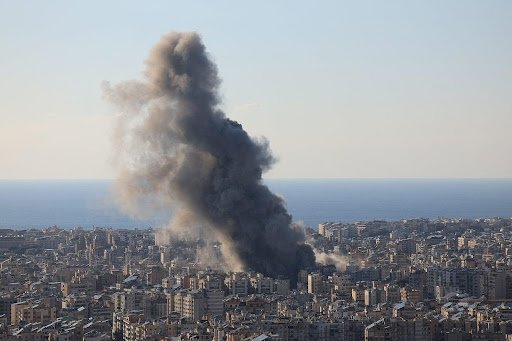
As of now, one million Lebanese have been displaced due to Israel’s attack and invasion in southern Lebanon. At least 1256 people have already been killed in less than a month, including 878 civilians. This is almost 70% civilian casualties, and none of them were Hezbollah soldiers. UNICEF reports 19,000 Lebanese children are uprooted on a daily basis due to the war.
Hezbollah which was a dominant militant group with popular support, now facing severe backlash in home. Many Sunnis and Christians didn’t want to get involved in ‘Iran’s war’. Even the Lebanese government banned Hezbollah’s activity on the first day of war, as the Lebanese Prime Minister said “This war was imposed upon us!” Hence, all the military activities of Hezbollah are now illegal.
But, Hezbollah is a ‘state’ within the state. As it gets all its weapons, ammunition, and finance directly from Iran, not Lebanon. And most importantly, it is a far more powerful military than the Lebanese army. The Lebanese army has approximately 60,000 active soldiers, while Hezbollah has 100,000 trained fighters, with multiple war experience. This paradoxical situation created a mixed situation in Lebanon.
On one hand, the Israeli forces are encroaching towards the ‘Litani River’, a vital and strategic location for the southern border; on the other hand, Hezbollah’s ongoing operation is dragging Lebanon into a brutal conflict that has already displaced millions. Now the question remains, will the Lebanese people step away from this regional war, or join the fight alongside the Iranians?
*The views presented in this article are the author’s own and do not necessarily reflect the views of The Diplomatic Insight.

Muhammad Irfan Sadik
Muhammad Irfan Sadikis a researcher, currently serves as the Senior Foreign Policy Analyst atYouth Policy Forum - YPF. Sadik holds a M.S.S. and B.S.S. from Department of International Relations at Jahangirnagar University. His research focuses on Intra-State Conflicts, Strategic Studies, International Security Studies, Disarmament and International Arms Control, and Maritime Affairs. He can be reached atrajinsadik110@gmail.com