Due to the growing influx of global climate finance to developing countries, small states are frequently branded as pilot projects of market-oriented green transitions. The Gambia has been able to get global acknowledgment as a climate leader in West Africa due to its decision to become one of the few countries that adopted the Paris Agreement in its full substance. But behind this story of success, there is another political economy conflict between liberal reform discourse and state domination. This paradox does not only exist within The Gambia, but it can be seen especially in those small, aid-reliant states, where the ambition on climate, investor trust, and political power collide.
The Gambian green transition is discussed within the context of liberal markets, participation in the process by the private sector, and transparency in the regulations. Though, as a matter of fact, it is driven by a state capitalist logic created by structural vulnerability, small market size, and reliance on external finance. The case of The Gambia has shown that liberal climate reform discourses tend to coexist with, and ultimately be limited by, robust state intervention. This hybrid reality needs to be understood by the donors, investors, and policymakers who would like to have effective climate governance models in the Global South.
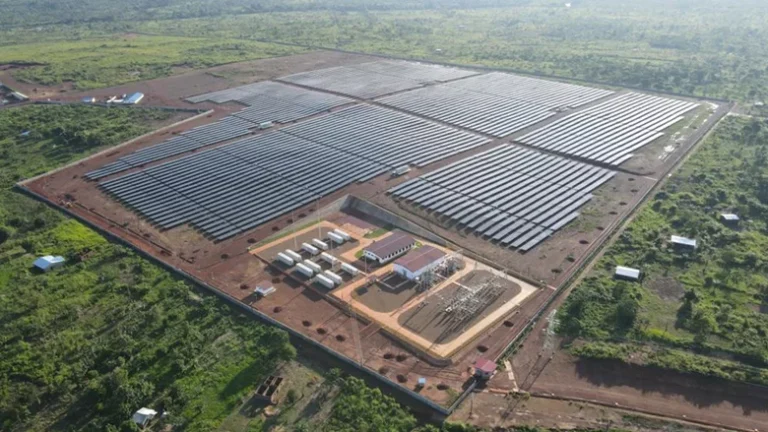
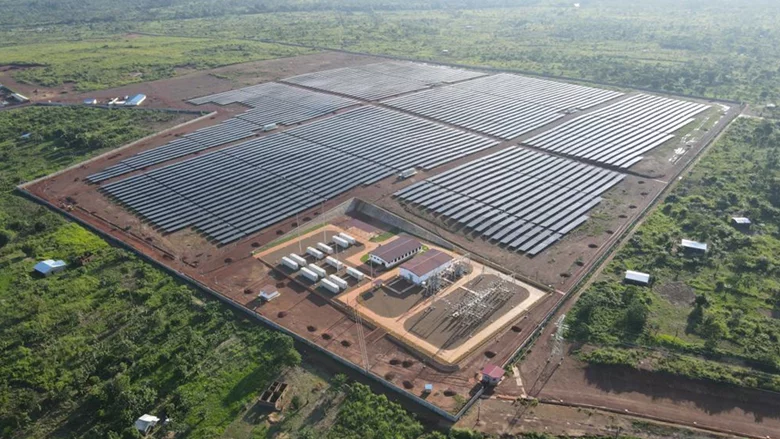
The climate and energy policies of the government are formally based on market-oriented principles. The most popular approaches to the expansion of solar power, waste-to-energy, and grid infrastructure are promoted in the policy documents in terms of privacy of investments in renewable energy, decreasing regulatory barriers, and partnerships of the state and the business (PPPs). This vision is well aligned with the expectations of the donors and the climate finance standards of the world, which emphasize competition, efficiency, and confidence of the investors.
This liberal reform agenda is anchored on three assumptions. First, the liberalized policy will bring both domestic and foreign companies to the provision of green infrastructure, and will decrease the financial load on the state. Second, the international community, especially the World Bank and the European donors, makes conditional financial assistance dependent on market-oriented reforms that would meet the international investment standards. Third, the increasing electricity prices and energy insecurity create the demand for quicker solutions, which supports the necessity of the involvement of the private sector.
Read More: Small State, Big Ideas: Gambia’s Re-engagement with China
Although there have been policy reforms, the private investors are still afraid. The small market size, currency volatility, low number of consumers, and weak grid infrastructure of the Gambia have a huge impact on increasing investment risks. Major renewable initiatives tend to need sovereign guarantees, which are not credible on the part of the government. Consequently, not all investments proposed are implemented, or rather, implemented with massive donor participation.
The Gambia has reacted by growing more dependent on a contemporary variety of state capitalism instead of going back to the restrictive state control. The decisive power of the project approvals, integration of the electricity grid, and energy planning rests with the key institutions, especially the Ministries of Petroleum and Energy and the National Water and Electricity Company (NAWEC).
Gambia’s green transition is an example of a structural dilemma in small states. The nation is small enough to allow it to encourage competitive and long-term private investment in green infrastructure, but small enough to be financially limited enough to follow an entirely state-based industrial approach.
The main problem is not which entity should be in the forefront of the green transition between the market and the state. Instead, The Gambia must deliberately form a consistent hybrid model which would entice investment and guard against market volatility, as well as maintain long-term energy security for the citizens.
Looking Ahead
As green investment, geopolitical interests, and strategic interests continue to grow increasingly interconnected at the global level, the experience of The Gambia can be used as a caution. Small states need to have effective climate transitions; this means the governance models should not reject the structural limitation but acknowledge it.
In a way, whether The Gambia is going to be successful in its green transition will not be determined by its liberal or state-led approach, but by its success in institutionalizing a sensible balance between ambition and capacity. The biggest problem is to change hybrid governance as an improvised reaction to a planned approach. When well managed, such a model would help to strengthen policy credibility, re-establish investor trust, and increase social legitimacy.
The case of The Gambia in the end adds to a bigger argument in the Global South: to what extent can green transitions become truly inclusive and sustainable when they are affected by pressure outside instead of realities inside.
The solution to climate ambition constraints that small states have to grapple with could not be the question between market liberalization and state capitalism, but rather redefining how the two can be used in a strategic manner to meet long-term national development objectives.
*The views presented in this article are the author’s own and do not necessarily reflect the views of The Diplomatic Insight.

Ebrima Ceesay
Ebrima Ceesay is a master's student of Political Science majoring in international relations at Universitas Islam International Indonesia. My areas of interest are the political economy of development, climate governance in the Global South, and how small states cope with their international diplomacy on structural constraints. I also analyze the interdependence of global climate finance, state ability, and market-oriented reforms on the basis of my career experience in commercial banking and compliance. He can be reached at ebrima.ceesay@uiii.ac.id