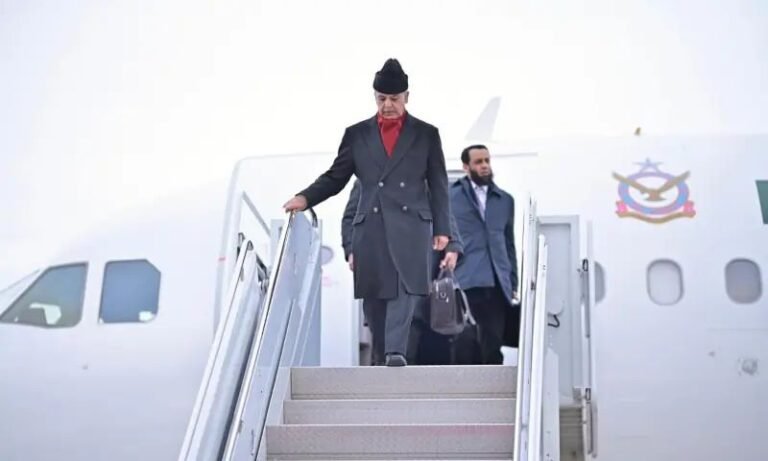
The year 2026 began very turbulently in the Middle East. Protests in Iran, agreements between Damascus and the Kurds, restructuring of the conflict in Yemen, a sharp deterioration in relations between Saudi Arabia and the United Arab Emirates, developments in Gaza, the conclusion of a defense agreement between Saudi Arabia and Pakistan with the possible inclusion of Turkey on the one hand, and intentions for defense cooperation between the United Arab Emirates and India on the other.
All this was amid the anxious expectation of a new war between the US and Iran. Some of these events were highly anticipated, while others could only have been predicted by a very small group of experts familiar with the details of what was happening on the ground. In any case, the combination of very significant and rapid changes in various problem areas of the region and the multifaceted developments in each of them makes it inappropriate to predict the regional situation based on scenarios at the moment.
Regarding the situation in the Middle East, Russian experts Ryabtseva E.E. and Ryabtsev A.L. are of the opinion that the conflict in the region will remain; the civil war in Yemen, chaos in Libya, and military conflicts in Syria and Iraq will continue.
The reason for lack of peace in the Middle East is three fundamentally interconnected issues, which are the issue of Palestine, the interests of non-regional players, and the activities of terrorist groups and non-state actors.
- The Palestinian issue arose primarily from the fact that independent and sovereign Jewish and Arab states such envisaged in the UN General Assembly resolution of 1947. Currently, a large part of the lands allocated to the Arab state by the UN resolution are under Israeli occupation. 5 million Palestinians from these lands live as refugees in neighboring countries. Numerous peace plans drawn up since 1967 have failed. The conflict between Israel and Palestine is one of the longest and most complex conflicts in modern history. Its roots are deeply connected within the history of the region, where religious, national, political and territorial interests intersect.
- Control of the Suez Canal and the Strait of Hormuz, which are among the most important trade routes in the world, is important for the global monarchy. Another goal can be considered to be maintaining control over the natural resources of the region. After the Cold War, the US presence in the region increased, and during the Syrian civil war, Russia’s military influence increased. Other global powers, namely China and India, are also active in the Middle East and have good political and economic relations with Iran and Saudi Arabia.
- Terrorist organizations and non-state actors seeking to establish their own states are another critical source of regional peace destruction. They are used by regional countries and non-regional players seeking to control the dynamics of the Middle East.
Without resolving these three issues, lasting peace and stability in the Middle East cannot be achieved. However, resolving them is extremely difficult. In a world where the United Nations has become difficult to operate in accordance with its fundamental goals and principles, the Palestinian issue cannot be resolved, non-regional players must be excluded from the region, and the fight against terrorist organizations is ineffective.
Another problem is the lack of a sanctions mechanism for non-compliance with UN Security Council resolutions. Many of the decisions adopted by the Security Council on the Middle East have not yet been implemented.
In the current situation, one of the factors of instability in the Middle East is the lack of agreement among the five world powers on the plans for the region. A large and important part of the Middle East is made up of the Persian Gulf, and the smallest challenge and conflict in this region affects world politics. The Persian Gulf is a sensitive region where the smallest developments and changes in this region can affect world politics and international relations.
Read More: Are the Risks of Technological War Hovering in the Middle East?
If an agreement is reached between the US, Russia and China (and to some extent the European Union and India) on the future of the Middle East, it can be assumed that Britain and France will agree to it.
Ultimately, the activities of the great powers in the Middle East are part of a multilateral and multipolar global struggle among themselves. It cannot be seen in isolation from the struggle for dominance in other important regions of the world.
A two-state solution to the Palestinian issue is of paramount importance. An independent Palestinian state with the 1967 borders and East Jerusalem as its capital must be internationally recognized. This depends on Israel’s position.
This will only be possible if the US convinces Israel that it does not expect it in the near future. Moreover, in order to achieve a two-state solution, it is necessary to overcome the main problems related to the situation of Jewish settlers in the occupied territories, the return of Palestinian refugees, and the status of Jerusalem. The process that began with the Oslo Accords has been suspended. With the ongoing tragedy in Gaza, negotiations on the establishment of two states are impossible.
The main thing that can be done for Palestine now is to ensure a ceasefire in the Gaza Strip and the delivery of humanitarian aid. A ceasefire was brokered between the two countries in October 2025, thanks to Egypt’s efforts. A ceasefire agreement was signed between Israel and Hamas at a Gaza peace conference held on October 13 in the Egyptian city of Sharm el-Sheikh. The document was signed by US President Donald Trump, Egyptian President Abdel Fattah al-Sisi, Qatari Emir Sheikh Tamim bin Hamad al-Thani, and Turkish President Recep Tayyip Erdogan as mediators and guarantors of the ceasefire in Gaza.
However, the situation in Gaza remains unstable after the ceasefire. It is also extremely difficult for non-regional players to leave the region. The United States has military bases in Saudi Arabia, Iraq, the UAE, Qatar, and Bahrain. There is a clear US and Russian military presence in Syria. It is unrealistic to expect that these military facilities will be closed in the near future and that all foreign troops will leave the region. The naval forces of the US-led coalition are present in the Red Sea, the Strait of Hormuz, and provide maritime security for commercial shipping.
To legitimize their military presence in the Middle East, many states cite the instability of the Middle East and the activities of terrorist organizations and non-regional military elements as examples. Stabilizing the Middle East and ensuring regional peace through mechanisms created by the countries of the region will eliminate disputes between non-Middle Eastern players.
A military presence is necessary to have influence in the dynamics of the Middle East, which is a strategically important region for the global balance.
Read More: Lurking Chaos in Middle East and China’s Outreach to the Muslim World
If the current players in the Middle East withdraw, it is likely that other international players will transfer their military presence to the region. Therefore, non-regional actors who want to have a foothold in the Middle East will not strive to stabilize the situation in the region.
Finally, peace in the Middle East is threatened by the activities of terrorist groups and other non-state actors supported by some regional or non-regional actors. An effective fight against all terrorist organizations is necessary, especially against ISIS, the Muslim Brotherhood and other terrorist groups.
Today, terrorism in the Middle East is taking on more and more forms. In order to expand its activities and strengthen its position, the political leadership is interested in special structures to increase funding for ideological purposes.
Within the framework of the resolutions of the United Nations Security Council, it is important to effectively combat terrorist organizations in the region, to limit the financing of terrorism, to eliminate the possibility of propaganda and representation of these organizations in other countries, to develop and implement effective multilateral military measures.
However, some countries in the region are not interested in effectively combating these organizations, which have become a useful tool for them to achieve short-term goals. In addition, some non-regional players also support the activities of terrorist groups on the grounds that this will help them in the fight against ISIS.
The main cause of instability in the region is the activities of terrorist organizations. Today, a large number of terrorist organizations operate in the Middle East. The most well-known of these are ISIS (Islamic State of Iraq and the Levant), Al-Qaeda, Ansar al-Islam, Army of Islam, Muslim Brotherhood, Armed Islamic Group, Islamic Jihad Movement in Palestine, Islamic Front, Fatah (or Palestinian National Liberation Movement), Hamas (Islamic Resistance Movement), and Hezbollah.
When considering the problems of the Middle East, we must recognize that without adherence to four basic principles:
- strict implementation of United Nations resolutions,
- mutual respect for the borders and territorial integrity of countries,
- non-interference in internal affairs,
- full compliance with international rules in the field of arms, peace in the Middle East will not be established.
In addition, all states must respect two principles that form the basis of international law: pacta sunt servanda (respect for agreements) and bona fide (good faith). In order to ensure not only the long-awaited stability in the Middle East, but also peace and tranquility throughout the world, strict adherence to these two principles by all UN members is necessary.
The Arab East has been and remains a conflict-ridden region in the world. Since World War II, this territory has faced numerous conflicts characterized by the intervention of external factors. The Middle East is a place of all kinds of conflicts, including ethnic, religious, political, and conflicts over water resources.
It should be noted that the reasons that led the Arab countries to the “Color Revolutions” of 2011 and 2019 have not yet been resolved, and all political conflicts today are a continuation of the same factors.
According to Marina Sapronova, a professor at the Department of Oriental Studies at MGIMO, Arab countries are the largest users of weapons, and it should be noted that these weapons are supplied by the United States.
Middle East political experts believe that conflicts in the Arab East have always had an international dimension, and they have attracted powers from outside the region, and the wars have generated a large flow of refugees.
Analysis shows that the Arab world has changed significantly since the “Arab Spring” of 2011 and the wave of 2019. It is worth noting that after this, the process of destroying state institutions began, and now leaders are engaged in their reconstruction, and two factors should be distinguished in conflict situations, the first of which is: non-Arab regional powers – Israel, Turkey and Iran – are now on the political scene and are promoting their development models for the region, and non-state actors are Hamas, Houthis, Hezbollah and other groups that have played a role in the conflicts in the region.
Read More: Calm Before the Storm? From Protests to War, the Middle East on Edge
The second factor is created by Saudi Arabia and Qatar, which are waging their own struggle for influence in the region.
In the context of a multipolar world, we see new players in the Middle East, such as China, which is proposing new investment projects and is trying to impose its culture and customs in the region through soft power. It should be noted that China will not be involved in the conflicts in the Middle East and its goal is to establish trade and investment cooperation through cultural diplomacy. The growth of China’s influence in the Middle East is a significant development in world politics that cannot be ignored.
However, there are other playas that have been the main cause of instability in the region for many years due to the sale of weapons and natural resources in the Middle East. Under the conditions of American hegemony, US partner governments in the Middle East and North Africa are among the highest spenders on the military and intelligence sectors in the world, and the United States is the main supplier of weapons.
This weapons-centric model has shaped not only regional security but also the political economy of the Middle East, deeply embedding militarization in governance and foreign policy. As the global system shifts toward multipolarity, how might this affect security spending by Middle Eastern governments?
Without the United States as the undisputed military hegemon and with existing interests in US arms purchases, might this create opportunities to direct military budgets or even weapons central to regional security strategies? Or will the perceived instability of multipolarity instead push spending even further and more consistently toward military approaches?
The nature of the shift from unipolar to multipolar balance of power remains controversial, in part because of differing definitions of unipolarity and multipolarity. However, the US government predicted in 2008 that the global system would become multipolar by 2025.
While the precise timing of the emergence of multipolarity may not be agreed upon, the general processes is clear, raising important questions about how a fragmented global order might affect the arms trade and broader security paradigms in the Middle East. The dynamics that drive current spending provide valuable insight into how these trends might evolve in the future.
Officially, U.S. arms sales to the Middle East are described as pursuing policy objectives, such as “promoting greater intraregional security and cooperation,” “strengthening partner capacity,” and fostering “mutual cooperation,” and these arms sales are seen as a clear obstacle to political stability in the region.
While the ability to adapt has largely been achieved, the persistent lack of meaningful security, regional cooperation, and partner capacity raises important questions about why America’s regional partners remain such loyal customers despite billions of dollars spent on US weapons that appear to be failing to meet their stated objectives.
Read More: The Most Powerful Yet Hidden Community in the Middle East
Regarding the conclusions and implications of this paper, several suggestions are made that could help ensure peace and stability in the Middle East, and they are listed below:
One of the most important ideas is to establish a direct dialogue between the main players, such Israel, Palestine, and the countries of the region, based on international law. It is also suggested that the role of international organizations in creating a stable monitoring and support structure is appropriate.
One important outcome that could be achieved is that agreements are concluded gradually, rather than all at once, to build trust. Also, supporting joint economic and infrastructure projects helps to reduce tensions. The impact of education and culture on the young generations is also of great importance.
Another positive outcome could be that by creating channels of communication between different communities and using the media, people will become more aware of the peace process. Also, strengthening the role of women in negotiations can lead to more diverse and sustainable perspectives. Finally, the participation of the international community in monitoring and implementing agreements can also bring greater stability.
To confront terrorist groups, the key measure is to strengthen intelligence and security cooperation between countries. It is also necessary to reduce the sources of financing of these groups, prevent extremism, and provide social solutions, such as education and welfare, to reduce the risk of attracting young people to extremism.
Providing peace in the Middle East in a multipolar world depends on balancing the interests of the great powers, political will, and the development of regional cooperation. If constructive dialogue and multilateral diplomacy are strengthened, then achieving relative stability is possible. Otherwise, the region may remain one of the permanent flashpoints in the international system.
*The views presented in this article are the author’s own and do not necessarily reflect the views of The Diplomatic Insight.

Ziyoev Subhiddin Nasrievich
Ziyoev Subhiddin Nasrievich is a candidate of Philological Sciences, and the Head of the Middle and Near East Department of the Institute for the Study of Asian and European States at the National Academy of Sciences of Tajikistan.