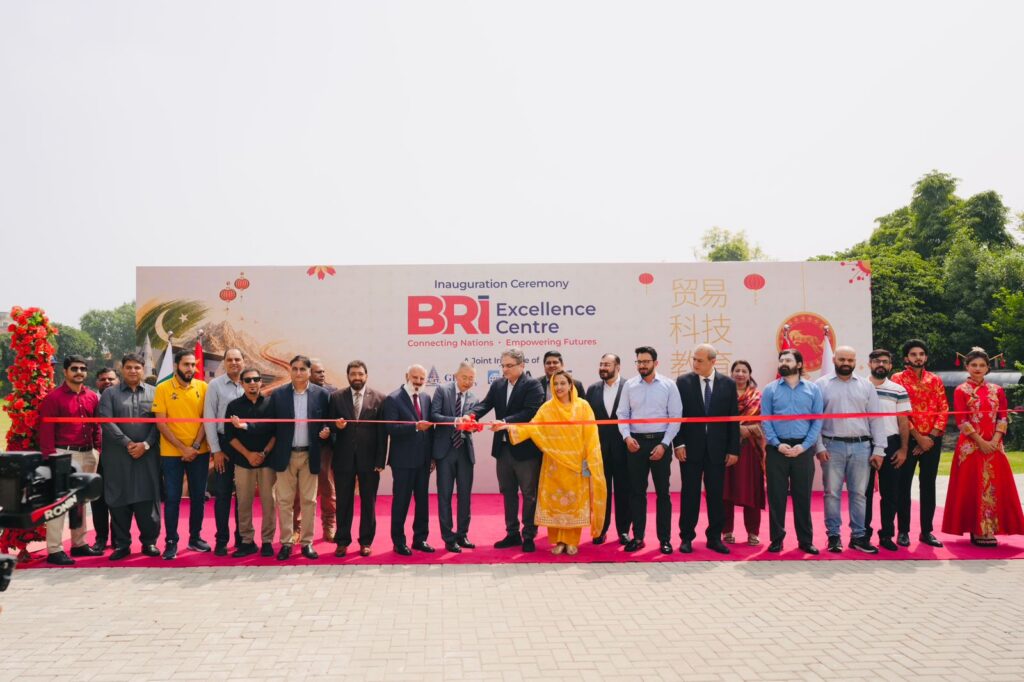
Gujranwala (TDI): Diplomatic Insight Group (DIG), alongside Gujranwala’s GIFT University, and Gujranwala Business Alliance (GBA), inaugurated the BRI Excellence Centre (BEC) at the University campus today – Thursday.
The inauguration was graced by Sun Yan, Consul General of China in Lahore, who was the Chief Guest of the ceremony.
The Consul General was accompanied by Dr. Farhat Asif – Chairperson of Diplomatic Insight Group, Muhammad Anwar Dar – Chairman of GIFT University, and Ahmad Ikram Lone – Founder and Chairman Gujranwala Business Alliance (GBA).
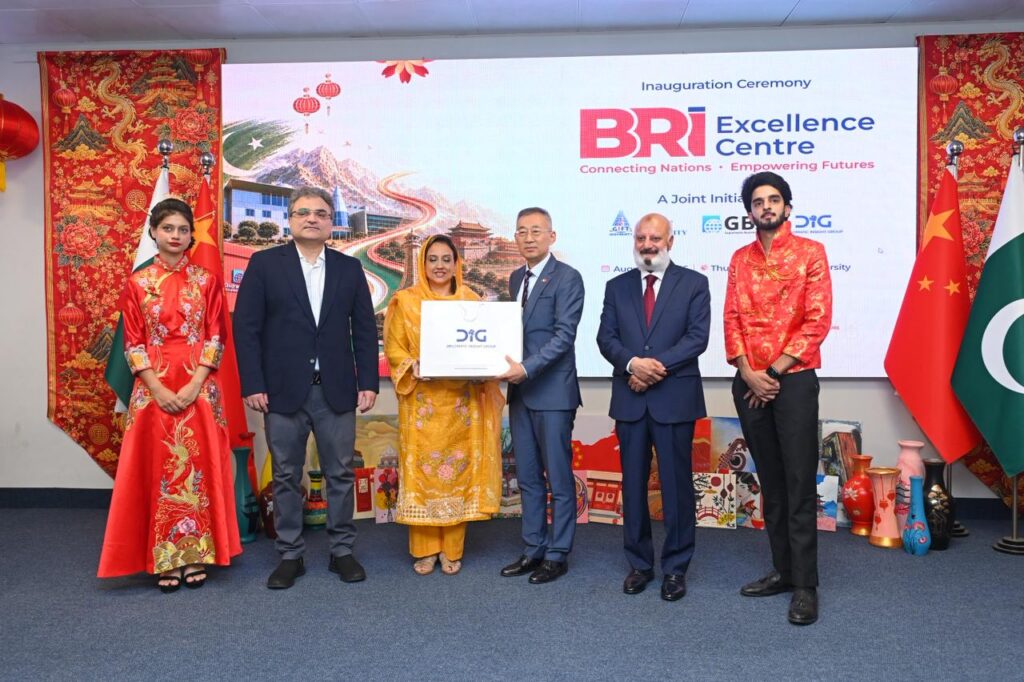
The Centre aims to move BRI cooperation from national vision to local delivery by joining academia, industry and diplomacy in Gujranwala.
The inauguration falls in the 75th year of diplomatic relations between Pakistan and China, and follows the January 2026 agreement to launch an upgraded CPEC 2.0 focused on industry, agriculture and mining, sectors that define Gujranwala’s economy.
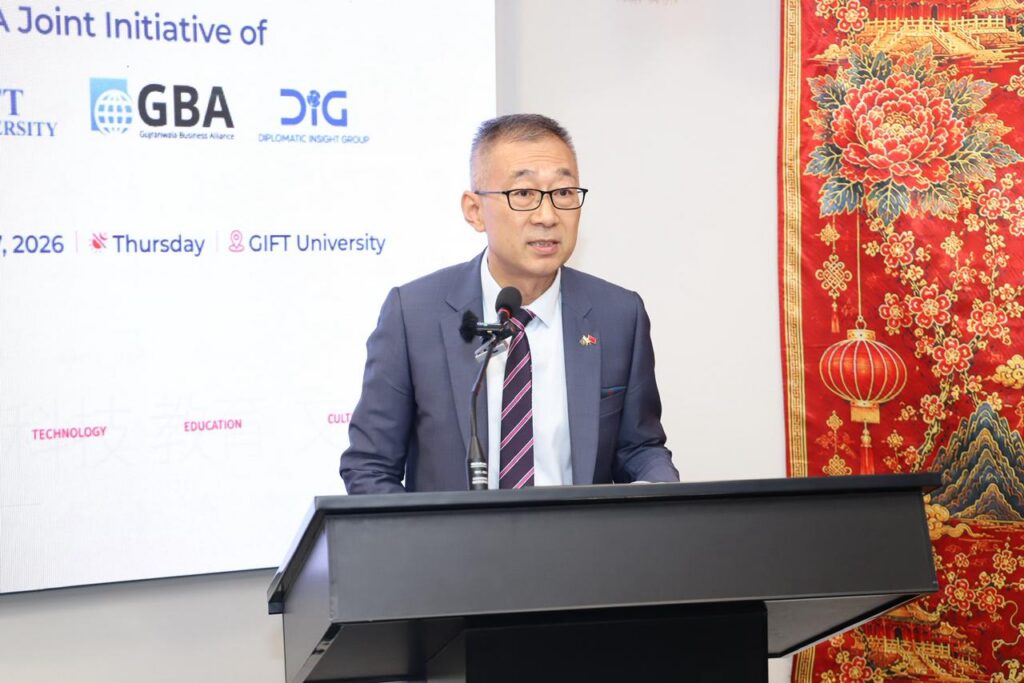
Consul General Sun Yan, in his remarks, hailed the BRI Excellence Centre as a great and timely initiative to coincide with the 75 years of the establishment of diplomatic relations between China and Pakistan. He said the Centre will bring both countries closer together in academic as well as industry exchanges.
The Centre operates across six working domains under one roof: a BRI Trade and Investment Centre, a Chinese Language and Cultural Centre, an AI and Digital Innovation Centre, an EV and Green Technology Centre, a BRI Research and Policy Institute, and an Entrepreneurship and Startup Centre.
Together they are designed to move Belt and Road cooperation from policy discussion in the federal capital to commercial and technical outcomes on the factory floor.
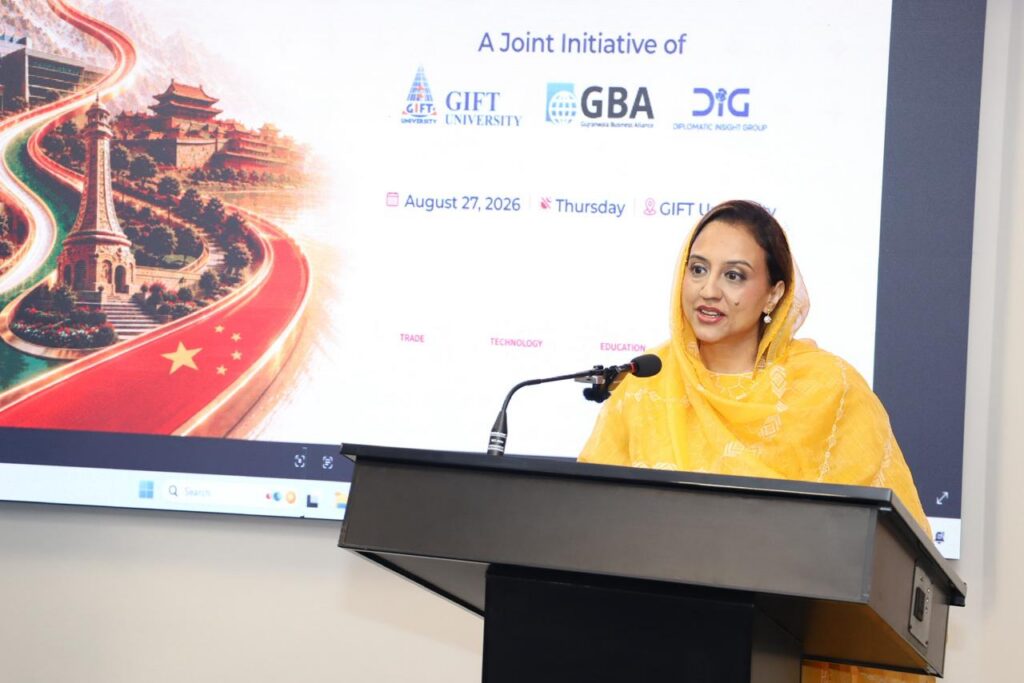
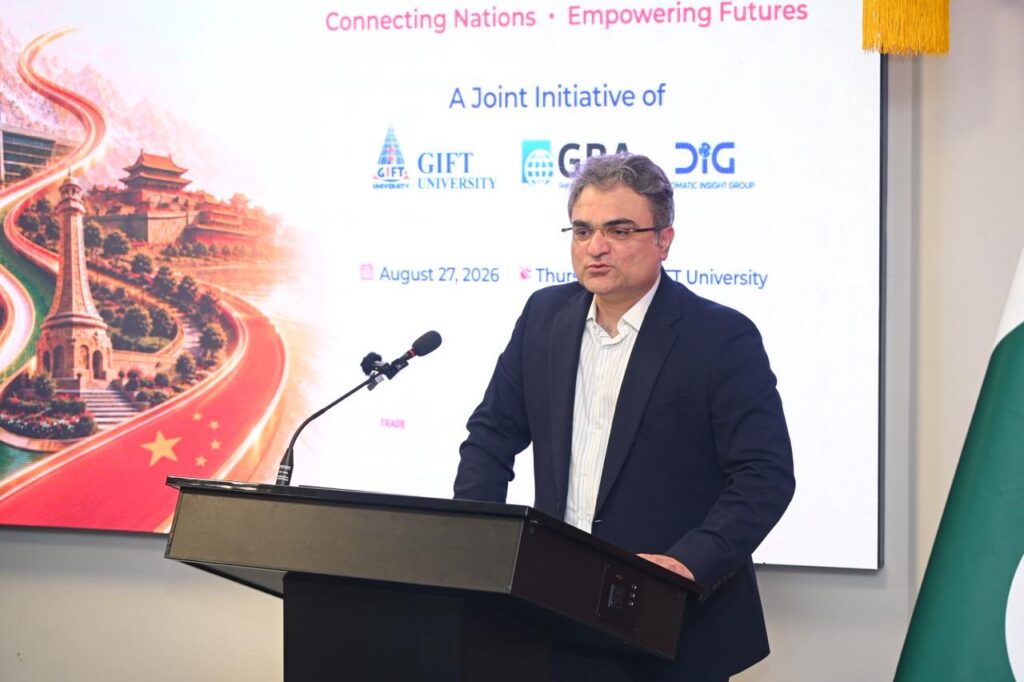
“We want this Centre to become a platform where Pakistani businesses can explore Chinese markets and partnerships, where students can learn Mandarin and understand contemporary China, where researchers can produce useful work on CPEC, trade and industrial policy, where startups can connect with technology and investment, and where Chinese institutions can find credible partners in Pakistan’s industrial heartland,” said Dr. Farhat Asif, Chair of the Diplomatic Insight Group.
Muhammad Anwar Dar – Chairman of GIFT University, acknowledged the efforts of Diplomatic Insight Group in helping materialize the vision of the University to give students more than just education; to help them establish their own businesses. He noted that the Centre will help students internationalize entreprenureship and offer opportunities for growth.
Gujranwala accounts for a substantial share of Pakistan’s manufactured exports, including roughly 40 percent of national surgical instrument exports and 30 percent of cutlery.
The city of 2.3 million people sits inside the Lahore-Gujranwala-Sialkot industrial triangle and directly on the China-Pakistan Economic Corridor route, yet has had no structured Chinese institutional presence until now.
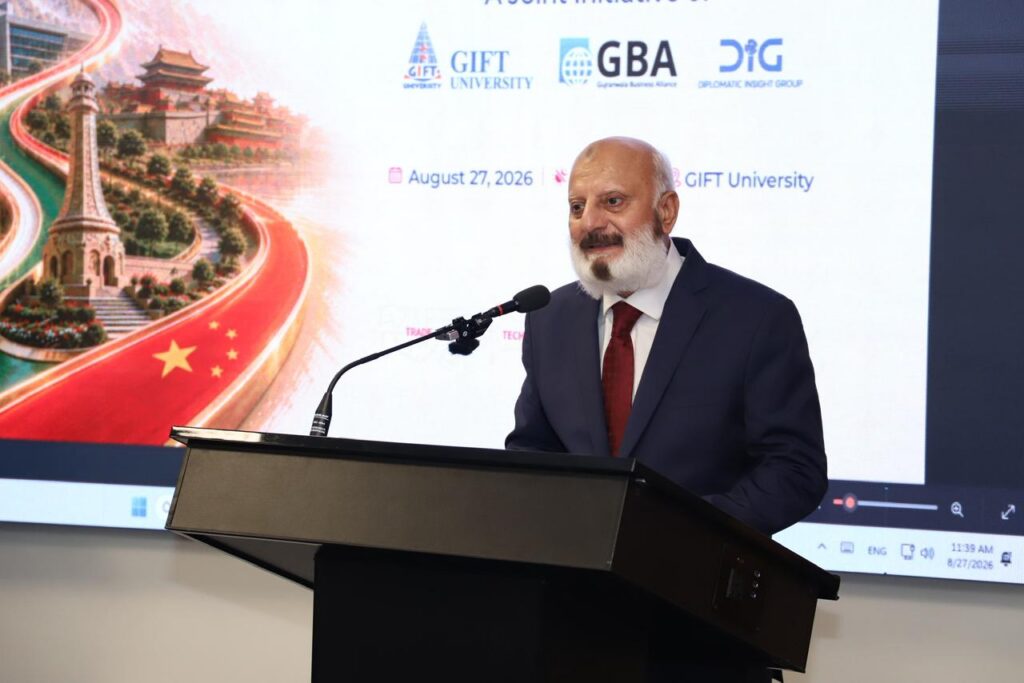
Ahmad Ikram Lone – Chairman of the Gujranwala Business Alliance (GBA) – speaking at the inauguration said, “Today we are not simply inaugurating a Centre, we are opening a new chapter of cooperation and activity, and shared opportunity between Pakistan and China.”
He called the newly-inaugurated Centre as a “first-of-its-kind in the region,” centering around four domains, which include trade, technology, education, and culture.
The Centre’s inaugural-year program includes an Annual Pakistan-China Youth Dialogue Forum, a business-to-business matchmaking summit connecting GBA member firms with Chinese enterprises in textiles, surgical instruments, ceramics and manufacturing, an AI and robotics showcase, an EV and green technology demonstration day, a startup pitch day, a student exchange cohort, and a flagship 75th-anniversary research report on Pakistan-China cooperation across Punjab’s industrial corridor.
DIG has worked on Pakistan’s engagement with the Belt and Road Initiative since 2009 and, through its Institute of Peace and Diplomatic Studies, established Pakistan’s first Centre for BRI and China Studies in Islamabad in 2018.