The Central Asia Regional Economic Cooperation known as CAREC Program is one of Asia’s most important and promising yet lesser known initiatives that aims to connect countries, their economies and people across Eurasia.
Backed by Asian Development Bank (ADB), CAREC brings together 11 member countries which include Pakistan, Afghanistan, China, Kazakhstan and Uzbekistan with the ultimate goal of promoting regional cooperation, economic integration, and sustainable development.
The vision of this program can be summed up by its simple yet strong motto: “Good Neighbors, Good Partners and Good Prospects.”
Why CAREC Matters?
CAREC was established to resolve and address one of the region’s major challenges which is poor connectivity. The countries of Central Asia, which are landlocked, face many difficulties accessing global markets.
CAREC works to establish and fill this gap by building roads and railways, energy corridors that economically and physically connect the region to South Asia, Middle East and Europe.
In doing this, it creates a bundle of opportunities for trade, investment and cultural exchange that can drive long term stability and growth across Eurasia.
Read More: Intra CAREC Trade in Focus as Kazakh Envoy Addressed the Annual Conference
Core Work Areas of CAREC
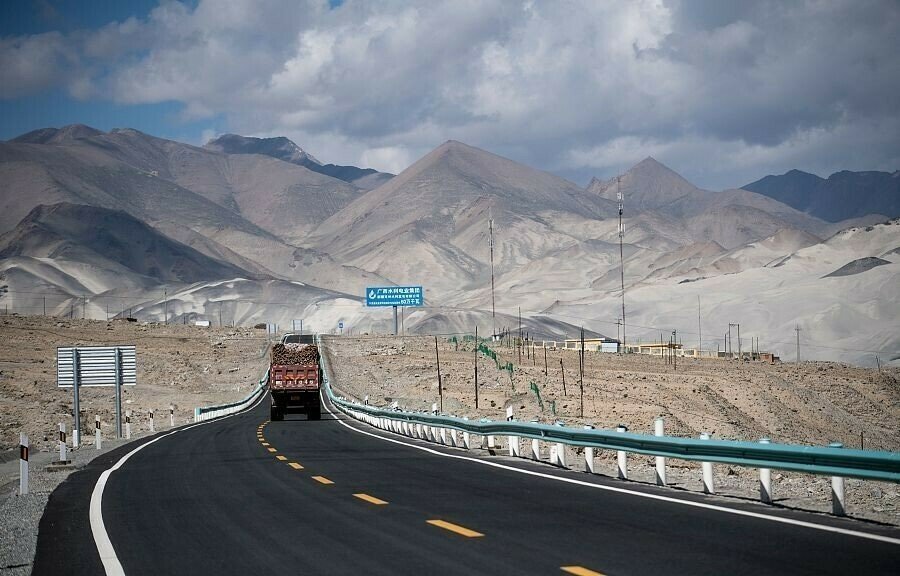
The core of CAREC lies in four main areas: transport, energy, economic cooperation and trade facilitation. The program invests in regional transport corridors, highways, border crossing facilities and rail links which allow goods and people to move faster at the lower cost.
It also helps streamline customs processes and harmonize the trade policies which make transnational trade smoother and more efficient. In the energy sector, CAREC works on integrating regional electricity grids and promoting cross border energy trade and encouraging clean technologies such as renewable energy and electric mobility.
Since its origin, CAREC has grown into a massive collaborative network. As per official data, the program has supported over 270 projects which are worth more than $51 billion; which make it one of the most significant regional cooperation frameworks under ADB.
Unlike the other traditional aid programs, CAREC is built on highly shared responsibility in which every member contributes investment, policies and ideas to ensure collective growth.
CAREC 2030 Strategic Framework
The most important milestone in the evolution of CAREC was the introduction of its 2030 Strategic Framework. Approved in 2017, this long term plan expanded program focus beyond infrastructure to include digital connectivity, water resources, agriculture and new areas such as human development. Under CAREC 2030 framework, the program operates in five thematic clusters:
- Economic and financial stability
- Human development
- Agriculture and water
- Trade, tourism and economic corridors
- Infrastructure and connectivity
These clusters are supported by priorities like digital transformation, gender equality and climate resilience. The framework presents CAREC evolution from a narrow infrastructure project to multidimensional platform for regional sustainable growth.
Read More: Pakistan Invites CAREC States to Join SEZs, Boost Trade
Flagship Initiative and Corridors
Among CAREC’s most prominent projects are its six Transport and Economic Corridors which connect China western provinces to Caucasus, Central Asia and Pakistan Seaport. They are not just about roads but they also represent trade routes that can transform regional economies.
For instance, Almaty-Bishek Economic Corridors between Kyrgyzstan and Kazakhstan serve as a pilot model of integrated development which combines transport, health, education, tourism and transport to boost local prosperity.
Another flagship of CAREC is CAREC Integrated Trade Agenda (CITA) 2030, which focuses on improving trade and reducing non-tariff barriers.
Similarly, the CAREC Energy Strategy 2030 promotes cross border electricity trade, energy efficiency and renewable projects which help member countries transition toward a sustainable power system. These kinds of initiatives highlight CAREC’s shift from traditional infrastructure to a future oriented model of regional growth.
CAREC and Pakistan
For Pakistan, CAREC offers strategic opportunities which serve as a transit gateway between Central Asia and Arabian Sea through its port in Gwadar and Karachi.
This program can enhance trade routes, support Pakistan energy and digital connectivity goals and attract foreign investment.
As CAREC expands, Pakistan Participation can play a greater role in linking South Asia and Central Asia which turn geographical position into economic advantage.
CAREC may not always make headlines but it is quietly transforming the economic geography of Eurasia, by connecting countries through trade, energy and shared knowledge, it is not only building roads but relationships.

Established in December 2008, The Diplomatic Insight is Pakistan’s premier diplomacy and foreign affairs magazine, available in both digital and print formats.