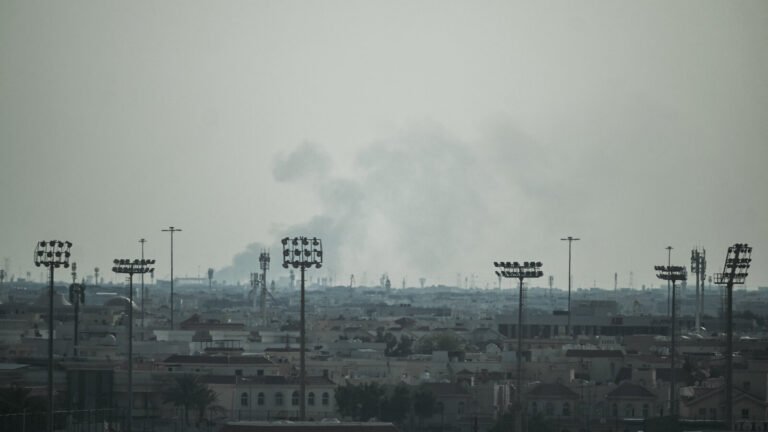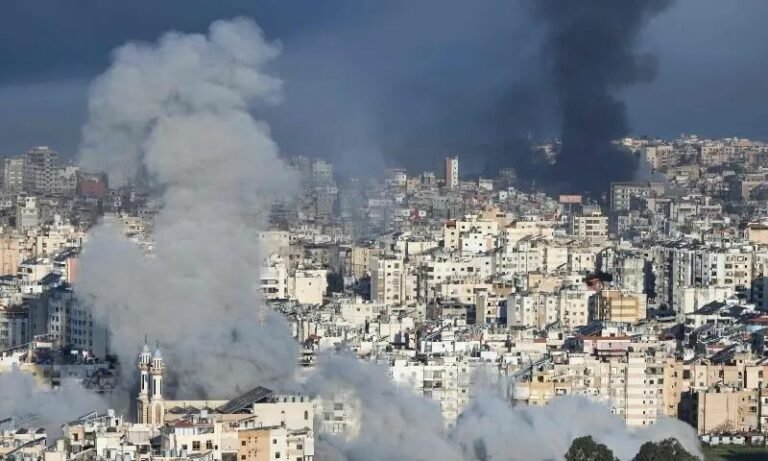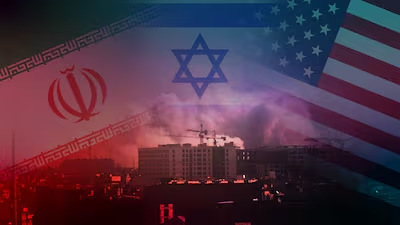
At 2 a.m., when the world is asleep, geopolitical decisions are often awake. A strike there, a threat here, a statement devoid of any prepositions but presented as defense, and in the blink of an eye the temperature of a whole region rises. The new confrontations between the United States and Iran is not merely a trading of missiles, it is ideology, memory, deterrence, and pride.
The peculiarity of this confrontation is not its existence, but that it has become common. Escalation no longer shocks. It spreads via headlines, drives up the oil prices, shakes the diplomatic cables, and then fades in the background shuffle of international politics.
One would want to go back to a historic event in the history of the Iranian politics to figure out why this rivalry is structurally persistent: the 1989 demise of Ruhollah Khomeini. Khomeini was not just the head of the Islamic Republic but he institutionalized a worldview. His revolutionary theory had incorporated anti-Western, or more so American, influence into the ideological DNA of state.
Upon his demise, there were those who theorized that Iran would tend to weaken its confrontational stance gradually. Rather the system he created was robust. Washington no longer felt the suspicion, but the structure of suspicion. Anti-Americanism turned into a rhetorical tactic, and influenced the decisions of foreign policy when the revolutionary zeal of 1979 had died away.
The Iran-US relationship has gone through the stages of the indirect activity and aggression over the decades. Since the regime of sanctions to the nuclear negotiations and since the confrontations in the sea to the proxies throughout the Middle East, this rivalry has proven to be lasting.
The Joint Comprehensive Plan of Action of 2015 was a glimpse of potential diplomacy but its failure strengthened the suspicion. The disintegration of the deal in Tehran gave greater credence to the critics of the view that compromise with the US is a strategic miscalculation. In Washington, the regional operations of Iran strengthened the views on expansionism. The outcome is the hardline narratives getting reinforced in both ways in a cyclic manner.
Nowadays, the conflict is not so much a matter of one particular issue but the distrust of multiple layers. Washington justifies its policies as a measure to stop nuclear proliferation and destabilization. Tehran justifies its opposition by the necessity to defend the sovereignty and prevent foreign intervention.
The two jobs have elements of a strategic reasoning. Nevertheless every measure, be it sanctions, military action, or rhetoric equivalence creates retaliation. Deterrence is turned into talk in other ways and even talk is then subject of politics that is dangerous.
Read More: A Line Crossed: The Tragic Martyrdom of Ayatollah Khamenei
A notable aspect of the state of dynamic that is particularly impressive is the normalization of brinkmanship. Signaling in the military has been streamlined. Naval operations in the Gulf, drone attacks, cyber attacks, and proxy battles are no longer extraordinary. The deviant has become normal.
When escalation is the order of the day, policy makers may fail to appreciate risks of making miscalculation. It is seldom the time when controlled signaling turns into uncontrolled confrontation which is announced by history. It is amassed by small steps, all of them excused as self-defense.
Such cities as Tehran and Washington are situated in the geographical frameworks that are rather far apart, but are psychologically combined. The Middle East serves as a stretch test and stress test. The partners, proxies, and regional players all perceive each action, recalibrating their own. This is what renders the competition multidimensional. It is not bilateral in operation, though bilateral in its source.
The markets to energy react within hours. There are variable insurance premiums on shipping routes. Investors insure against the uncertainty. In the case of developing economies which rely on imported energy, even marginal escalation is translated into material suffering. Therefore, strategic signaling between two states is turned into economic vulnerability of a number of other states.
Generational memory is another dimension that is very important. The Generation revolution that lived through the year 1979 and the embassy crisis have slowly surrendered demographic superiority. In Iran, there is a huge proportion of the population that was born after the death of Khomeini. Youthful generations in the United States perceive Iran in the light of passed over security discourses, determined by past crisis.
The ideological grounds of hostility were in no way the immediate creation of either generation, but both of them are its victims. This combined lack of connection to the previous generation poses a paradox; policies based on the historical grievance are perpetuated by the population that is further and further removed in relation to the events.
Technology introduces one more dimension. Asymmetric capabilities, cyber operations, and drone warfare are confusing established boundaries of war. There is no longer any need to declare escalation. It may manifest itself in terms of infrastructural interruptions, or a few specific strikes, or proxy conflicts that are balanced on a level not exceeding traditional warfare levels. This grey-zone warfare would enable the two to flex their muscles without going into the full scale battle. But grey zones are ambiguous in nature. The lack of clarity leads to misunderstanding.
The politics within the country also complicate the diplomacy. In Tehran, compromise is liable to look as subversion of revolution based on the legacy of Khomeini. In Washington, participation can be presented as a sign of weakness or appeasing.
Read More: Fragmentation in the Middle East: Internal Rivalries and External Pressures
The leaders in either directions work in polarizing surroundings where the perception of concession becomes common weapon in the hands of the adversaries. Escalation, then, may be politically less risky than compromise. The politics of resolution triumph over the intricacies of negotiation.
The nuclear problem is still in the center but now it serves as a strategic object and a symbolical arena. To Iran, nuclear development has an omen of technological independence and strategic disarmament. In the case of the United States, the reasoning on why nuclear proliferation in the region should be avoided is anchored on the need to uphold global norms and to reassure the allies.
But the art of diplomacy in the nuclear file has become intermittent. The negotiations begin and end and expectations are high and disappointments begin and worsen. Every diplomatic failure reinforces the position of people who claim that the opposing side cannot be trusted.
In addition to state actors, regional alliances make it harder to make calculations. The connections of Iran with non-state groups and allied militias increase its sphere of influence and concern the Americans. In the meantime, the US partnerships in the Gulf enhance the feeling of being surrounded by Iran. Both sides consider their positions to be defensiveness and the other aggressive. This security dilemma that is mutual establishes logic of escalation.
Another aspect that is eye-catching is the economic weaponization integrated into the policy of sanctions. Sanctions are presented as an alternative to war, but they cause institutional stress to civilian communities. Domestic pressure in Iran is caused by inflations, depreciation of currency and limited access to international markets. At the same time, sanctions internalize the discourses of victimhood and struggle. Hardline resilience is reinforced by economic coercion, which is meant to force a policy alteration.
The competition, psychologically, has come up with what could be considered as strategic exhaustion that has not been resolved. Both parties are used to stress but not to change. There are established crisis management systems but weak crisis prevention systems. Escalation is done well but trust-building is intermittent. It is not dramatic miscalculation as such, but erosion of diplomatic imagination.
History explains that long-standing rivalries need to be recalibrated periodically. The passing of Khomeini was symbolic, but the ideological system of the man proved to be institutionalized. Similarly, changes in American governments change the tone, but seldom structural suspicion. Man personality evolves; paradigms persist. The only way to break the cycle is to realize that no amount of deterrence can be used to bring about stability. Deterrence is able to freeze conflict, but not to reconcile narratives.
And there exists a more far-reaching systemic connotation. In a multipolar world, long-term Iran-US tension is intertwined with the changing world order. Other forces spy, insure, and even take advantage of instability. The competition is integrated into the bigger competitions on influence, energy trails, and diplomatic orientation. This exaggerates its importance out of bilateral interests.
Read More: Escalating Iran War Forces Shutdown of Key Saudi, Kurdish and Israeli Energy Sites
Finally, the most discomforting element of the existing tensions is their comfort. Both sides of the policymakers seem to be assured with handling the escalation within limited parameters. But bravery at battle can be even the most unsafe premise of all. The longer escalation is normalized, the more likely it will be that one misunderstood signal, one miscalculated strike, or a sudden actor would be able to create the imbalance.
The real strategic power might consist not in the possibility to strike back but in the possibility to re-tune. Long-term backchannel diplomacy and confidence-building exercises, as well as regional dialogue structures are not indicators of frailty; they are put in place to buy predictability. In the absence of them, deterrence can be seen as a cycle to itself and not to the negotiation.
The post-Khomeini period has proven that ideology lives longer than people. But legacies are not destiny. The competition between the United States and Iran has been sustained since it is institutionally supported and convenient politically. It will continue to exist unless there will be a conscious effort to change its logic.
Whether they are able to control escalation is not the question before Tehran and Washington leaders. The question is whether they are ready to get out of it. Pride is a fast-moving element in geopolitics. Peace, on the contrary, entails patience, restraint and political bravery.
Finally, the perilous solace of bang can possibly not end in a bang. It can simply solidify into enduring hostility and this can define the future generation of inevitable knowledge. To avoid that end requires as much imagination to prevent it as substance to deter and diplomacy to resolve. The next stage of this competition will be determined not by how able a person is to signal strength most convincingly but by how inclined he is to redefine strength in general.
*The views presented in this article are the author’s own and do not necessarily reflect the views of The Diplomatic Insight.

Warda Tehreem
Warda Tehreem is a student of International Relations at the International Islamic University, Islamabad. She takes a keen interest in analyzing emerging defense and maritime trends in South Asia.