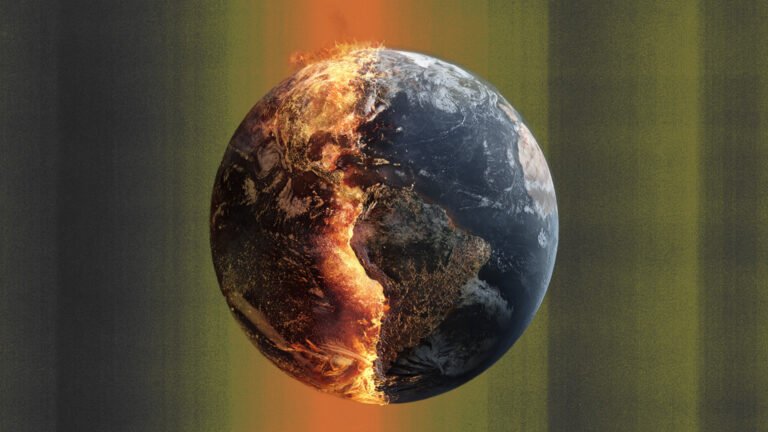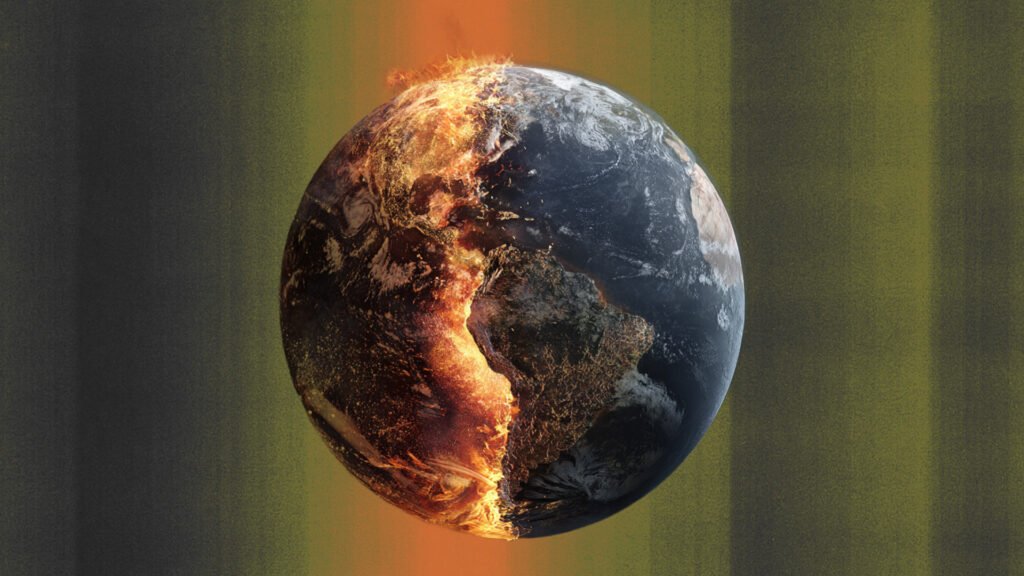
Climate Change is a threat, a warning, a catastrophe incoming that people encounter every day in the form of smog, pollution, floods, forest fires, and still act oblivious towards it. Gradually, it is becoming a reality and seeping into everyday lives and making the habitable inhabitable. The world sees it, all the stakeholders are witnesses to havoc being wrecked by climate change, and yet they take it as a thing of the future, a catastrophe far away, but is it that far?
The reason for their willful ignorance lies in the effort it requires, the long-term solution. That would require sacrifice in their time to save the planet for future generations and neither individuals nor leaders seem to be ready for that. They procrastinate about the action required to manage climate change as we have already crossed the Threshold of Prevention.
The situation at the international level is ambiguous. On one hand there are people who are working for the cause and even planning about how to save the planet and on other hand there are people who can do something real on ground yet chose to ignore it.
There are non-profit organizations who work for the cause of managing climate change, such as Climate Action Network, a global network of over 1900 groups, Friends of the Earth, Earth Justice, and more. These involve non-state actors and can have a significant influence on states for making climate sensitive policies and for individuals to take climate-based action in everyday lives. States are run by the principles of power, realpolitik, statism, self-help, and individuals are confined in that as well.
Read More: Reimagining South-South Climate Cooperation: From Rhetoric to Structural Justice
One such example is the great power reaction towards climate change. Even being the biggest contributors to climate change, their response to climate change is not effective and efficient enough. According to the World Resources Institute, the top ten countries of greenhouse gas emitters are China, the USA, the EU, Russia, Japan, Brazil, Indonesia, Iran, and Canada.
However, the bigger impact is on the countries with the least contribution, and then they are compensated via climate justice. Though great powers’ better decision-making, policy-making, and execution can help manage the impact of climate change better than funds could ever do, for now, they are resorting to compensation and not mitigation.
The United States of America and the People’s Republic of China Heads of State usually avoid being even a part of the Conference of the Parties on climate change, and the United States even withdrew from the Paris agreement of 2015. This was a great setback as the Paris agreement was a legally binding international treaty on climate change aiming to limit global warming to well below 2 degree centigrade above pre industrial by reducing green-house gas emissions through nationally determined contributions.
A great power leaving an imminent treaty, such as the Paris agreement, can have a dominant effect and can also result in the agreement being redundant. There is a historical example of that when the League of Nations was established, and the USA was not a part of it. This, along with some other reasons involved, resulted in the failure of those institutions.
In the anarchical world of international relations, and the interdependent problems such as climate change requires great power inclusion to bring some rule-based order to manage the problem. The Bretton wood system is one such example that stabilized the world economic system, and even now, no matter how frail it has become, it still is there due a rule based order backed by a great power.
Read More: Pakistan’s Green Future Rests on Youth Leadership, Says UK Climate Expert
The United States of America’s recently released National Security Strategy has re-oriented its direction from aiming for global domination to maintaining control in the western hemisphere and preventing the domination of others.
The most alarming part was this statement: ‘’We reject the disastrous “climate change” and “Net Zero” ideologies that have so greatly harmed Europe, threaten the United States, and subsidize our adversaries.’’
These statements can result in the loss of progress that has been made over decades with regard to climate change. They are not just adopting a climate-averse strategy, but they are encouraging Europe to do so too. Now imagine a world where the threat is there, and it is visible, and there is an opportunity for the great powers to manage and mitigate, and yet they chose to retreat and go for statism as they are not at disadvantageous locations as the developing and climate sensitive countries are.
They are even discouraging attempts to subsidize them, too. This can save the dollars for now but might end up taking all of them once it turns into a catastrophe. In a world that is called to be run on a liberal base order, there is a realistic side which Thucydides talked about ages ago, though it still remains relevant: ‘’The strong do what they can, and the weak suffer what they must.” (from History of the Peloponnesian War).
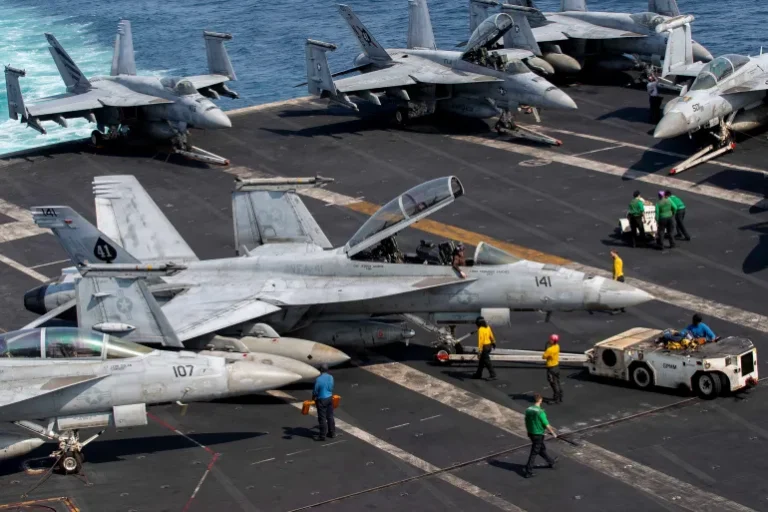
In the near future, there will be a need for great power inclusion to solve an interdependent problem, and one can hope that the United States of America becomes a part of it. It is necessary to create a certain order in an anarchical world to solve a problem that demands collective action. However, for now it appears to be an unlikely scenario, and the reason is the military adventures that are even worse than not managing and mitigating the risks of climate change at all.
*The views presented in this article are the author’s own and do not necessarily reflect the views of The Diplomatic Insight.

Shakh e nabat
Shakh e nabat is doing her Master's in International Relations at Quaid I Azam University Islamabad. She is also currently working as a junior research fellow at Maritime Center of Excellence.