On Economic, Political, and Social Empowerment through Governance, Gender Mainstreaming, and Education
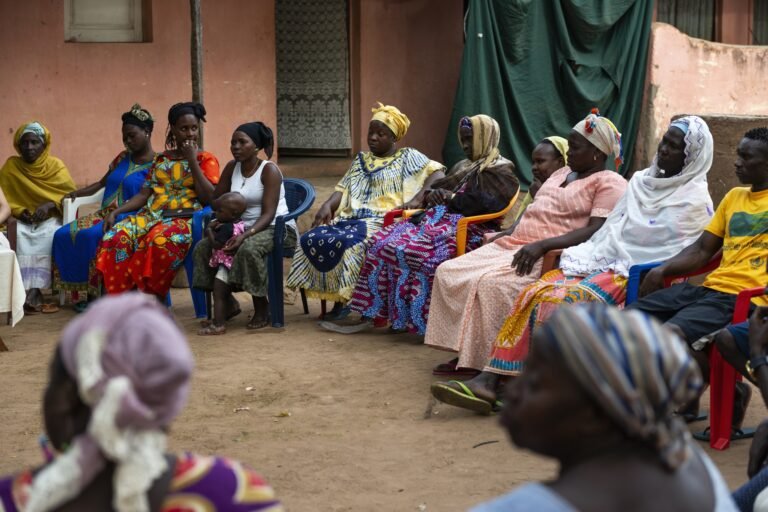
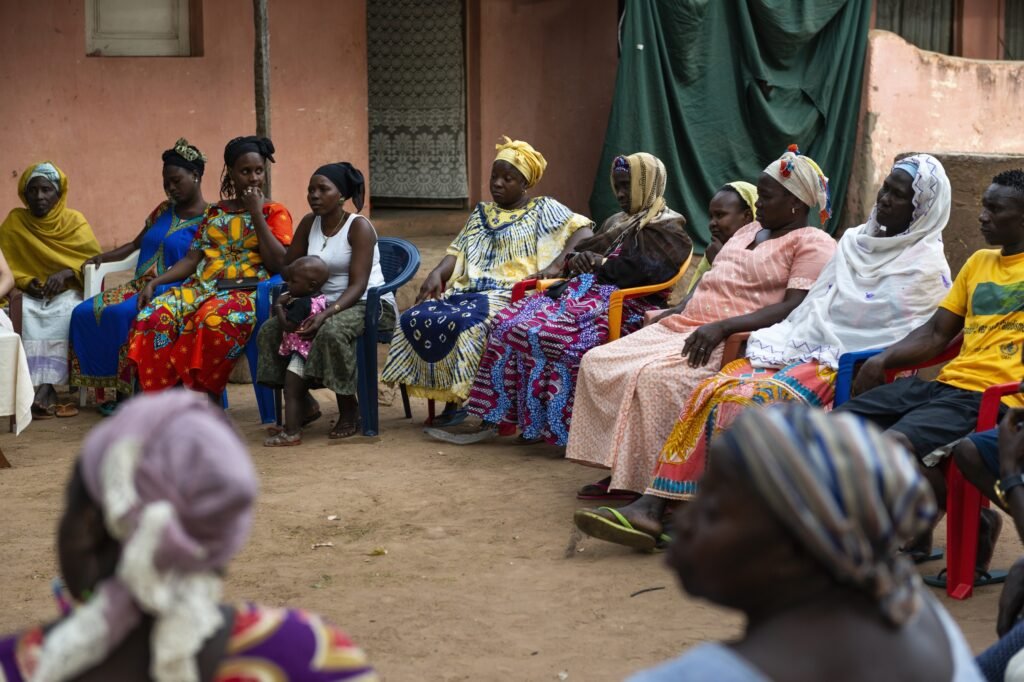
The metaphor “no one is successful unless everyone is liberated” captures a profound truth about human development: individual prosperity is inextricably linked to collective freedom. The Global South, which contains about 85% of the world’s population, requires this principle to be implemented immediately for all aspects of women’s welfare which includes economic and political and social development.
The liberation of women requires both transformative governance and effective gender mainstreaming and revolutionary educational systems because it represents a moral duty and an essential requirement for development.
Women in the Global South attain their most visible freedom through economic participation which continues to be the most challenging aspect for them to achieve equal rights. The World Economic Forum 2025 Global Gender Gap Report shows that Southern Asia holds the lowest position in Economic Participation and Opportunity because their gender parity score stands at only 38.8% while Sub-Saharan Africa maintains a score of 67.5%.
The statistics demonstrate a terrible fact that women in Sudan, Pakistan and India can access only one-third of the economic resources which men possess while their female labor-force participation remains below 50 percent of their male counterparts.
Read More: WPC, German Embassy Explore Joint Initiatives on Women’s Empowerment and Governance
The barriers exist in both their physical form and their fundamental nature. The employment rate for women in these areas with unstable conditions and ongoing conflicts reaches 20% while men maintain a 69% employment rate. The COVID-19 pandemic created wider employment gaps because it reduced women’s global workforce participation by 4.2%, which equates to more than 54 million job losses, while women working in informal jobs faced greater hardship. The evidence shows that when all obstacles to progress are removed, real change will take place.
The Women Entrepreneurship Development Project in Ethiopia has enabled more than 27,000 women to obtain business loans which resulted in their participating businesses achieving a 67% rise in average income and a 58% increase in employment growth. The World Bank programs in the Democratic Republic of Congo helped women to start more than 5,000 businesses between 2018 and 2024 which resulted in the creation of close to 15,000 new jobs.
The economic liberation of women requires more than access to credit; it demands the dismantling of legal barriers, the provision of childcare infrastructure, and the challenging of gender norms that confine women to unpaid domestic labor. The Gender and Economic Agency Initiative demonstrate that evidence generation needs to be conducted with scientific rigor because this will enable development of effective economic empowerment policies for women in various contexts.
Political Empowerment: From Marginalization to Leadership
The second essential foundation of women’s liberation is political representation but current advancement progresses at a painfully slow speed. As of January 2026, women hold only 27.5% of parliamentary seats worldwide, and at the current rate, gender parity in national legislative bodies will not be achieved before 2063. The Global South shows different results because Rwanda has the highest female parliamentary representation at 64% whereas Nicaragua Cuba and Mexico have reached gender equality but other regions show a major deficit.
Sub-Saharan Africa shows both its political empowerment possibilities and its existing obstacles. Women make up 27% of legislative positions in the region which surpasses Asia’s 22.1% while the gap between top-performing Namibia at 81.1% gender parity and Chad at 57.1% gender parity stands at 24 percentage points. The 2025 Global Gender Gap Report shows that political empowerment remains the dimension with the widest global gap which has been closed by only 22.9%.
The evidence demonstrates that gender quotas achieve their intended results. Countries that implement legislated candidate quotas experience a five-percentage point increase in women’s parliamentary representation when compared to countries that lack such laws. However, representation alone does not establish sufficient standards.
Women parliamentarians experience harassment and discrimination while they work in “soft” job functions that include social affairs instead of “hard” job functions that include defense and finance. The genuine process of political liberation requires people to obtain both decision-making authority and control over every policy domain.
Educational Transformation: The Foundation of Liberation
The most essential pathway for women’s freedom exists through education, yet 133 million girls worldwide remain without educational access because of poverty, conflict, early marriage and backward policies. The Afghan government has enforced a ban on secondary education and higher education for girls which has denied more than 2.2 million young women their opportunity to obtain education.
The Global South has made significant improvements to educational access in the region. Girls’ primary school enrolment reached 92% in 1993 but now stands at almost complete worldwide enrolment while secondary school enrolment rose from 52% to 77%.
The number of female students in higher education programs increased from 41 million to 139 million students worldwide. However, there are still important gaps which need to be addressed. The region of Sub-Saharan Africa has the lowest Educational Attainment score of 85.6% while 13 economies in the region report female literacy rates below 50%.
Beyond access lies the challenge of content. UNESCO emphasizes that gender-transformative education must not only ensure enrolment but empower learners equally “in and through education.” The project demands that we eliminate harmful gender stereotypes while we create educational spaces that support girls in STEM fields which currently have a 35% female student population and we need to establish safe environments that do not allow violence or discrimination.
The digital divide makes these problems worse because in sub-Saharan Africa only 40 to 44 women have spreadsheet skills for every 100 men who have those same abilities.
Gender Mainstreaming: The Governance Challenge
The Beijing Declaration and Platform for Action established its priority to implement gender mainstreaming through the integration of gender perspectives into all policies and programs more than 25 years ago. Yet, as recent scholarship confirms, this vision remains “largely unmet in practice.”
The Global South presents major challenges for gender mainstreaming implementation. Research identifies critical knowledge gaps, weak institutional mechanisms, and implementation failures. Women’s ministries lack both political power and technical capacity to implement gender mainstreaming across other government departments while sectoral ministries understand gender only as women’s issues which leads to policies that present women as victims instead of active agents.
The absence of separate data for different genders creates a critical obstacle. The absence of statistical data that demonstrates the different effects of policies on men and women makes it impossible to create equitable programs that function effectively. The current situation shows that funding shortages continue because core budgets do not include gender equality as an essential element and most gender-based initiatives receive insufficient financial support.
The existing challenges face additional difficulties because cultural and political resistance acts as a barrier. Some member states argue that gender policies interfere with national traditions which results in weakened resolutions and delayed progress on reproductive rights and gender-based violence.
The UN Women 2025 Gender Snapshot shows that all gender equality targets from the SDGs have failed to achieve progress because member states refuse to reach political agreement.
The Path Forward: Collective Liberation as Development Strategy
The metaphor of collective liberation demands a paradigm shift in how the Global South approaches development. Women’s welfare cannot be treated as a separate “women’s issue” but must be recognized as central to economic growth, political stability, and social cohesion.
Governance systems need to replace tokenistic representation with real empowerment methods. The implementation needs to establish stronger women’s ministries which will require gender analysis to be included in all policy development work and provide sufficient funds to support gender equality initiatives.
Educational systems need to develop into genuine transformative forces which will overcome patriarchal systems while providing girls with access to high-quality STEM education. Economic policies need to remove the fundamental obstacles that prevent women from working because the 4.2% employment decline women experienced during COVID-19 represents a dual loss that affects communities and entire economies.
Read More: The Next Generation of Women in Soft Power
The evidence shows that when women lead local councils in India, they achieve 62% more drinking water projects than male council leaders. The economic independence of women leads to household welfare improvements which create prosperous communities that generate economic benefits which decrease poverty and mortality rates. The achievement of gender parity in parliaments leads to policy development that better serves the needs of all citizens.
The statement “No one is successful unless everyone is liberated” represents both a moral principle and a method for development. The Global South stands at a crossroads. The country has two options which include maintaining its current practices while accepting that gender equality in parliamentary representation will not occur until 2063 and that millions of girls will remain uneducated.
The country will achieve success through its new approach which recognizes women’s emancipation as the essential element for national achievement. The choice is clear, and the time is now. The liberation of women is the liberation of nations.

Peseo Lao Pio
Peseo Lao Pio is from Tanzania, and is a highly skilled ICT professional with an interest in global politics and economic change in Africa. His devotion to the development of the continent is the reason he pursued a Master’s degree in Political Science at Universitas Islam Internasional Indonesia (UIII). Pio brings extensive real-world experience to community welfare initiatives. He has worked as a mobile teacher for street children, contributed to critical environmental conservation projects, and held the role of community facilitator with VSO International. He was awarded the prestigious Best Student Award during his undergraduate studies for exceptional performance which demonstrates a consistent record of excellence in all his professional and humanitarian activities.