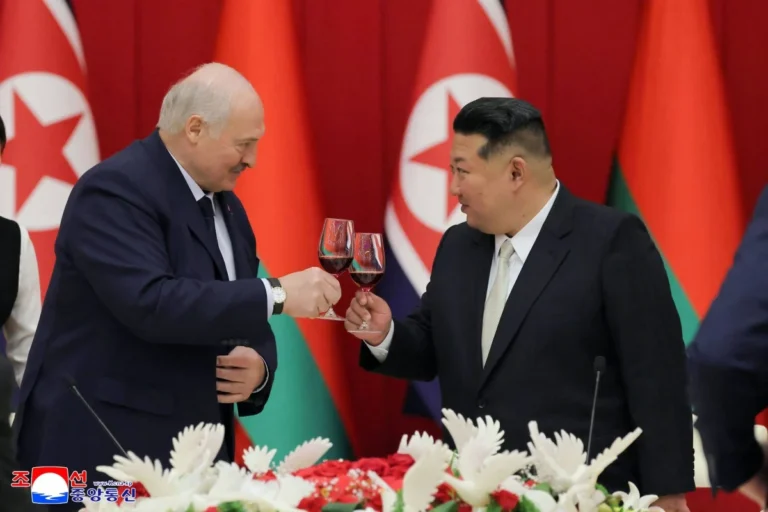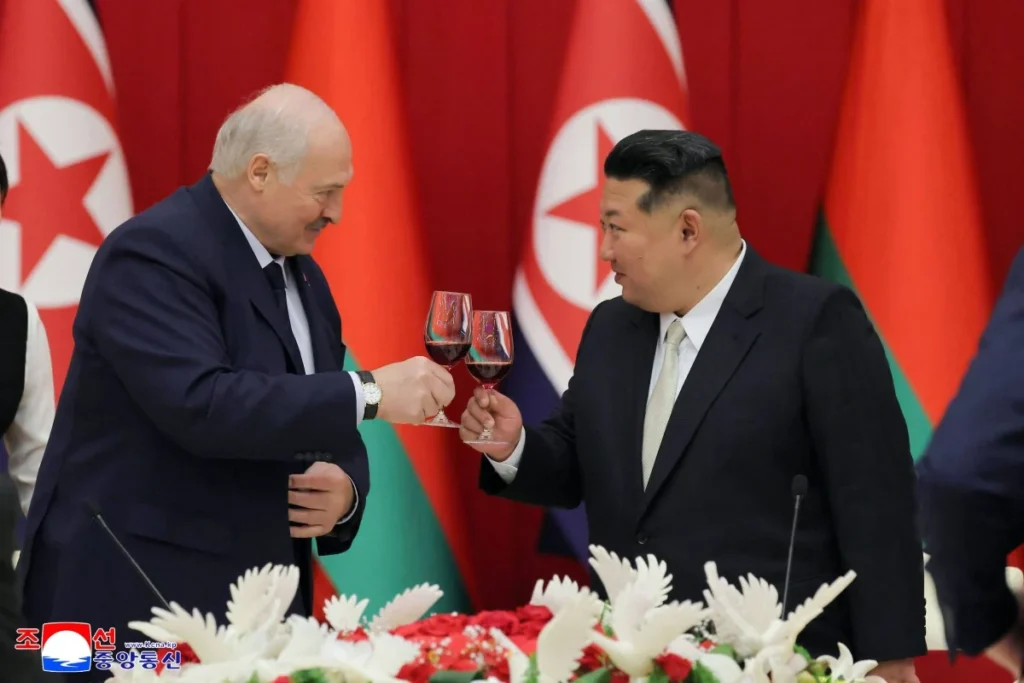
Pyongyang (TDI): Belarus and North Korea signed a treaty on friendship and cooperation, on Thursday, during Lukashenko’s two-day trip to Pyongyang. The document was signed by the Belarusian President and his North Korean counterpart, Kim Jong Un.
The treaty creates a formal framework for closer relations between the two countries. It will support greater cooperation in areas such as diplomacy, agriculture, education, public health and information.
Lukashenko called the agreement fundamental and said relations were entering a fundamentally new stage. Kim Jong Un said the treaty would help ensure the stable development of ties.
Lukashenko and Kim last met in Beijing on 3rd September 2025 on the sidelines of the 2025 China Victory Day Parade at Tiananmen Square, which commemorated the 80th anniversary of the end of World War II.
He told Kim Jong Un that a great future awaits North Korea with its hardworking and disciplined people. He also added that in today’s world, where major powers openly ignore and violate international law, independent countries need to cooperate more closely.
Read More: China, North Korea Vow to Boost Strategic Communication and Cooperation
This cooperation should focus on protecting sovereignty and improving the lives of citizens. Kim, in turn, expressed solidarity with Belarus and full support against unlawful pressure from the West. Both leaders noted that their governments hold similar positions on many international issues.
The signing took place during Lukashenko’s first official state visit to North Korea. The two countries have had diplomatic relations for decades, but ties have developed further in recent years.
Both nations face Western sanctions and maintain close links with Russia. The treaty builds on this shared reality and provides a basis for practical cooperation in multiple fields.
Belarusian Foreign Minister, Maxim Ryzhenkov. said the sides agreed to cooperate across a wide range of sectors, from agriculture to information exchange.
Discussions, during the visit, covered boosting high-level visits, expanding practical ties, and exchanging views on international and regional issues of mutual concern.
The treaty outlines goals and principles for bilateral cooperation and sets a framework for expanding relations at a time when both countries seek stronger partnerships beyond traditional Western channels.

Muhammad Usman Hashmi
Muhammad Usman Hashmi is a researcher in International Relations, focusing on climate diplomacy, global governance, and political economy in the Global South. He has contributed to policy dialogues with the Foreign Policy Community of Indonesia and serves as a Senior Research Fellow at the International Council on Human Rights, Peace and Politics. He is also associated with Rethinking Economics Islamabad, contributing to research on development and sustainability. He can be reached at musmanhashmi99@gmail.com