

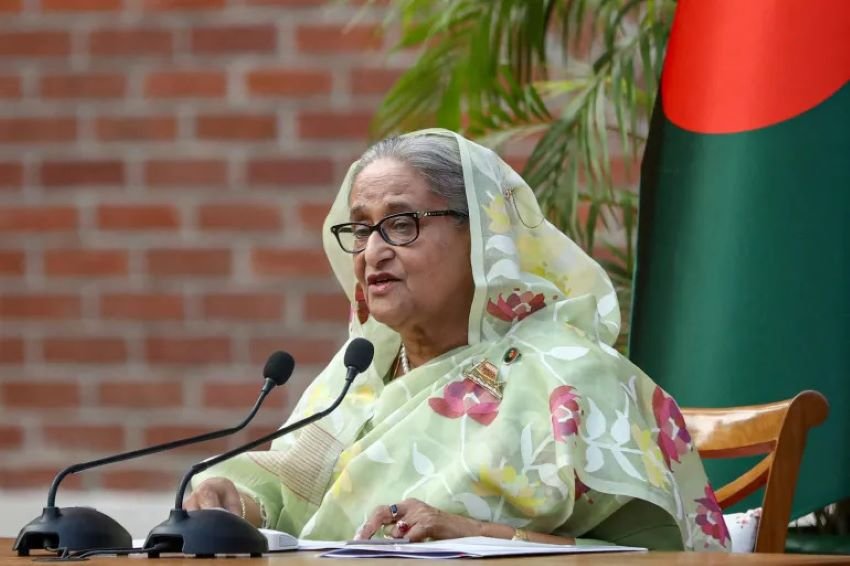
Dhaka (TDI): Bangladesh’s capital and major cities remained calm on Tuesday, a day after former Prime Minister Sheikh Hasina was sentenced to death by the International Crimes Tribunal for her role in last year’s deadly student uprising.
The tribunal handed down the sentence in absentia to Hasina and former Home Minister Asaduzzaman Khan, citing their involvement in the violent suppression of student protesters. The Awami League condemned the trial as a “kangaroo court” and urged supporters to close shops and halt services nationwide.
Monday’s unrest saw clashes between Hasina’s opponents and security forces. Protesters attempted to demolish the home of her father, Bangladesh founder Sheikh Mujibur Rahman, and vandalized the residence of former President Abdul Hamid in the northeastern Kishoreganj district.
Read More: Bangladesh Requests India to Extradite Hasina After Death Sentence
By Tuesday, however, businesses, schools, and public services remained open, though many residents expressed unease about the country’s uncertain future.
Hasina, 78, was convicted on five counts of crimes against humanity, in addition to receiving a life sentence for allegedly inciting violence and ordering the use of helicopters, drones, and lethal weapons against protesters. A former police chief, who became a state witness, was sentenced to five years in prison.
The protests, which erupted in July and August last year, were sparked by opposition to a government job quota system seen as favoring party affiliates.
According to Bangladesh’s interim government, over 800 people were killed and roughly 14,000 injured, while the United Nations estimated as many as 1,400 deaths. The unrest led to the collapse of Hasina’s 15-year administration on August 5, 2024, prompting her and Khan to flee to India. Extradition from India remains unlikely, making enforcement of the sentences improbable.
Read More: Bangladesh Court Sentences Former PM Hasina to Death
Hasina has 30 days to surrender or be arrested to file an appeal, though she and Khan declined state-appointed defense counsel, rejecting the tribunal’s attorneys. She maintains that the charges are unjustified, insisting that she and Khan “acted in good faith to minimize the loss of life.”


